Raipur-Kurud Gauge Conversion Done, Dhamtari Line Underway
Synopsis
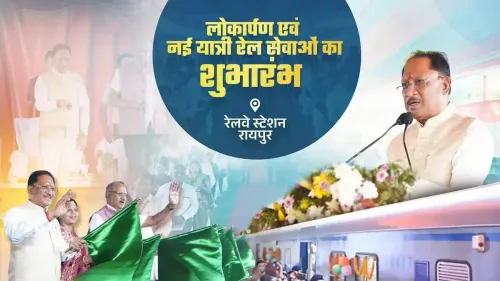
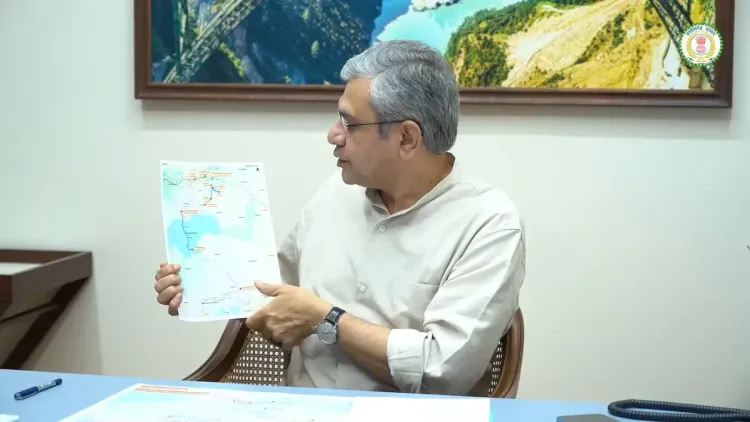
The Raipur-to-Kurud narrow gauge rail line has been converted to broad gauge, Union Railway Minister Ashwini Vaishnaw announced via Chhattisgarh's Chief Minister's Office. Work on the Kurud-to-Dhamtari extension is currently underway, promising improved passenger and freight connectivity across the region.
Key Takeaways
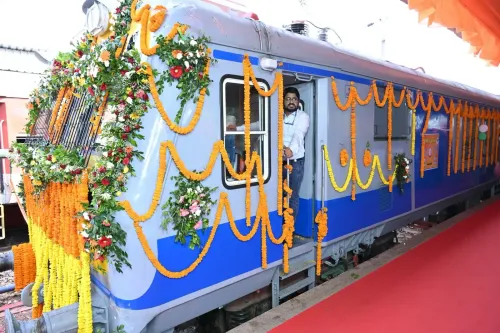
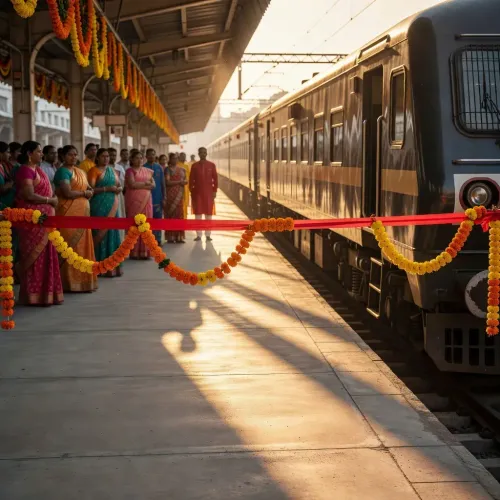
The Raipur–Kurud narrow gauge rail line has been fully converted to broad gauge , enabling faster and heavier train operations.
Union Railway Minister Ashwini Vaishnaw confirmed both the conversion and ongoing construction in a statement shared by the Chhattisgarh CMO on 20 October 2026 .
Work on the Kurud–Dhamtari rail line extension is currently in progress, targeting improved regional connectivity.
The project aligns with Project Unigauge , India's decades-long programme to standardise rail gauge nationally.
Dhamtari district 's agricultural and industrial economy stands to benefit from reduced freight costs and better passenger access once the extension is complete.
A rail corridor that once crept along on narrow tracks is now broad-gauge — and the next stretch is already under construction. The Chief Minister's Office of Chhattisgarh shared a statement on 20 October 2026 from Union Railway Minister Ashwini Vaishnaw, confirming that the Raipur-to-Kurud narrow gauge line has been fully converted to broad gauge and that work on the onward Kurud-to-Dhamtari section is actively progressing.
A colonial-era narrow line gets a 21st-century upgrade
The Raipur–Kurud corridor is among the last remnants of the narrow gauge network that once threaded through central India's hinterland. Indian Railways has been executing Project Unigauge since the 1990s — a nationwide drive to eliminate gauge mismatches and bring every corner of the network onto the standard 1,676 mm broad gauge. The Raipur–Kurud conversion is a textbook outcome of that decades-long push: a line that could only handle slower, lower-capacity narrow-gauge stock can now run full-size trains, opening the door to faster passenger services and heavier freight loads.
Vaishnaw's statement, quoted by the CMO, underlines the sequenced logic: 'Raipur se Kurud tak pehle narrow gauge rail line thi, jise ab broad gauge mein parivartit kiya gaya hai' ('The Raipur-to-Kurud line, which was earlier narrow gauge, has now been converted to broad gauge'). The minister added that work on the Kurud-to-Dhamtari extension is ongoing, promising further improvement in rail connectivity for the region.
Why Dhamtari matters — and what the extension unlocks
Dhamtari district, located south of Raipur, sits in an agriculturally productive and industrially active zone of Chhattisgarh. Better rail access directly benefits farmers moving produce, traders shipping goods, and daily commuters who currently depend on road transport for the final leg of their journey from Kurud. A completed Kurud–Dhamtari broad-gauge line would effectively extend the Raipur rail catchment area deep into the district's heartland.
Chhattisgarh holds some of India's richest deposits of coal, iron ore, and other minerals. Rail connectivity improvements in the state carry a dual economic dividend: smoother passenger movement and, crucially, cheaper bulk freight corridors for industries that feed into national supply chains. Every kilometre of new or upgraded track here has an outsized multiplier effect compared with states where road infrastructure is already saturated.
Gauge conversion as state policy, not just a railway milestone
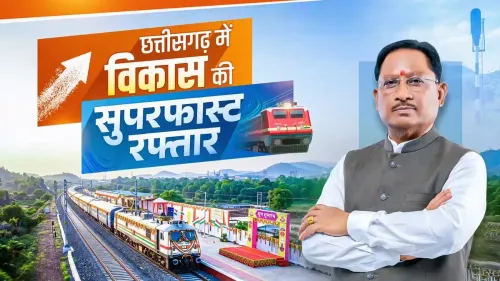
The CMO's decision to amplify Vaishnaw's remarks signals that the Vishnu Deo Sai government in Raipur is actively framing rail expansion as a pillar of its development narrative. Sharing the Railway Minister's words under the hashtag #RailInfra4Chhattisgarh is a deliberate branding move — tying central-government infrastructure investment to state-level political messaging ahead of future electoral cycles.
The broader national pattern is clear: the Centre has prioritised gauge standardisation and new rail lines in central and eastern India — states like Chhattisgarh, Odisha, and Jharkhand — precisely because their mineral wealth and rural density make rail the most economically efficient mode of mass transport. The Raipur–Kurud completion is one data point in that larger arc.
The watch now is on Kurud–Dhamtari: when the section is commissioned, how quickly freight and passenger traffic ramps up, and whether further extensions toward the district's outer blocks follow. That last question will determine whether this corridor becomes a genuine regional artery — or stops at Dhamtari town.
Point of View
The Chhattisgarh CMO is stitching central infrastructure delivery into a state-level development story — a classic cooperative federalism optic. The real test of whether this investment translates into measurable impact lies in the Kurud–Dhamtari timeline: delays in commissioning would blunt the narrative. Chhattisgarh's mineral-freight dependence on rail makes completion of this corridor a genuine economic priority, not just a political talking point.
NationPress
21 Oct 2026
Frequently Asked Questions
Has the Raipur to Kurud narrow gauge line been converted to broad gauge?
Yes. Union Railway Minister Ashwini Vaishnaw confirmed that the Raipur-to-Kurud narrow gauge line has been converted to broad gauge, as shared by the Chhattisgarh Chief Minister's Office on 20 October 2026.
What is the current status of the Kurud to Dhamtari rail line?
Work on the Kurud-to-Dhamtari rail line is currently in progress. Once complete, it will extend broad-gauge rail connectivity from Raipur through Kurud all the way to Dhamtari district.
What is Project Unigauge in Indian Railways?
Project Unigauge is an Indian Railways initiative launched in the 1990s to convert all narrow and metre gauge lines across the country to the standard broad gauge, improving operational efficiency and network integration.
How will the Raipur-Kurud-Dhamtari rail upgrade benefit local residents?
The upgrade will enable faster passenger trains and heavier freight movement, benefiting daily commuters, farmers transporting produce, and traders and industries relying on cost-effective bulk logistics in Chhattisgarh.
Who announced the Chhattisgarh rail gauge conversion update?
Union Railway Minister Ashwini Vaishnaw made the announcement, which was subsequently shared by the official Chief Minister's Office of Chhattisgarh on the social media platform X.