Jackie Shroff honours V. Shantaram on 125th birth anniversary: 'Great cinema inspires'
Synopsis
On what would have been his 125th birthday, V. Shantaram — the filmmaker who directed 55 films, co-founded Prabhat Film Company, and shot India's first colour film — is being remembered by Bollywood actor Jackie Shroff as a visionary who proved cinema could inspire, not just entertain. Few figures in Indian film history combined social conscience, technical audacity, and industry institution-building the way Shantaram did.
Key Takeaways
Jackie Shroff posted a tribute to V.
Shantaram on his 125th birth anniversary on 18 November 2026 .
Shantaram was born on 18 November 1901 in Kolhapur, Maharashtra and passed away on 30 October 1990 in Mumbai , aged 88 .
Over six decades, he reportedly produced 92 films , directed 55 , and acted in 25 .
His 1933 production Sairandhri is credited as India's first colour film.
He was awarded the Dadasaheb Phalke Award in 1985 and posthumously the Padma Vibhushan in 1992 .
He reportedly nurtured talents including Lata Mangeshkar , Yash Chopra , Jeetendra , and Govind Nihalani .
Bollywood actor Jackie Shroff paid tribute to legendary Indian filmmaker V. Shantaram on his 125th birth anniversary on 18 November 2026, calling him a visionary who demonstrated that cinema's power extends far beyond entertainment. Shroff's tribute came via a social media post that drew fresh attention to one of Indian cinema's most consequential figures.
Jackie Shroff's Tribute
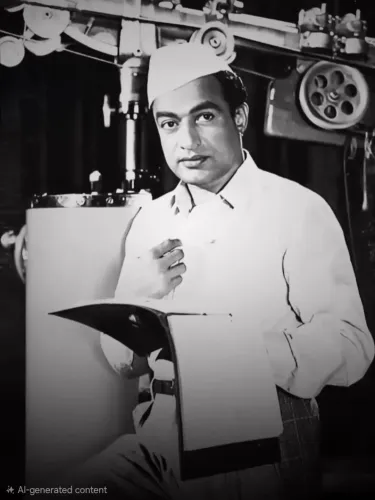
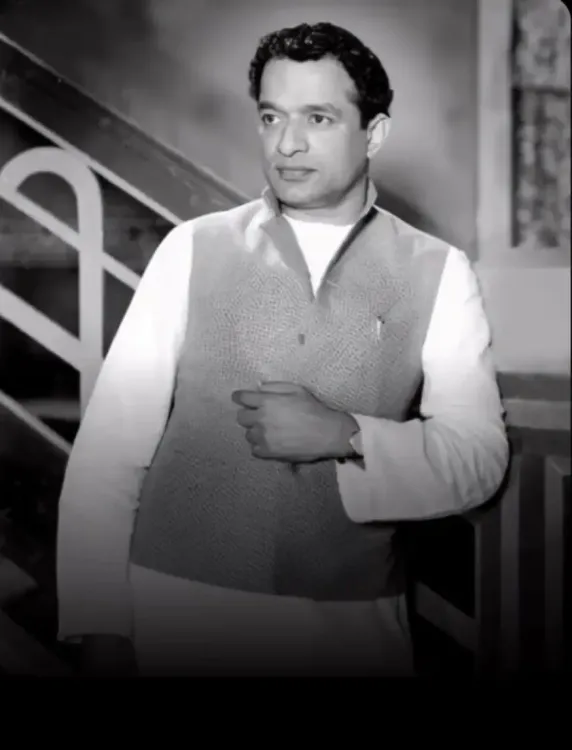
Sharing a black-and-white photograph of V. Shantaram dressed in a white kurta with a textured waistcoat, Jackie Shroff wrote: 'Remembering V Shantaram ji on his birth anniversary, a visionary filmmaker who proved that great cinema doesn't just entertain—it inspires!' The post underscored the enduring reverence that Shantaram commands among successive generations of Indian film artists.
The Pioneer Behind Indian Cinema
V. Shantaram, born Shantaram Rajaram Vankudre on 18 November 1901 in Kolhapur, Maharashtra, is widely regarded as one of the founding pillars of Indian cinema. He began his career at the Maharashtra Film Company in Kolhapur, working across various roles before transitioning into acting and direction. He went on to co-found the Prabhat Film Company in 1929 and later established Rajkamal Kalamandir in Mumbai. Over a career spanning more than six decades, he reportedly produced 92 films, directed 55, and acted in 25. He passed away in Mumbai on 30 October 1990, aged 88.
Cinema as Social Commentary
What distinguished Shantaram from contemporaries was his consistent use of cinema as a vehicle for social reform. His films tackled child marriage, gender inequality, dowry, communal harmony, rehabilitation, and the dignity of marginalised communities. Among his celebrated works are Sant Tukaram, Duniya Na Mane, Aadmi, Dr. Kotnis Ki Amar Kahani, Jhanak Jhanak Payal Baaje, Do Aankhen Barah Haath, Navrang, and Pinjara. His 1957 classic Do Aankhen Barah Haath — centred on a prison warden's attempt to reform six hardened convicts — remains a touchstone of humanist filmmaking in India.
Technical Milestones and Talent Nurtured
Shantaram's legacy is equally rooted in technical innovation. His 1933 production Sairandhri is credited as India's first colour film, while works including Amrit Manthan, Amar Jyoti, and Jhanak Jhanak Payal Baaje — the latter starring Sandhya and Gopi Krishna and celebrating Indian classical dance — showcased his restless experimentation. He is also reportedly credited with nurturing several careers that would define Hindi cinema, including those of Lata Mangeshkar, Jeetendra, Mumtaz, Padmini Kolhapure, Govind Nihalani, and Yash Chopra.
Honours and Personal Life
Shantaram was awarded the Dadasaheb Phalke Award in 1985, Indian cinema's highest honour, in recognition of his lifetime contribution. He was posthumously conferred the Padma Vibhushan in 1992. His personal life was deeply entwined with cinema: he was married three times — first to Vimalabai, then to actress Jayashree, and later to actress Sandhya, who starred alongside him in several of his most celebrated productions. He had seven children from his first two marriages. As tributes mark his 125th birth anniversary, Shantaram's body of work continues to serve as a benchmark for purposeful filmmaking in India.
Point of View
But through the people who populated them.
NationPress
18 Nov 2026
Frequently Asked Questions
Who was V. Shantaram and why is he significant in Indian cinema?
V. Shantaram, born Shantaram Rajaram Vankudre on 18 November 1901 in Kolhapur, Maharashtra, is regarded as one of the pioneers of Indian cinema. Over a career spanning more than six decades, he reportedly directed 55 films and produced 92, using cinema consistently to address social issues such as child marriage, gender inequality, and communal harmony.
What did Jackie Shroff say about V. Shantaram on his 125th birth anniversary?
Jackie Shroff shared a black-and-white photograph of V. Shantaram on social media and wrote: 'Remembering V Shantaram ji on his birth anniversary, a visionary filmmaker who proved that great cinema doesn't just entertain—it inspires!' The tribute was posted on 18 November 2026, marking Shantaram's 125th birth anniversary.
What are V. Shantaram's most celebrated films?
Among his most celebrated works are Sant Tukaram, Duniya Na Mane, Dr. Kotnis Ki Amar Kahani, Jhanak Jhanak Payal Baaje, Do Aankhen Barah Haath, Navrang, and Pinjara. His 1957 film Do Aankhen Barah Haath, about a prison warden reforming six convicts, remains a landmark of Indian humanist cinema.
What awards did V. Shantaram receive for his contribution to cinema?
V. Shantaram was awarded the Dadasaheb Phalke Award in 1985, Indian cinema's highest honour. He was posthumously conferred the Padma Vibhushan in 1992, recognising his lifetime contribution to Indian film.
What technical milestone is V. Shantaram credited with in Indian cinema?
V. Shantaram's 1933 production Sairandhri is credited as India's first colour film. He also experimented with technique across films such as Amrit Manthan, Amar Jyoti, and Jhanak Jhanak Payal Baaje, making him one of the most technically adventurous filmmakers of his era.