CM Saini Launches 'Namo Morni Mission' to Make Morni Haryana's Organic Farming Model
Synopsis
Haryana CM Nayab Singh Saini launched 'Namo Morni Mission' and 'Maati Vandan Abhiyan' at Panchkula's Morni, enrolling 2 lakh farmers and 3 lakh acres for natural farming, with a 2029 target to replicate Sikkim's fully organic model.
Key Takeaways
Namo Morni Mission and Maati Vandan Abhiyan were launched by Haryana CM Nayab Singh Saini at Morni, Panchkula on 17 November 2026 .
Approximately 2 lakh farmers registered nearly 3 lakh acres of land for natural farming at the state's first organic farming fair.
The target is to make Morni a fully organic block on the lines of Sikkim by 2029 .
A dedicated produce label — 'Morni Organic Fresh' — will give farmers market access and brand recognition.
The initiative is aligned with Prime Minister Narendra Modi 's National Natural Farming Mission .
The government's three-pillar strategy for Morni is upaj, brand aur mandi — produce, brand, and market.
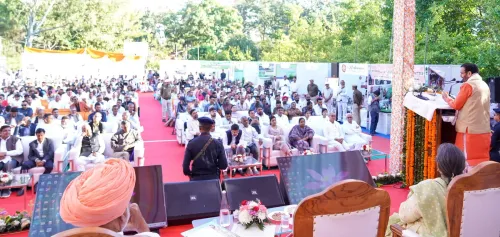
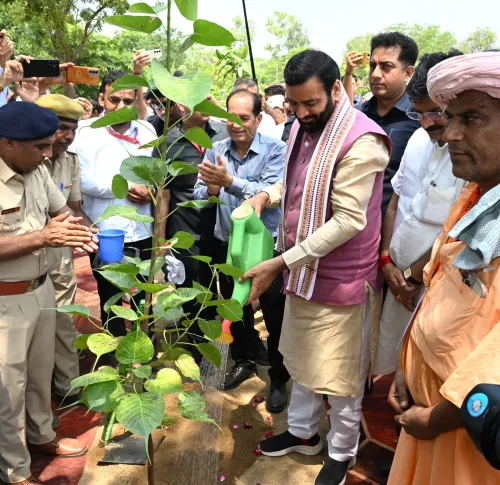
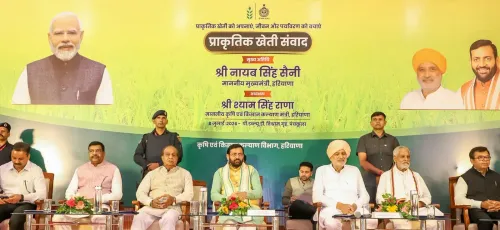
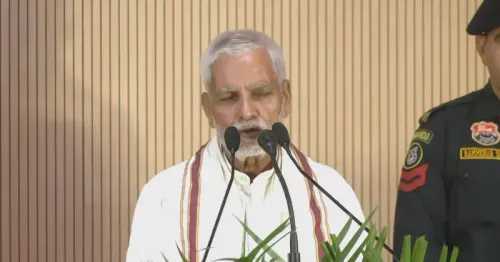
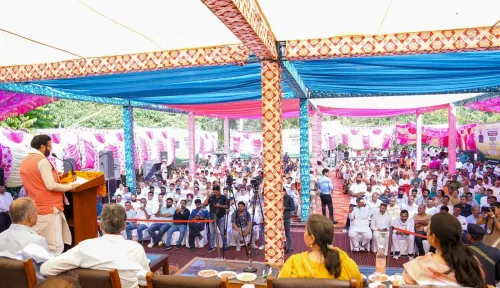
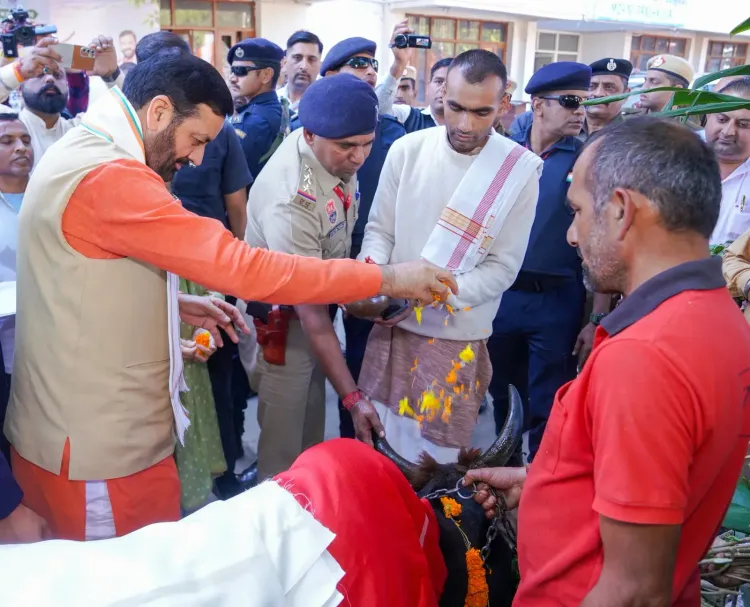
Soil first, then profit — that is the bet Haryana Chief Minister Nayab Singh Saini is placing on a forested hill block in Panchkula. On Tuesday, 17 November 2026, Saini travelled to Morni to inaugurate the state's first Organic and Natural Farming Farmers' Fair, where he launched two new initiatives: the 'Maati Vandan Abhiyan' (Soil Salutation Campaign) and the 'Namo Morni Mission', declaring an ambition to turn the region into Haryana's answer to fully-organic Sikkim.
What happened at Morni's first organic farming fair
The event drew farmers from across the region for a landmark registration drive. According to Saini's post, nearly 2 lakh (200,000) farmers enrolled approximately 3 lakh (300,000) acres of land for natural farming during the fair — a single-day mobilisation that signals serious grassroots appetite for chemical-free agriculture in the state.
Saini described the experience as one of 'immense pride and joy' — 'atyanth garv aur prasannata ki anubhuti'. The occasion anchored two new programmes: Maati Vandan Abhiyan, which elevates soil health as the entry point for farming reform, and Namo Morni Mission, which frames Morni itself as the laboratory for that reform.
The Sikkim benchmark and the 2029 deadline
Sikkim became India's first fully organic state in 2016, converting all its farmland away from synthetic inputs — a decade-long effort that earned it global recognition and premium market access for its produce. Saini has explicitly benchmarked Morni against that model, with a target year of 2029.
The ambition is threefold: healthy soil, higher farmer incomes, and clean food for every family. Saini crystallised it in a neat phrase — 'upaj, brand aur mandi' (produce, brand, and market) — positioning all three as the new identity of Morni. The vehicle for market access will be a dedicated label: 'Morni Organic Fresh', designed to give local farmers a recognisable brand and a direct route to buyers willing to pay a premium for certified organic produce.
Where the National Natural Farming Mission fits in
The Morni initiative is explicitly framed as an extension of Prime Minister Narendra Modi's National Natural Farming Mission, the central government programme that seeks to scale chemical-free agriculture across India. By anchoring a state-level push inside that national framework, the Haryana government is positioning Morni not just as a local experiment but as a potential showcase for the broader mission — the kind of district-level proof-of-concept that other states could replicate.
India's push toward natural farming is driven by twin pressures: the long-term degradation of agricultural soil from decades of heavy chemical fertiliser use, and the need to raise farmer incomes without deepening input costs. Morni — hilly, relatively low on industrial agriculture, with an identity distinct from the Green Revolution heartland of the Haryana plains — is a logical choice for a pilot that must prove organic farming can be both ecologically sound and economically viable.
The 'Morni Organic Fresh' brand and what comes next
Brand-building is the piece that most organic transitions miss. Saini's explicit mention of a branded output channel — Morni Organic Fresh — suggests the government intends to handle market linkage, not just farm conversion. The gap between a farmer switching away from chemicals and a farmer actually earning more from that switch is bridged only by reliable, premium demand. How quickly that brand reaches urban markets in Chandigarh, Delhi, and beyond will determine whether the 2029 Sikkim benchmark is a reachable goal or an aspirational headline.
With 200,000 farmers already registered and three lakh acres on the books, the numbers are there. The next test is whether the ecosystem — certification, supply chains, and consumer trust — can be built fast enough to match them.
Point of View
The Saini government is trying to close the credibility gap that has dogged most organic transitions: the absence of a viable market at the other end. The 2029 deadline is politically legible — it falls within a future election cycle — and the registration numbers, if they translate into actual land conversion, would make Morni one of the largest single-block organic transitions in India. Whether the state can sustain the certification and supply-chain infrastructure needed to justify a price premium will be the real measure of whether this is a durable agricultural shift or a well-staged announcement.
NationPress
17 Nov 2026
Frequently Asked Questions
What is the Namo Morni Mission?
'Namo Morni Mission' is a Haryana government initiative launched by CM Nayab Singh Saini to develop Morni in Panchkula as a model organic and natural farming block, targeting full organic status by 2029 on the lines of Sikkim.
What is Maati Vandan Abhiyan?
'Maati Vandan Abhiyan' (Soil Salutation Campaign) is a campaign launched alongside the Namo Morni Mission that places soil health at the centre of Haryana's natural farming push, encouraging farmers to restore and protect agricultural soil.
How many farmers registered for natural farming at the Morni fair?
According to CM Saini, approximately 2 lakh (200,000) farmers registered nearly 3 lakh (300,000) acres of land for natural farming at Haryana's first Organic and Natural Farming Farmers' Fair in Morni.
What is the Morni Organic Fresh brand?
'Morni Organic Fresh' is a dedicated produce brand announced by the Haryana government to give farmers in the Morni region market access and a recognisable identity for their organically grown products.
How is Sikkim connected to Haryana's Morni organic farming plan?
Sikkim became India's first fully organic state in 2016 and is treated as a national benchmark. CM Saini has set a goal to develop Morni into a similar model organic block by 2029, using Sikkim's journey as the template.