CM Saini Backs 'Green Revolution 2.0' at Panchkula Natural Farming Event
Synopsis
Haryana Chief Minister Nayab Singh Saini attended a natural farming dialogue in Panchkula on 8 July 2026, committing to 'Green Revolution 2.0' through cluster farming, AI tools, agri-startups, food processing and a new 'Haryana Prakriti' global brand under the state's Vision-2035 framework.
Key Takeaways
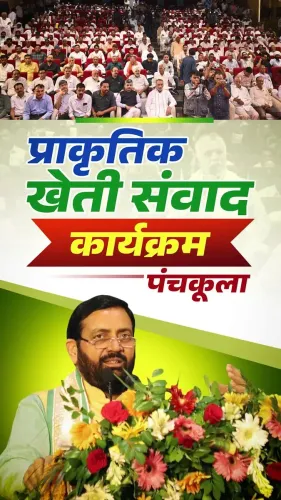
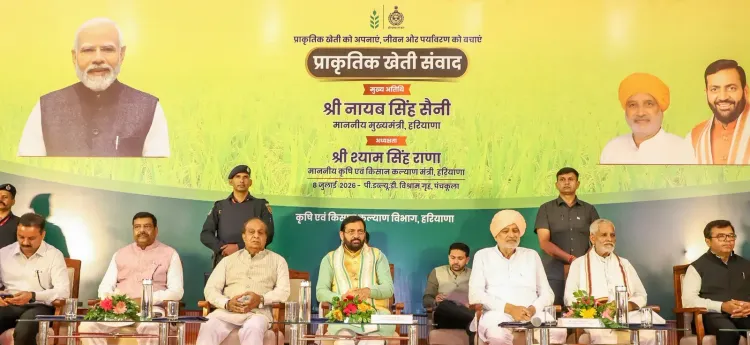
CM Nayab Singh Saini participated in the Prakritik Kheti Samvad Karyakram in Panchkula on 8 July 2026 .
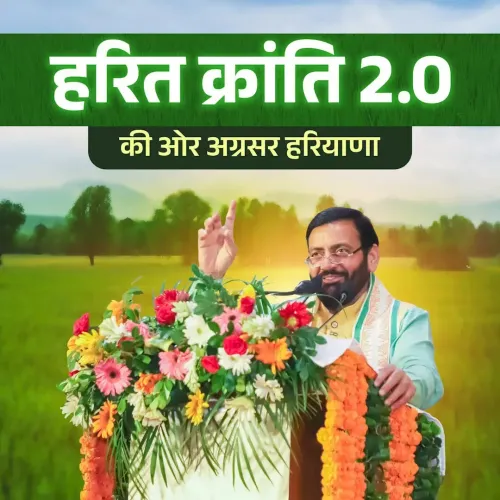
He framed natural farming as 'Harit Kranti 2.0' — the next phase of India's agricultural transformation under PM Modi 's leadership.
Haryana's Vision-2035 framework includes cluster-based natural farming, AI-based agri-solutions , agri-startups and food processing to raise farmer incomes.
Saini announced plans to create a 'Haryana Prakriti' brand to market the state's natural produce at a global level.
The initiative aligns with central schemes such as Paramparagat Krishi Vikas Yojana and broader goals of Viksit Bharat and Atmanirbhar Bharat .
Farmers, agri-startups and food processing units are identified as primary stakeholders in Haryana's natural farming ecosystem.
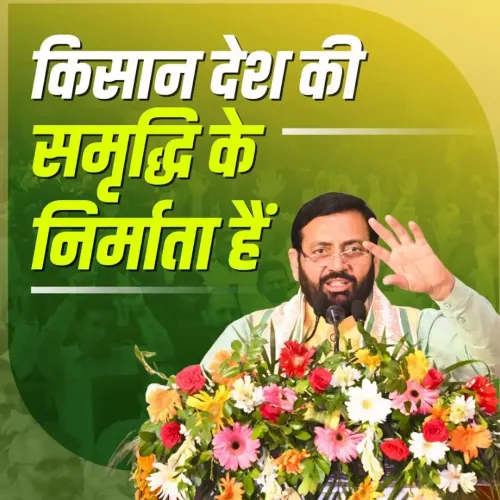
Haryana Chief Minister Nayab Singh Saini on Wednesday, 8 July 2026, participated in the 'Prakritik Kheti Samvad Karyakram' (Natural Farming Dialogue Programme) in Panchkula, reaffirming the state's commitment to what he described as 'Harit Kranti 2.0' — a second Green Revolution anchored in natural farming, technology and sustainable agriculture.
Context
Saini stated that the event offered an opportunity to 'prakriti ke saath santulit vikas ka sashakt aadhar' — 'a strong foundation for balanced development in harmony with nature.' He credited Prime Minister Narendra Modi's leadership for elevating natural farming beyond an agricultural reform campaign into a pillar of the Viksit Bharat vision. The programme brought together farmers, agri-entrepreneurs and policymakers to chart a forward-looking course for Haryana's agricultural sector.
Policy Backdrop
The push for natural farming builds on a long policy lineage. The original Green Revolution of the 1960s transformed Haryana and Punjab into India's foodgrain heartland through high-yielding varieties and chemical inputs — but at significant cost to soil health and groundwater. The central government's Paramparagat Krishi Vikas Yojana, launched in 2015, began nudging states toward organic and natural farming clusters. Prime Minister Modi has publicly championed zero-budget natural farming since at least 2019, linking it to soil restoration and farmer welfare under broader frameworks such as Digital India and Atmanirbhar Bharat.
Haryana's own Vision-2035 framework targets sustainable agriculture through cluster-based natural farming, modern technology adoption and farmer income growth. Saini's remarks at Panchkula signal that the state intends to operationalise these goals through concrete instruments rather than broad declarations.
Stakeholders and Impact
Saini outlined a multi-pronged strategy: cluster-based natural farming, integration of AI-based agricultural solutions, support for agri-startups and expansion of food processing infrastructure — all aimed at raising farmer incomes and making agriculture more resilient. The announcement that carries immediate market significance is the proposed 'Haryana Prakriti' brand, which Saini said would give Haryana's natural produce a distinct global identity and directly benefit the farmers who grow it. If formalised, such a brand could open premium export channels and improve price realisation for participating cultivators.
Farmers across Haryana's agricultural belt stand to be the primary beneficiaries — or first movers — of these initiatives. Agri-startups working on precision agriculture and food processing units seeking raw-material tie-ups are also positioned as key partners in this ecosystem.
What's Next
Attention will now shift to the state-level rollout of the cluster natural farming programme and any formal launch of the Haryana Prakriti brand. The integration of AI-driven advisory tools with on-ground farming clusters will be a test of whether the technology ambitions translate into measurable income gains for small and marginal farmers. Haryana's experience, given its historical role in the first Green Revolution, is likely to be watched closely by other states considering similar pivots toward sustainable, technology-enabled agriculture.
Point of View
Echoing similar moves by other states to capture premium markets for natural produce. Anchoring the initiative to PM Modi's personal advocacy gives it political weight while tying Haryana's agricultural policy tightly to the Centre's Viksit Bharat agenda ahead of future electoral cycles. The real test will be in implementation: translating AI advisory tools and cluster models into tangible income gains for the state's large small-and-marginal farmer population.
NationPress
7 Oct 2026
Frequently Asked Questions
What is the 'Prakritik Kheti Samvad Karyakram' held in Panchkula?
It is a Natural Farming Dialogue Programme organised in Panchkula, Haryana, where Chief Minister Nayab Singh Saini and other stakeholders discussed the state's roadmap for promoting chemical-free, sustainable agriculture under the 'Green Revolution 2.0' vision.
What is 'Haryana Prakriti' and what is its purpose?
'Haryana Prakriti' is a proposed state brand announced by CM Saini to market Haryana's natural farm produce at a global level, aiming to give Haryana's farmers a distinct international identity and improve price realisation for their produce.
What is Haryana's Vision-2035 for agriculture?
Vision-2035 is Haryana's long-term development framework that targets sustainable agriculture through cluster-based natural farming, AI-driven agri-solutions, agri-startup support and food processing expansion to raise farmer incomes.
How does Green Revolution 2.0 differ from the original Green Revolution?
The original Green Revolution of the 1960s relied on high-yielding varieties and chemical inputs to boost foodgrain output, while Green Revolution 2.0 emphasises natural and chemical-free farming, digital technology, AI advisory tools and sustainable soil health.
What central government schemes support natural farming in India?
The central government's Paramparagat Krishi Vikas Yojana, launched in 2015, supports organic and natural farming clusters across states. PM Modi has also championed zero-budget natural farming since 2019 under the broader Atmanirbhar Bharat and Viksit Bharat frameworks.