Jasleen Royal sings 'Luka Chuppi' from Rang De Basanti in solidarity with protesting students

Synopsis
Jasleen Royal turned to a song from Rang De Basanti — a film about youth rising against injustice — to stand with students demanding accountability over NEET-UG paper leaks. The choice of 'Luka Chuppi', originally sung by Lata Mangeshkar, was no accident: it signals how deeply the 2006 film remains embedded in India's language of protest.
Key Takeaways
Jasleen Royal shared a rendition of 'Luka Chuppi' from Rang De Basanti (2006) to express solidarity with protesting students.
The original song was penned by Prasoon Joshi and sung by the late Lata Mangeshkar .
Royal urged 'dialogue, not division' and called for a peaceful resolution to the unrest.
Violent clashes erupted on Monday as students and CJP supporters marched from Jantar Mantar to Parliament , demanding the resignation of Union Education Minister Dharmendra Pradhan over NEET-UG paper leaks .
Delhi Police have assured a thorough investigation into the violence.
Singer Jasleen Royal has voiced her support for students protesting across India, sharing an emotional rendition of 'Luka Chuppi' from the celebrated 2006 film Rang De Basanti. The video, posted on social media, carried a text overlay reading: 'I couldn't stay silent. I use my voice to stand with every student protesting.'
The Song and Its Significance
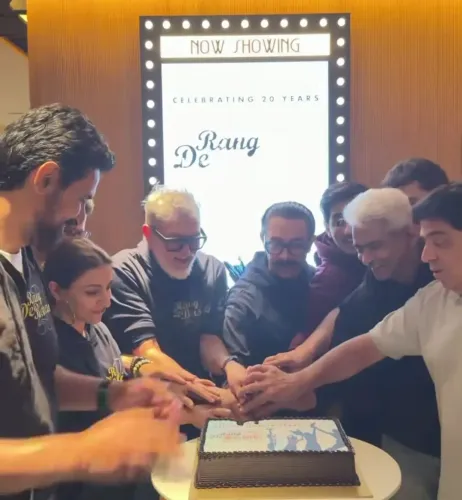
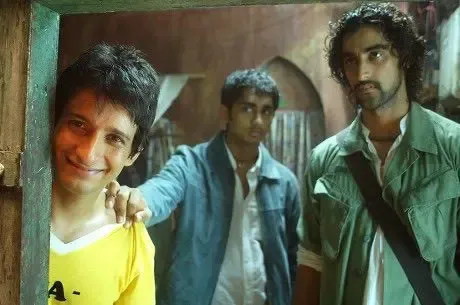
The original 'Luka Chuppi' was penned by Prasoon Joshi and sung by the late legendary vocalist Lata Mangeshkar, with the track picturised on Waheeda Rehman and R. Madhavan in the film. Rang De Basanti, directed by Rakeysh Omprakash Mehra, starred an ensemble cast including Aamir Khan, Siddharth, Sharman Joshi, Kunal Kapoor, Atul Kulkarni, Soha Ali Khan, and Alice Patten, with Waheeda Rehman, Anupam Kher, Kirron Kher, and Om Puri in supporting roles. The film's narrative — centred on youth rising against institutional injustice — has long made it a cultural touchstone for student movements in India.
Royal's Message to the Protesters
In the caption accompanying the video, Royal wrote: 'My prayers are with everyone who has already been affected and I sincerely hope there are no further casualties or injuries. May dialogue lead the way, not division, and bring us closer to a peaceful resolution.' She urged for a measured, non-violent path forward amid the ongoing unrest.
The Protests That Prompted Her Response
On Monday, violent clashes erupted as thousands of supporters of the Cockroach Janata Party (CJP) and students marched from Jantar Mantar towards Parliament, demanding the resignation of Union Education Minister Dharmendra Pradhan over recurring examination irregularities, including the NEET-UG paper leaks. The protests drew students, opposition leaders, and activists calling for accountability in India's education system. Delhi Police have since assured a thorough investigation into the violence that broke out during the demonstrations.
Jasleen Royal's Journey in Music and Cinema
Royal first entered Hindi cinema with the song 'Preet' for the 2014 film Khoobsurat, starring Sonam Kapoor and Fawad Khan. Since then, she has established herself as a prominent voice in contemporary Indian music. Her decision to use a song from Rang De Basanti — a film explicitly about youth-led dissent — to express solidarity is being seen as a deliberate artistic and political statement.
As the protests continue and demands for education reform grow louder, Royal's gesture reflects a broader pattern of artists lending their voice to public movements, a tradition with deep roots in Indian cultural history.
Point of View
And invoking it carries deliberate weight. What is notable here is the restraint: Royal stops short of political targeting, calling instead for dialogue, which distinguishes her statement from more partisan celebrity interventions. The NEET-UG controversy, however, is far from a cultural moment — it is a systemic failure in one of India's most high-stakes examinations, and the protests reflect genuine institutional distrust. Artist solidarity is visible; structural accountability remains absent.
NationPress
22 Jul 2026
Frequently Asked Questions
Why did Jasleen Royal sing 'Luka Chuppi' from Rang De Basanti?
Jasleen Royal sang 'Luka Chuppi' to express solidarity with students protesting across India over NEET-UG paper leaks and examination irregularities. She stated she 'couldn't stay silent' and used the song — from a film about youth rising against injustice — as a deliberate artistic gesture of support.
What are students protesting about?
Students are protesting against recurring examination irregularities, most notably the NEET-UG paper leaks, and are demanding the resignation of Union Education Minister Dharmendra Pradhan. Violent clashes broke out on Monday as thousands marched from Jantar Mantar towards Parliament in New Delhi.
Who originally sang 'Luka Chuppi' from Rang De Basanti?
'Luka Chuppi' was originally sung by the late legendary vocalist Lata Mangeshkar, with lyrics penned by Prasoon Joshi. The song was picturised on Waheeda Rehman and R. Madhavan in the 2006 film directed by Rakeysh Omprakash Mehra.
What did Jasleen Royal say about the protests?
Royal wrote that her prayers were with everyone affected and hoped for no further casualties or injuries. She called for dialogue over division and urged a peaceful resolution to the unrest.
What action have Delhi Police taken over the protest violence?
Delhi Police have assured a thorough investigation into the violence that erupted during Monday's march from Jantar Mantar to Parliament. No further details on arrests or findings have been confirmed as yet.