Javed Akhtar on why science and liberal arts must go hand in hand
Synopsis
Javed Akhtar — screenwriter of Sholay, lyricist of Lagaan, Urdu poet — has a message for engineers and artists alike: break the watertight compartments. His argument that liberal arts is what separates humans from computers is both a cultural provocation and a timely challenge to India's STEM-first education model.
Key Takeaways
Javed Akhtar called for integrating science and technology with liberal arts including history, literature, poetry, painting, and folk arts.
He argued that awareness of the liberal arts is 'the difference between a human being and a computer or a robot.' Akhtar criticised 'watertight compartments' in education, urging both scientists and humanities students to cross disciplinary lines.
He is a Padma Bhushan (2007) and Padma Shri (1999) recipient with five National Film Awards to his name.
His career spans the Salim–Javed screenwriting duo, acclaimed lyrics for films like Lagaan , and the Urdu poetry collection Tarkash .
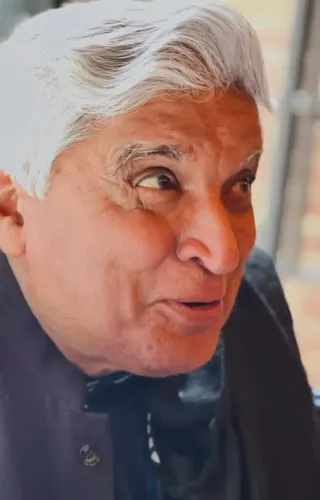
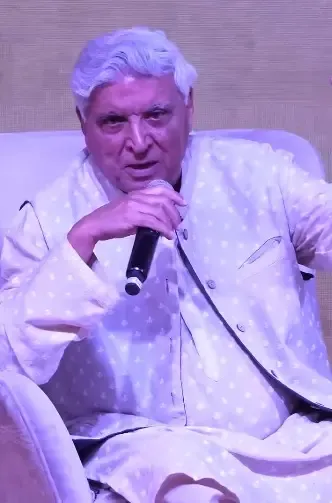
Veteran screenwriter, lyricist and poet Javed Akhtar has called for a deeper integration of science and technology with the liberal arts, arguing that subjects such as history, literature, poetry, and painting are essential to what makes a person fully human — and not merely a sophisticated machine.
The Core Argument
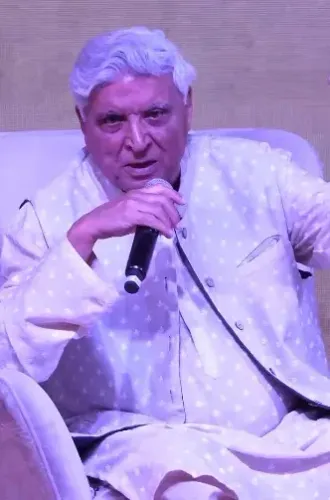
Speaking to reporters, Akhtar drew a sharp distinction between technical knowledge and humanistic understanding. 'Science and technology are a very important thing. But it is also important to have some awareness from the liberal arts. This is the difference between a human being and a computer or a robot,' he said.
He warned against what he called 'watertight compartments' — the tendency of professionals to confine themselves exclusively to their own domains. In his view, this intellectual siloing limits both personal growth and the broader contribution an individual can make to society.
A Two-Way Street
Akhtar's appeal was notably bilateral. He urged those working in the sciences to acquaint themselves with history, literature, poetry, painting, and folk arts. Equally, he said, those in the humanities and liberal arts should cultivate a foundational grasp of science and technology.
'Similarly, people in science should also have a certain information about liberal arts. History, literature, poetry, painting, folk arts. These watertight compartments are not right,' Akhtar said. The emphasis on folk arts is particularly notable — a reminder that cultural knowledge extends well beyond canonical texts and formal disciplines.
Who Is Javed Akhtar
Akhtar's perspective carries the weight of a career that has itself straddled multiple disciplines. He first rose to national prominence as one half of the celebrated screenwriting duo Salim–Javed, alongside Salim Khan. Together they wrote landmark Hindi films including Zanjeer (1973), Deewaar (1975), Sholay (1975), and Mr. India (1987), reshaping the grammar of Bollywood storytelling for a generation.
He subsequently reinvented himself as a lyricist of the first order, writing songs for films such as Silsila, 1942: A Love Story, Border, Refugee, and Lagaan. Beyond cinema, he is a recognised Urdu poet — his collection Tarkash is among the most acclaimed in contemporary Urdu verse.
Accolades and Standing
His cross-disciplinary achievements have been formally recognised at the highest levels. Akhtar has received five National Film Awards, the Padma Shri in 1999, and the Padma Bhushan in 2007. Few figures in Indian public life have navigated the worlds of popular cinema, literary poetry, and intellectual commentary with comparable ease — which is precisely why his call for bridging the arts-science divide resonates beyond the classroom.
Why It Matters Now
Akhtar's remarks arrive at a moment when India's education policy debate is actively grappling with similar questions. The National Education Policy (NEP) 2020 had already advocated for multidisciplinary learning at undergraduate level, yet implementation remains uneven across institutions. Critics of hyper-specialisation in STEM argue that graduates lacking cultural and historical grounding are ill-equipped for roles requiring empathy, ethical reasoning, and communication — skills that artificial intelligence and automation are unlikely to replicate in the near term.
Point of View
Placement records, salary benchmarks — all pull the other way. What makes Akhtar's intervention worth noting is not novelty but authority: here is someone who built a career precisely by combining the poetic and the populist, the literary and the commercial. The irony is that his own biography makes his argument better than any policy document could.
NationPress
25 Oct 2026
Frequently Asked Questions
What did Javed Akhtar say about science and liberal arts?
Javed Akhtar said that while science and technology are crucial to human progress, an understanding of liberal arts — including history, literature, poetry, painting, and folk arts — is what distinguishes human beings from computers and robots. He urged both scientists and arts students to break out of their disciplinary silos.
Why does Javed Akhtar believe liberal arts education matters?
Akhtar argues that liberal arts cultivate the distinctly human qualities — empathy, cultural awareness, historical sense — that technology alone cannot provide. He described rigid disciplinary boundaries as 'watertight compartments' that are 'not right' for holistic individual development.
Who is Javed Akhtar and what is he known for?
Javed Akhtar is a veteran screenwriter, lyricist, and Urdu poet. He co-wrote landmark films including Sholay (1975) and Deewaar (1975) as part of the Salim–Javed duo, and later wrote lyrics for Lagaan, Border, and Refugee. He has received the Padma Shri (1999), Padma Bhushan (2007), and five National Film Awards.
What awards has Javed Akhtar received?
Javed Akhtar has received five National Film Awards, the Padma Shri in 1999, and the Padma Bhushan in 2007, recognising his contributions to Indian cinema and literature.
How does Akhtar's view connect to India's education debate?
Akhtar's remarks echo the multidisciplinary learning goals of India's National Education Policy (NEP) 2020, which advocates for integrated curricula at undergraduate level. However, implementation remains uneven, and critics argue that STEM-focused institutions continue to marginalise humanistic learning despite the policy intent.