Javed Akhtar recalls producer's demand for a 'brand new story that came before'
Synopsis
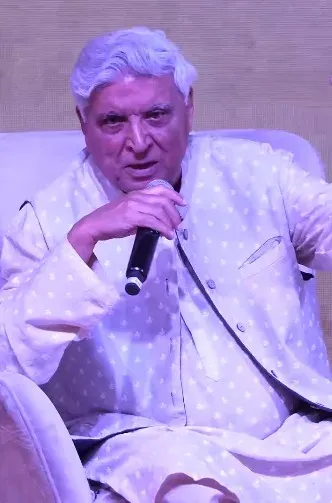
Javed Akhtar's decades-old anecdote about a producer who wanted a 'brand new story that has come before' has gone viral again — and it still lands. The clip from 'Movers & Shakers' is less a nostalgic throwback and more a live diagnosis of Bollywood's enduring allergy to narrative risk.
Key Takeaways
Javed Akhtar recounted his early experience narrating an original story to a Mumbai film producer in a resurfaced clip from 'Movers & Shakers' .
The producer praised the story but flagged a 'risk' — that it had never been made before — revealing the industry's preference for proven formulas.
Akhtar summarised the paradox: the producer wanted 'a brand new story which has come before.' The anecdote is widely seen as a critique of Bollywood's historically low appetite for original, risk-taking scripts.
The clip's renewed viral circulation has reignited debate about whether mainstream Hindi cinema has evolved in its openness to unconventional storytelling.
Veteran screenwriter Javed Akhtar once offered a masterclass in Bollywood's paradox of originality — and a resurfaced clip from the talk show 'Movers & Shakers' is reminding the internet why his observations about the film industry remain as sharp today as ever.
The Story Behind the Story
In the clip, Akhtar recounts one of his earliest encounters with a Bollywood producer, shortly after he arrived in Mumbai to try his luck in the industry. Having written what he believed was a genuinely fresh narrative, he managed — with considerable effort — to secure a rare appointment with a producer at a time when simply entering a film office was a feat in itself.
'I started narrating the story. I saw that the producer was listening very attentively. So I thought that it was interesting,' Akhtar recalled.
The Punchline That Defined an Era
What followed, however, was a moment of quiet revelation. After Akhtar finished his narration, the room fell silent. When he pressed the producer for a response, the reply he received was both polite and devastating.
'The story is good, but there is a risk. The risk is that I do not recollect watching this story on screen as yet. Till now, this story has not come in any movie,' the producer told him, according to Akhtar's account.
Akhtar's interpretation was immediate and incisive: 'I understood that he wants the same story which has come in the movie. The producer's demand is very interesting for a movie story. He wants a brand new story which has come before.'
What It Reveals About Bollywood's Risk Culture
The anecdote cuts to the heart of a structural tension that has long defined mainstream Hindi cinema — the industry's historically low appetite for narrative risk. Producers, particularly in the pre-multiplex era, routinely favoured proven formulas over untested storytelling, prioritising box-office certainty over creative ambition.
Notably, this dynamic is not unique to India. Hollywood studios have faced similar criticism for franchise-dependence and sequel culture. But Akhtar's framing — the demand for novelty that has already been validated — captures the contradiction with unusual precision.
Why the Clip Is Resonating Again
The video's renewed circulation on social media reflects a broader conversation about whether mainstream Indian cinema has meaningfully evolved in its willingness to back original scripts. While the rise of OTT platforms has opened new avenues for unconventional storytelling, big-budget theatrical releases continue to lean heavily on sequels, remakes, and established IP.
Akhtar, whose credits include screenplays for iconic films like Sholay and Deewar, has long been regarded as one of Hindi cinema's most authoritative voices on craft and industry culture. His recollection serves as both a personal memoir and an institutional critique — one that younger writers navigating the same corridors may find uncomfortably familiar.
Point of View
Now simply repackaged as franchise extensions and remake rights. OTT has created a parallel lane for original writing, but the theatrical mainstream still largely runs on the same risk calculus Akhtar encountered as a newcomer. The real question his clip raises is not whether the industry has changed, but whether the writers who followed him were forced to adapt to it — or managed to change it.
NationPress
22 Sept 2026
Frequently Asked Questions
What is the Javed Akhtar 'Movers & Shakers' clip about?
The clip shows veteran screenwriter Javed Akhtar recounting an early experience in Mumbai, where a film producer praised his original story but declined it because it had never been made before. Akhtar uses the anecdote to highlight Bollywood's paradoxical demand for 'a brand new story which has come before.'
Why has the Javed Akhtar clip gone viral again?
The clip has resurfaced on social media and is resonating because it captures an enduring tension in Hindi cinema — the industry's preference for proven formulas over genuinely original scripts. Its renewed circulation coincides with ongoing debates about creativity and risk in mainstream Bollywood.
What does the anecdote reveal about Bollywood's approach to original scripts?
It reveals a historically low risk appetite among mainstream producers, who have tended to favour stories with box-office precedent over untested narratives. Akhtar's account suggests this dynamic was entrenched even in the early decades of Hindi cinema.
Who is Javed Akhtar?
Javed Akhtar is one of Hindi cinema's most celebrated screenwriters and lyricists, known for iconic films including Sholay and Deewar. He is widely regarded as an authoritative voice on craft, industry culture, and the evolution of Indian cinema.
Has Bollywood's attitude towards original stories changed since Akhtar's early days?
The rise of OTT platforms has created more space for unconventional and original storytelling in India. However, big-budget theatrical releases continue to rely heavily on sequels, remakes, and established intellectual property, suggesting the core risk calculus Akhtar described has not fundamentally shifted in the mainstream.