Did the Kerala HC Uphold Creative Freedom by Dismissing Appeals Against ‘Haal’ Certification Cuts?
Click to start listening
Synopsis
The Kerala High Court has delivered a landmark ruling in favor of artistic freedom by dismissing appeals against the Malayalam film "Haal". This decision reaffirms the film's right to creative expression amidst controversies regarding its depiction of interfaith themes.
Key Takeaways
- The Kerala High Court supports artistic freedom.
- Dismissal of appeals reinforces creative expression.
- Judicial endorsement of filmmakers' rights.
- Significant ruling for Malayalam cinema.
- Implications for future film censorship cases.
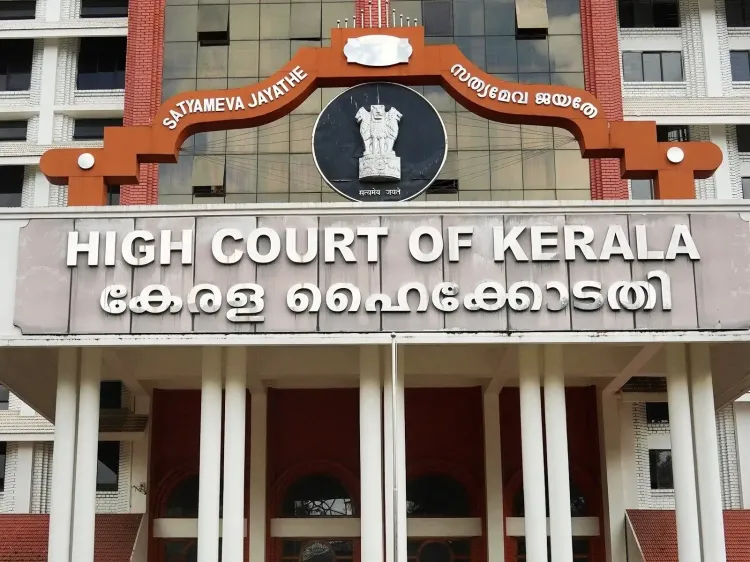
Kochi, Dec 12 (NationPress) In a groundbreaking judgment that champions artistic freedom, the Kerala High Court has dismissed the appeals brought forth by the Union Government and the Catholic Congress. These appeals challenged a previous ruling by a single judge which annulled the A-certificate along with six required cuts for the Malayalam film "Haal".
The ruling was delivered by a division bench consisting of Justice Arvind Sushrut Dharmadhikari and Justice P.V. Balakrishnan.
The Catholic Congress argued that the film inaccurately depicted the Bishop of Thamarassery, who is known for opposing interfaith marriages.
Additionally, they claimed that the film served as a form of propaganda aimed at minimizing concerns surrounding the controversial subject of “Love Jihad.”
However, the single judge previously ruled that the film's portrayal fell comfortably within the boundaries of creative expression and that films cannot be censored merely because they do not align with the beliefs or sensitivities of certain groups.
Separately, the Union Government and the Central Board of Film Certification (CBFC) contested the legitimacy of the filmmakers’ writ petition under Article 226 of the Constitution.
The division bench decided to view the film before reaching a verdict on the appeals.
Initially scheduled for release on September 12, "Haal", featuring Shane Nigam, faced delays in certification. This prompted the filmmakers to approach the High Court, leading the CBFC’s Revising Committee to issue an A-certificate but with six mandated cuts, which included the highly debated beef biriyani scene.
Following this, the producers and director challenged both the certification and the required cuts in court.
During the hearings before the single judge, objections were raised by the Catholic Congress and an RSS office-bearer.
After reviewing the film and deliberating extensively, the single judge ruled that four of the six mandated cuts were unnecessary.
These cuts included scenes showing a Christian heroine dancing in a burqa, visuals of the Thamarassery Bishop’s home, police interrogation scenes, and a suggestion to blur the name of a Christian institution.
Since the filmmakers had already consented to remove cuts five and six, which included the beef biriyani scene and specific dialogues referring to a cultural organization, these were not evaluated on their merits.
Ultimately, the single judge instructed the CBFC to reassess the certification without the contested cuts.
In response, the Catholic Congress and later the Union Government appealed to the division bench, which has now upheld the earlier ruling, further validating the constitutionally protected creative space for filmmakers.
Point of View
I assert that this ruling by the Kerala High Court is a vital endorsement of creative freedom, enhancing the artistic landscape of Indian cinema. It underscores the importance of allowing filmmakers to express diverse narratives without undue censorship, reflecting the democratic ethos that our nation upholds.
NationPress
13/12/2025
Frequently Asked Questions
What was the main controversy surrounding the film 'Haal'?
The controversy arose from the film's portrayal of the Bishop of Thamarassery and its alleged propaganda against interfaith marriages, which prompted challenges from the Catholic Congress and the Union Government.
What did the Kerala High Court decide regarding the film's certification?
The Kerala High Court upheld the decision of the single judge, which quashed the A-certificate and dismissed the mandated cuts, reinforcing the principle of artistic freedom.
What are the implications of this ruling for filmmakers?
This ruling strengthens the constitutional protection for creative expression in cinema, allowing filmmakers to explore diverse narratives without fear of censorship.