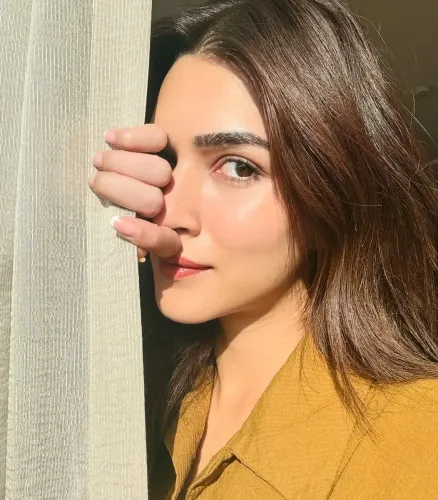
Kriti Sanon raises women's safety concerns on Daughter's Day 2026

Synopsis
On Daughter's Day, Kriti Sanon's Instagram message — asking people to imagine their daughter being followed, alone, at night — cut through the usual celebrity well-wishes. With Delhi students already on the streets demanding safer public spaces after an alleged gang rape in Kalkaji, the actress channelled a national mood: that celebrating daughters while normalising their daily fear is a contradiction India can no longer afford to ignore.
Key Takeaways
Kriti Sanon posted a women's safety message on Instagram on Daughter's Day, 27 September 2026 .
Her post asked followers to imagine a daughter being followed at night, calling out the normalisation of safety precautions like pepper spray, live location sharing, and fear-driven cab bookings .
Sanon said the real Daughter's Day will only come when women can walk alone at night, use public transport, and exist in public spaces without fear .
Her post follows the alleged gang rape of a 17-year-old girl at Aastha Kunj Park, Kalkaji, Delhi .
Hundreds of Delhi University students have been marching under the slogan 'Hum Auratein Azaad Hain' demanding safer public spaces.
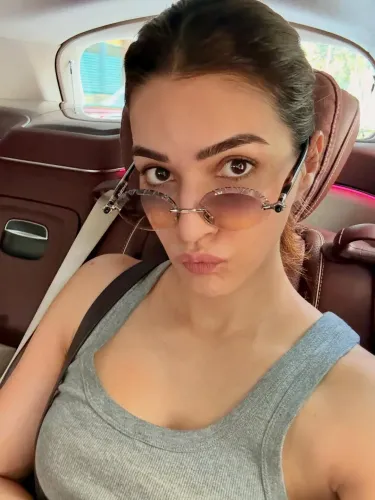
Actress Kriti Sanon used Daughter's Day 2026 to shine a spotlight on the everyday fears women across India navigate, sharing a heartfelt message on her official Instagram handle on Sunday, 27 September. Her post, which drew widespread attention, painted a visceral picture of the anxieties that millions of women in the country live with as a matter of routine.
What Kriti Sanon Said
In her post, accompanied by a broken heart emoji, Sanon asked followers to sit with a difficult scenario: “This Daughter’s Day, Imagine your daughter calling you saying, ‘I think I’m being followed by some men.’ Imagine her walking home alone at night, constantly looking over her shoulder. Imagine her phone dying before she reaches home. Now let that sink in..”
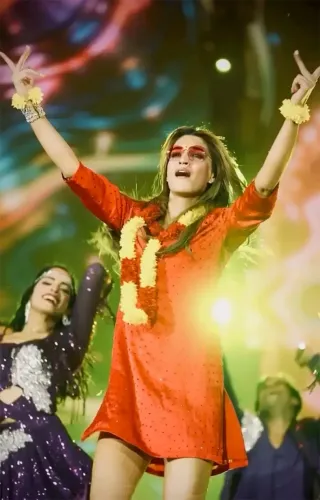
The actress, known for her recent appearance in 'Cocktail 2', went further to describe the everyday safety measures women are compelled to adopt as a lifestyle — from sharing live locations and carrying pepper spray to booking cabs instead of walking short distances. “We have forced her to make this her lifestyle,” she wrote pointedly.
The World She Envisions
Sanon articulated a clear benchmark for what genuine celebration of daughters would look like: “The day a daughter can walk home alone at night, sit in a park after dark, wear whatever the hell she wants, take public transport without fear, or simply exist in a public space without calculating the risk of being assaulted.. That is the day we should celebrate Daughter’s Day.”
She concluded her post with a message of solidarity: “To every daughter who has ever called home and said, ‘I’ve reached.’ May you one day live in a world where you don’t have to.. That is the world our daughters deserve! And that is the world we owe them!”
The Backdrop: Delhi Protests and Kalkaji Incident
Sanon’s post arrives against a charged backdrop. Following the alleged gang rape of a 17-year-old girl at Aastha Kunj Park in Kalkaji, Delhi, hundreds of students — particularly from Delhi University colleges — took to the streets demanding safer public spaces for women. Protesters have been marching under the slogan “Hum Auratein Azaad Hain” (We Women Are Free), demanding accountability and structural change.
The protests and Sanon’s intervention reflect a broader national conversation on public safety for women — one that resurfaces with painful regularity after high-profile incidents but has yet to translate into a sustained reduction in reported crimes against women.
Why This Resonates
India’s National Crime Records Bureau (NCRB) data has consistently shown that crimes against women remain a significant challenge, with cases ranging from street harassment to sexual assault reported across urban and rural India alike. Critics argue that systemic gaps — in policing, street lighting, public transport design, and fast-track courts — continue to leave women structurally vulnerable. Sanon’s post, notably, does not address any single perpetrator or incident; instead, it challenges the normalisation of women’s fear itself as a societal failure.
As Daughter’s Day observances draw to a close, the question Sanon poses — whether India can offer its daughters safety as a right rather than a privilege — is likely to remain at the centre of public discourse in the weeks ahead.
Point of View
Invoke a single case, or offer a single policy fix. That restraint is also its sharpest edge — by describing the safety checklist women run through every day as a 'forced lifestyle,' she moves the indictment from individual perpetrators to collective complicity. The timing, coinciding with the Kalkaji protests, gives the message political weight the actress may or may not have intended. What mainstream coverage often misses in these moments is the gap between the intensity of the public reaction and the absence of any structural follow-through: India has seen this cycle — outrage, candlelight marches, promises — repeat with grim regularity. The real test is whether Daughter's Day 2026 produces any policy response or simply exhausts itself on social media.
NationPress
27 Sept 2026
Frequently Asked Questions
What did Kriti Sanon post on Daughter's Day 2026?
Kriti Sanon shared an Instagram post on 27 September 2026 questioning women's safety in India, asking readers to imagine their daughter being followed at night and highlighting how safety precautions — pepper spray, live location sharing, fear-driven cab bookings — have become a forced daily routine for women. She wrote that the real Daughter's Day will only arrive when women can walk alone, use public transport, and exist in public spaces without fear.
What is the connection between Sanon's post and the Kalkaji incident?
Sanon's post coincides with widespread protests in Delhi following the alleged gang rape of a 17-year-old girl at Aastha Kunj Park in Kalkaji. While her message does not reference the case directly, it reflects the same national conversation about women's safety that the incident reignited.
What are Delhi University students protesting about?
Hundreds of students, particularly from Delhi University colleges, have taken to the streets demanding safer public spaces for women following the alleged gang rape at Kalkaji's Aastha Kunj Park. They have been marching under the slogan 'Hum Auratein Azaad Hain' (We Women Are Free).
Why does Daughter's Day carry added significance this year?
Daughter's Day 2026 falls amid heightened public anger over the alleged Kalkaji gang rape and ongoing student-led protests in Delhi. Several public figures, including Kriti Sanon, have used the occasion to pivot from celebratory messaging to demanding structural safety guarantees for women across India.
What is 'Hum Auratein Azaad Hain' and who is behind it?
'Hum Auratein Azaad Hain' — meaning 'We Women Are Free' — is the rallying slogan adopted by student protesters, predominantly from Delhi University colleges, who have been conducting marches demanding safer public spaces for women in the wake of the alleged Kalkaji incident.