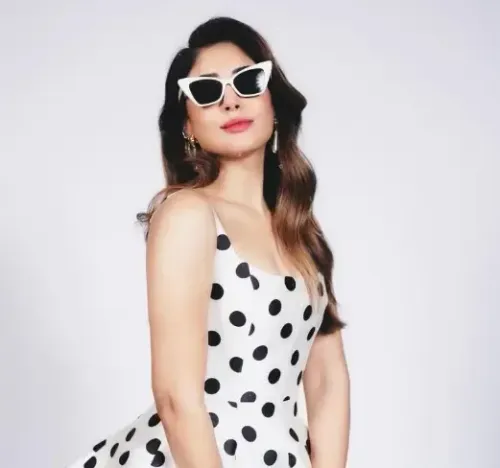
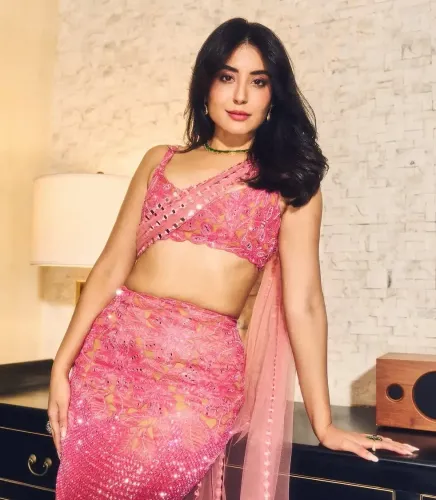
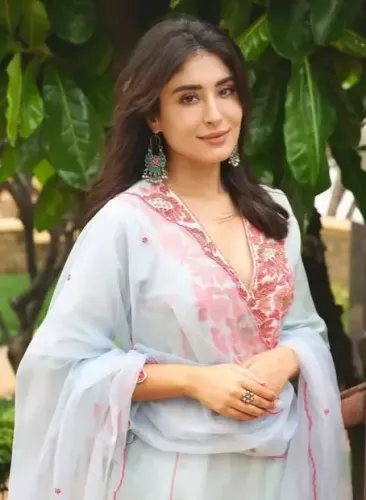
Kritika Kamra on why 1960s-70s fashion felt more personal than today's social media trends
Synopsis
Kritika Kamra's deep dive into 1960s-70s fashion for 'Matka King' revealed something the algorithm age has erased: when trends moved slower, fashion felt more personal. Regional identity, cultural roots, and individual interpretation shaped what you wore—not the feed. Today's homogenized global aesthetic, she argues, has flattened that richness into sameness.
Key Takeaways
Actress Kritika Kamra portrayed 1960s - 1970s characters in 'Bambai Meri Jaan' and 'Matka King' .
Fashion in the 1960s-70s was defined by decade-long trends, allowing deeper personal and regional expression.
Today's social media-driven cycles change trends within weeks, creating a "homogenized" global aesthetic.
In the 1970s , New York and South Bombay fashion felt distinctly different due to cultural and regional influences.
Indian women's styling of salwar kameezes and sarees reflected unique subcontinental tradition, even as global influences mixed in.
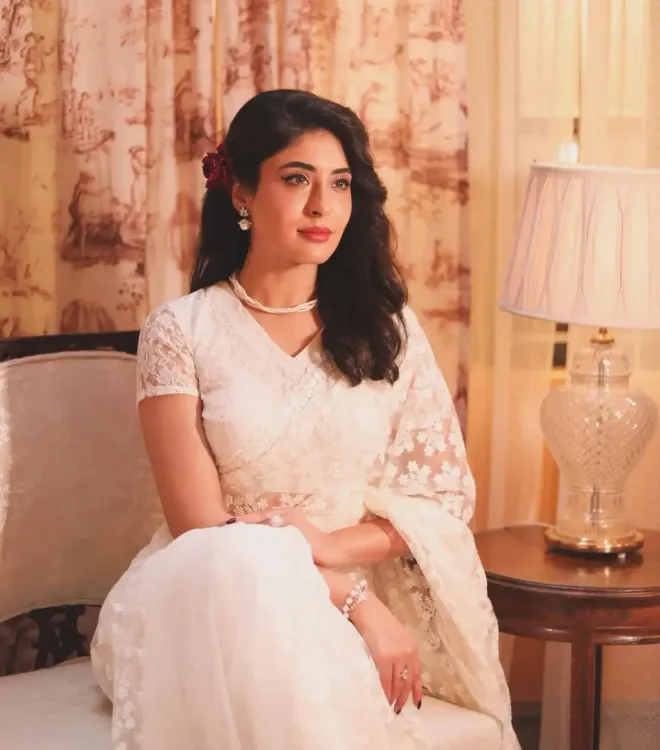
Actress Kritika Kamra, who has portrayed characters from the 1960s and 1970s in projects including 'Bambai Meri Jaan' and 'Matka King', argues that fashion from those decades felt more personal and culturally rooted than today's rapidly shifting, social media-driven aesthetic. Speaking to IANS on 7 May, Kamra reflected on how the slower pace of trend cycles in mid-century fashion allowed for deeper individual and regional expression.
The rhythm of trend cycles then versus now
Kamra observed that the 1960s, 1970s, and 1980s each had distinct defining aesthetics that persisted long enough to shape an entire decade's visual identity. "When we studied fashion history in fashion school, it was always defined by decades," she explained. Today, by contrast, trends cycle rapidly—sometimes within weeks—driven by constant social media feeds and viral moments. "Trends change really quickly," Kamra said, "and also because of social media, everybody's kind of seeing the same references, the same trends all over the world. So it doesn't feel as personal. It feels a bit more homogenized."
Cultural distinctiveness versus global homogeneity
Kamra's research for 'Matka King' deepened her appreciation for how fashion once carried region-specific and culture-specific interpretations. While broad trends existed in the 1960s and 1970s, she noted, individual cities and countries applied them through their own lens. "Each person had their own interpretation," she said. "When you see pictures of the West versus India, there's also a lot of cultural difference." The way Indian women wore tight salwar kameezes or draped sarees in particular styles was distinctly rooted in subcontinental tradition, even as global influences seeped in. "Some things that we borrowed from there, some things that we had our own," Kamra reflected.
How geography shaped fashion identity
The contrast between New York and South Bombay fashion in the 1970s exemplified this regional distinctiveness. "The fashion of New York feels different from the fashion of South Bombay in the 70s," Kamra observed. That difference arose not from gatekeeping but from the organic interplay of local culture, available materials, climate, and social values. The mixing of global and local influences created something neither purely Western nor purely Indian, but authentically rooted in place and time.
Personal style versus algorithmic trends
Reflecting on her own approach to fashion, Kamra concluded: "I have always dressed for myself." That philosophy—dressing for personal identity rather than algorithmic visibility—mirrors the ethos she observed in mid-century fashion. The implication is clear: when trends move slower and social validation is not instantaneous, individuals have space to develop a coherent personal aesthetic.
Point of View
But the slower cycle meant individual cities and communities had time to develop distinct visual languages. Today's algorithm—Instagram, TikTok, Pinterest—flattens geography and culture into a single global feed. The result is that a teenager in Mumbai and one in Manhattan now chase identical trends within hours. Fashion has become less a reflection of who you are and more a race to what's viral. Kamra's call to dress 'for yourself' is quietly radical in an age where the self is increasingly defined by the feed.
NationPress
27 Sept 2026
Frequently Asked Questions
Why does Kritika Kamra believe 1960s-70s fashion felt more personal?
Because trends in those decades persisted long enough to define entire decades, allowing individuals and regions to develop distinct interpretations. Today's social media-driven cycle changes trends within weeks, creating a homogenized global aesthetic where everyone sees the same references simultaneously.
How did regional identity shape fashion in the 1970s according to Kamra?
Cities like New York and South Bombay developed visually distinct fashion identities rooted in local culture, climate, and values. Indian women's styling of salwar kameezes and sarees reflected subcontinental tradition, while Western fashion evolved differently—creating authentic regional differences that social media has since flattened.
What role did Kamra's research for 'Matka King' play in her observations?
Her deep dive into 1960s-70s fashion and film archives for the project revealed how thoroughly culture, geography, and individual interpretation shaped what people wore. This hands-on research contrasted sharply with today's homogenized, algorithm-driven trends.
How does Kamra describe the impact of social media on modern fashion trends?
She argues that social media has accelerated trend cycles and created a homogenized global aesthetic, where everyone sees the same references worldwide. This leaves little room for personal interpretation or regional distinctiveness, making fashion feel less personal than it did in slower-moving decades.