Kumar Sanu on Gulshan Kumar's assassination: 'The golden era ended that day'
Synopsis
Nearly three decades after Gulshan Kumar's killing, Kumar Sanu says the wound never healed — the golden era of Hindi film music died with the T-Series founder, Nadeem-Shravan fell apart, and no one has since matched Gulshan Kumar's ability to take Indian music to the world.
Key Takeaways
Kumar Sanu described Gulshan Kumar as the defining force of Hindi film music's golden era during the 1990s .
Sanu credits Gulshan Kumar with teaching artists, including himself, to demand fair payment for their work.
Gulshan Kumar's assassination on 12 August 1997 in Mumbai triggered a collapse of key industry collaborations, including the split of composer duo Nadeem–Shravan .
Sanu stated that no one since has matched Gulshan Kumar's ability to predict hit music and distribute it globally.
The remarks came during promotions for Sanu's new song 'Suniyo Zara' at his Andheri West home.
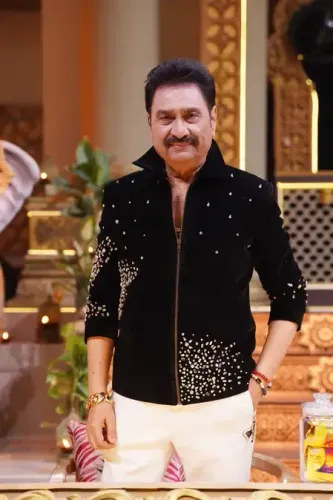
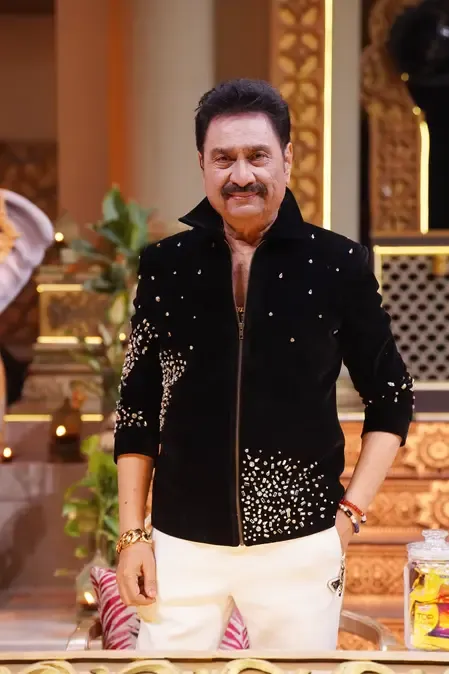
Veteran playback singer Kumar Sanu has said that the assassination of music mogul Gulshan Kumar marked the end of a golden era in Hindi film music and triggered a slow but irreversible unravelling of the industry's creative ecosystem. Sanu made the remarks during the promotional activities for his new song 'Suniyo Zara', speaking at his residence in Andheri West, Mumbai.
The Golden Era That Was Lost
"Till the time he was here, it was a golden era for Hindi film music," Sanu said. He described Gulshan Kumar not merely as a businessman or music lover, but as a visionary who could predict what music would work and, crucially, knew how to take it to a global audience. "No one had all these techniques better than him. Even today, no one has it," he added.
Sanu was emphatic about Gulshan Kumar's personal influence on his own career, saying, "I am not saying he is my godfather, he is my godfather." The sentiment underscores how central Gulshan Kumar was not just to the industry's commercial machinery but to individual artists' trajectories.
How the Industry Unravelled After the Killing
Sanu pointed to a chain of consequences that followed Gulshan Kumar's death. "After Gulshan ji's death, the industry changed completely," he said, noting that many film music rights that the mogul regularly acquired stopped finding a similarly passionate buyer. The ripple effects, he argued, were felt across collaborations and partnerships. Nadeem–Shravan, one of the most celebrated composing duos of the 1990s, split apart — a development Sanu linked directly to the vacuum left behind. "Nadeem went away," he recalled. "Then all the music directors who used to make good quality songs, everyone was affected."
The Lessons Gulshan Kumar Taught Artists
Beyond the commercial dimension, Sanu highlighted what he described as Gulshan Kumar's role as a mentor who advocated for artists' financial rights. "Gulshan ji was the man. He taught us that a singer should take money. He taught us, 'You should take your money. Why do you sing so hard?'," Sanu recalled. This, he said, was a philosophy that shaped an entire generation of playback artists who had previously been undervalued.
The Lasting Impact on Hindi Film Music
Gulshan Kumar, founder of T-Series, was shot dead outside a temple in Mumbai on 12 August 1997 — a crime that sent shockwaves through Bollywood and the music business. His death remains one of the most consequential moments in the history of the Indian music industry. Sanu's remarks, made nearly three decades later, reflect a continuing sense of loss. "Definitely it's a big loss for our industry," he said. The interview comes amid renewed public interest in the era's musical legacy, with Sanu's return to the spotlight through 'Suniyo Zara' prompting reflection on a chapter of Hindi music that many argue has never been replicated.
Point of View
And therefore fragile, the industry's infrastructure was in the 1990s. Three decades on, the fact that no equivalent tastemaker-distributor has emerged also points to a structural gap that streaming platforms have filled commercially but not creatively. The timing — Sanu speaking up during a new song's promotions — should not distract from the substance: his account adds a rare first-person layer to one of Bollywood's most consequential tragedies.
NationPress
11 Nov 2026
Frequently Asked Questions
What did Kumar Sanu say about Gulshan Kumar's assassination?
Kumar Sanu said that Gulshan Kumar's assassination in 1997 ended the golden era of Hindi film music and had far-reaching negative consequences for the industry. He described Gulshan Kumar as a visionary who could predict hit music and knew how to distribute it globally — skills he said no one has since replicated.
Who was Gulshan Kumar and why does his death still matter?
Gulshan Kumar was the founder of T-Series and one of the most powerful figures in Indian music in the 1980s and 1990s. He was shot dead in Mumbai on 12 August 1997. Artists like Kumar Sanu credit him with shaping the commercial and creative landscape of Hindi film music during its most celebrated period.
Why did Nadeem-Shravan split after Gulshan Kumar's death?
Kumar Sanu suggested that Gulshan Kumar's absence removed a unifying commercial force that had supported key industry relationships, including that of composer duo Nadeem–Shravan. Without that anchor, collaborations that depended on his patronage and vision began to fragment, eventually leading to Nadeem's departure.
What is 'Suniyo Zara' and why is Kumar Sanu in the news now?
'Suniyo Zara' is a new song to which Kumar Sanu has lent his voice. He made these remarks about Gulshan Kumar during the song's promotional activities at his Andheri West residence in Mumbai on 11 November 2026.
What role did Gulshan Kumar play in artists' financial rights?
According to Kumar Sanu, Gulshan Kumar actively advocated for playback singers to demand proper payment for their work, telling them directly: 'You should take your money. Why do you sing so hard?' Sanu credited this mentorship with changing how an entire generation of artists valued their own craft.