CM Mohan Yadav Marks National Education Day, Calls for Inclusive Schooling
Synopsis
On National Education Day, 11 November 2026, Madhya Pradesh CM Dr. Mohan Yadav pledged to spread quality and inclusive education to every child, honouring Maulana Abul Kalam Azad's legacy and echoing the goals of NEP 2020.
Key Takeaways
National Education Day is observed on 11 November every year to mark the birth anniversary of India's first Education Minister, Maulana Abul Kalam Azad .
Madhya Pradesh CM Dr.
Mohan Yadav called education the foundation of an empowered, aware and self-reliant society.
He pledged to ensure quality, all-inclusive education reaches every child in the country.
The observance has been held annually since 2008 , when the Government of India instituted it.
The appeal aligns with the National Education Policy 2020 goal of universal quality school access by 2030 .
Madhya Pradesh participates in the Samagra Shiksha scheme for school infrastructure and enrollment improvement.
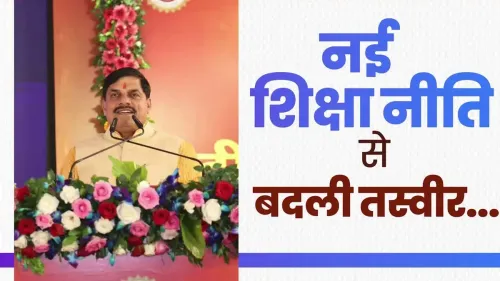
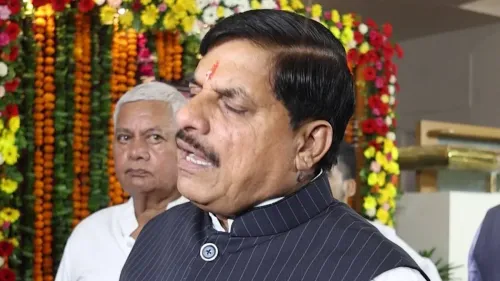
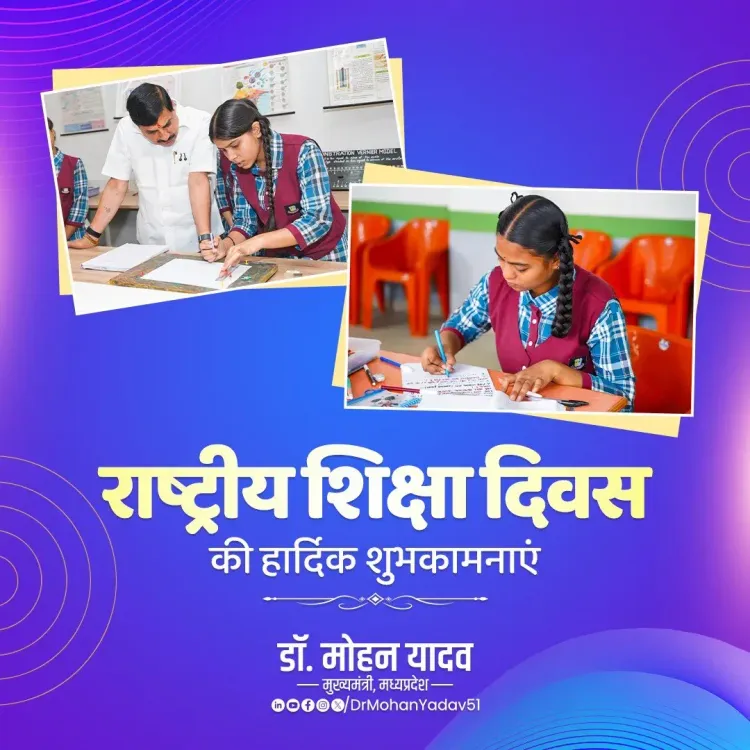
Every child deserves a seat in the classroom — that is the promise Madhya Pradesh Chief Minister Dr. Mohan Yadav renewed on National Education Day, 11 November 2026, calling on citizens to commit to quality and inclusive education that reaches every corner of the country.
Posting on the occasion, Dr. Yadav wrote: 'शिक्षा केवल ज्ञान प्राप्त करने का माध्यम ही नहीं, बल्कि सशक्त, जागरूक और आत्मनिर्भर समाज के निर्माण का आधार है' — 'Education is not merely a means of acquiring knowledge, but the very foundation for building an empowered, aware and self-reliant society.' He called for a collective pledge to spread quality, all-inclusive education and to ensure that every child has access to learning opportunities.
Why November 11 — the legacy of Maulana Abul Kalam Azad
National Education Day has been observed every year since 2008 to honour the birth anniversary of Maulana Abul Kalam Azad, India's first Education Minister and one of the chief architects of the country's post-independence educational institutions. Azad's conviction that education was inseparable from national self-determination continues to echo in the language state leaders choose on this day — words like 'empowerment', 'awareness', and 'self-reliance' draw directly from that legacy.
NEP 2020 and Madhya Pradesh's role in reaching every child
The broader policy frame behind Dr. Yadav's message is the National Education Policy 2020, which set an ambitious target of universal access to quality school education by 2030. Madhya Pradesh has been a participating state in the centrally-driven Samagra Shiksha scheme, which targets infrastructure upgrades and improved enrollment across government schools. The Chief Minister's emphasis on 'every child' and 'inclusive education' aligns squarely with both the NEP's equity goals and the state's obligations under that programme.
The sentiment is shared annually by leaders across India's states on this date, but it also arrives at a moment when school-level implementation of NEP provisions — from the foundational literacy framework to the restructured 5+3+3+4 curriculum design — is very much a live administrative challenge for state governments.
The day is a reminder: policy frameworks set the direction, but it is state-level execution — budgets, teacher training, school infrastructure — that decides whether that pledge to 'every child' is fulfilled or just repeated.
Point of View
A Congress icon, is a cross-partisan move that keeps the focus on shared national goals rather than partisan credit. The emphasis on 'every child' and 'self-reliance' maps onto a broader BJP developmental vocabulary around Atmanirbhar Bharat. Ultimately, the day serves as an annual accountability benchmark: the gap between such pledges and actual school-level outcomes in states like Madhya Pradesh will be the real measure of this commitment.
NationPress
11 Nov 2026
Frequently Asked Questions
Why is National Education Day celebrated on 11 November?
11 November is the birth anniversary of Maulana Abul Kalam Azad , India's first Education Minister. The Government of India declared this date as National Education Day in 2008 to honour his contributions to building the country's educational institutions.
What did Madhya Pradesh CM Mohan Yadav say on National Education Day 2026?
Dr. Mohan Yadav described education as the foundation of an empowered, aware and self-reliant society, and called for a collective pledge to spread quality, inclusive education and ensure every child has access to learning opportunities.
What is the National Education Policy 2020?
The National Education Policy 2020 is India's framework for transforming school and higher education, with a focus on access, equity and quality. It sets a target of universal quality school education by 2030 and introduces a restructured 5+3+3+4 curriculum design.
What is Samagra Shiksha and does Madhya Pradesh participate in it?
Samagra Shiksha is a centrally-driven scheme targeting school infrastructure upgrades and improved enrollment in government schools. Madhya Pradesh is a participating state under this programme.
Who was Maulana Abul Kalam Azad?
Maulana Abul Kalam Azad was India's first Education Minister after independence and a key architect of the country's early educational institutions. His birth anniversary is observed as National Education Day to recognise his vision of education as central to national development.