CM Mohan Yadav Launches NEP-2020 Workshop in Bhopal
Synopsis
Madhya Pradesh CM Dr. Mohan Yadav inaugurated a one-day NEP-2020 workshop in Bhopal on August 4, 2026, chaired by Governor Mangubhai Patel. Multiple MoUs were signed between national and international institutions covering AI, cyber security, skill development, and employment-oriented education.
Key Takeaways
Mohan Yadav inaugurated a one-day workshop in Bhopal on August 4, 2026 focused on aligning university curricula with National Education Policy 2020 .
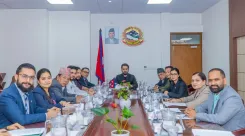
Governor Mangubhai Patel chaired the event, which brought together educationists, scientists, industry experts, and vice-chancellors.
The Department of Higher Education exchanged MoUs between national and international institutions at the event.
Partnership domains include AI, digital skills, cyber security, entrepreneurship, climate studies, good governance, and skill development .
The initiative is framed as a direct push to create employment-oriented opportunities for Madhya Pradesh's youth .
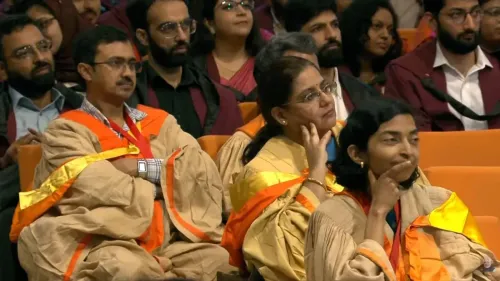
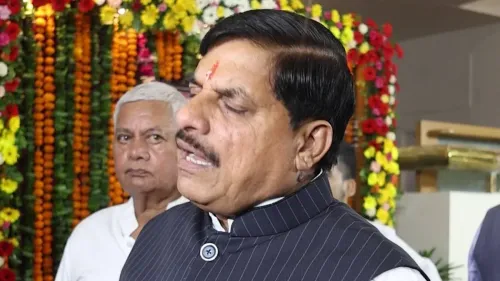
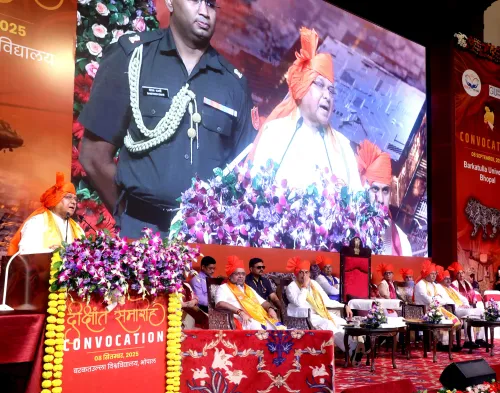
Madhya Pradesh Chief Minister Dr. Mohan Yadav opened a one-day workshop in Bhopal on Tuesday, August 4, 2026, bringing together educationists, scientists, industry experts, and vice-chancellors under the chairmanship of Governor Shri Mangubhai Patel — all focused on a single mandate: modernising university curricula to align with the National Education Policy 2020.
MoUs that map a new academic terrain
The workshop was not merely a conversation. The Department of Higher Education formalised multiple Memoranda of Understanding between national and international institutions at the event — agreements designed to inject real-world relevance into Madhya Pradesh's higher education ecosystem. The domains covered read like a blueprint for the next decade of employment: digital skills, artificial intelligence, innovation, research, entrepreneurship, environment and climate studies, cyber security, good governance, skill development, and employment-oriented education.
What NEP-2020 demands — and why this workshop matters
India's National Education Policy 2020 is the country's most sweeping education reform in over three decades, calling for multidisciplinary learning, flexible degree structures, and a deep integration of vocational and technology-driven content into mainstream academics. For states like Madhya Pradesh, translating that national vision into updated syllabi and institutional partnerships is the hard, unglamorous work that determines whether the policy delivers on its promise.
By convening vice-chancellors alongside industry specialists and scientists in a single room — with the Governor presiding — the state signalled that curriculum reform is being treated as a governance priority, not an administrative checkbox. The MoUs with international institutions add a cross-border dimension, potentially opening research collaborations and student exchange pathways that were previously out of reach for many of the state's universities.
Opportunities being built for Madhya Pradesh's youth
Chief Minister Yadav, addressing the gathering, framed the initiative in terms of youth opportunity: the new partnerships and modernised courses, he said, will create 'new momentum and new opportunities for young people' — particularly in future-facing fields like AI and cyber security where employer demand already outpaces graduate supply across India.
Madhya Pradesh is home to a large and young population, and its universities have historically lagged behind metropolitan institutions in industry linkages and research output. A coordinated push — anchored in NEP-2020 and backed by signed institutional agreements — represents a structural attempt to close that gap rather than paper over it.
The question now is implementation: whether the MoUs translate into active programmes, faculty training, and updated assessments, or remain ceremonial signatures. The workshop's cross-sectoral composition — academia, science, industry, and administration in one room — at least suggests the state is asking the right people to answer that question together.
Point of View
Vice-chancellors, and industry in a single room reflects a BJP-governed state's effort to demonstrate governance competence on education, a sector where the party has invested significant political capital nationally. The emphasis on AI, cyber security, and climate education also tracks a broader Union government push to future-proof India's graduate workforce ahead of a rapidly shifting labour market. Whether the MoUs produce measurable curriculum change will be the real test of this initiative's seriousness.
NationPress
18 Sept 2026
Frequently Asked Questions
What is the NEP-2020 workshop launched by CM Mohan Yadav in Bhopal?
It is a one-day workshop inaugurated by Madhya Pradesh Chief Minister Dr. Mohan Yadav on August 4, 2026, in Bhopal, chaired by Governor Mangubhai Patel, aimed at modernising university curricula in line with the National Education Policy 2020.
What MoUs were signed at the Bhopal higher education workshop?
The Department of Higher Education signed MoUs between national and international institutions covering areas such as AI, digital skills, cyber security, innovation, research, entrepreneurship, climate studies, good governance, and skill development.
Who chaired the NEP-2020 workshop in Bhopal on August 4, 2026?
Madhya Pradesh Governor Shri Mangubhai Patel chaired the one-day workshop, with Chief Minister Dr. Mohan Yadav inaugurating the event.
How does the Madhya Pradesh NEP-2020 workshop benefit students?
The MoUs and curriculum modernisation are intended to create employment-oriented education and new opportunities for youth in future-ready fields like AI, cyber security, and entrepreneurship.
What is the National Education Policy 2020 and why does it matter for Madhya Pradesh?
NEP-2020 is India's most comprehensive education reform in over three decades, mandating multidisciplinary, flexible, and vocationally integrated learning. For Madhya Pradesh, implementing it means updating university syllabi and forging institutional partnerships to close the gap with leading national institutions.