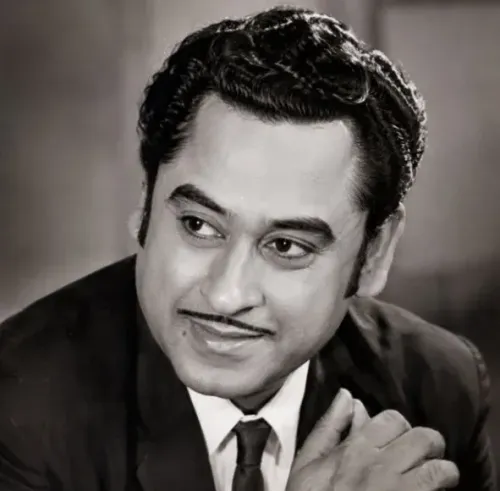
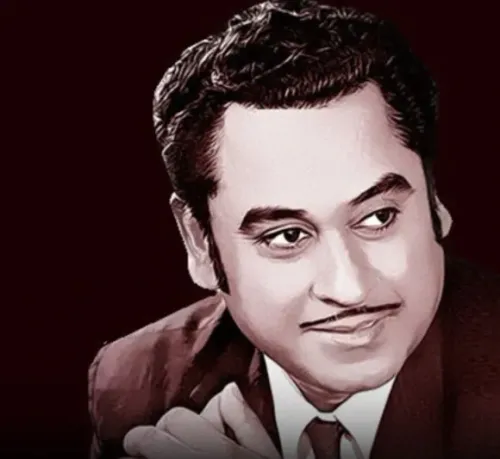
Kumar Sanu: 'Aashiqui' helped me break free from Kishore Kumar comparisons

Synopsis
Kumar Sanu has revealed that 'Aashiqui' was the deliberate turning point where he stopped being 'a clone of Kishore Da' and built his own identity — a candid admission from a singer with over 25,000 songs, now promoting new track 'Suniyo Zara'.
Key Takeaways
Kumar Sanu says early comparisons to Kishore Kumar were valid because he was singing cover versions of Kishore Da's songs.
The 'Aashiqui' album was the conscious turning point where Sanu worked to forge a distinctive singing identity.
Sanu has recorded over 25,000 songs across his career in Hindi film music.
He made the remarks at his home in Andheri West, Mumbai during promotions for his new song 'Suniyo Zara' .
Sanu noted that all legendary singers initially followed idols before creating their own identity through the right opportunity.
Veteran playback singer Kumar Sanu, who has recorded over 25,000 songs across his career, has opened up about the pivotal moment he found his own voice — and how the blockbuster album 'Aashiqui' marked the turning point that separated him from long-standing comparisons to the late Kishore Kumar.
The Kishore Kumar Shadow
Speaking at his residence in Andheri West, Mumbai during the promotional run for his new song 'Suniyo Zara', Sanu acknowledged that the comparisons were not entirely misplaced. In his early years, he had regularly sung cover versions of Kishore Kumar's songs, making a stylistic overlap almost inevitable.
'For me, the most important thing was the style of singing. In my earlier songs, you must have felt that there is a touch of Kishore Da. People said initially that this is a copy of Kishore Da or a clone of Kishore Da. I got to hear this from the beginning,' he said.
Rather than taking offence, Kumar Sanu said he chose to treat the comparison as a creative challenge. 'So when I got to hear it, I took it positively and found a way to tackle it,' he added.
How 'Aashiqui' Changed Everything
The 'Aashiqui' soundtrack, which became one of Hindi film music's defining albums of its era, proved to be the crucible in which Sanu forged a distinctive identity. He recalled that prior to 'Aashiqui', his output largely consisted of dubbing and covering Kishore Kumar's repertoire.
'I tried a lot to separate myself from Kishore Da with 'Aashiqui'. Before that, I was dubbing all the songs of Kishore Da as I was doing their cover versions. I thought if I follow the footsteps of Kishore Da, then I can only go to a limit. I had to achieve something of my own to go beyond the boundaries,' he explained.
The gamble paid off. The album became a super hit, and Sanu noted that the transition was deliberate rather than accidental. 'In 'Aashiqui' sometimes it sounds like Kishore Da, sometimes it looks like Kumar Sanu. I tried very hard to establish this. Many people liked it and it became a super hit,' he said.
A Pattern Shared by Legends
Sanu also placed his own journey within a broader artistic tradition, observing that virtually every legendary singer began by emulating an idol before carving out an independent identity. The key, he argued, was seizing the right opportunity to demonstrate what one's own voice could do.
'How did they make their identity? When they got the right opportunity, they showed what they can do with their voice and talent. I accepted it,' he said.
What's Next for Kumar Sanu
Kumar Sanu is currently promoting his new track 'Suniyo Zara', continuing an active career that has spanned decades and produced one of Bollywood's largest individual song catalogues. The candid reflections underscore how foundational the 'Aashiqui' era remains to his artistic legacy — and how consciously he shaped that transition.
Point of View
000 songs traces his identity to a single album says as much about how formative early branding is in Bollywood as it does about Sanu himself. The more interesting question mainstream coverage skips: how many singers after him faced the same 'Kumar Sanu clone' label, and did they find their own 'Aashiqui' moment?
NationPress
9 Nov 2026
Frequently Asked Questions
Why was Kumar Sanu compared to Kishore Kumar early in his career?
Kumar Sanu was compared to Kishore Kumar because he was actively singing cover versions and dubbings of Kishore Kumar's songs early in his career, making a stylistic overlap natural. He has acknowledged the comparison was fair given that context.
How did 'Aashiqui' help Kumar Sanu establish his own identity?
The 'Aashiqui' album gave Kumar Sanu the platform to deliberately blend and then separate his style from Kishore Kumar's influence, becoming a super hit in the process. He says he 'tried very hard' on that album to show his own voice alongside any residual Kishore Da touch.
How many songs has Kumar Sanu recorded in his career?
Kumar Sanu has recorded over 25,000 songs across his career, making him one of the most prolific playback singers in Hindi film music.
What is Kumar Sanu currently promoting?
Kumar Sanu is currently promoting his new song 'Suniyo Zara', during the promotional activities for which he made these candid remarks about his career journey.
What broader point did Kumar Sanu make about legendary singers?
Kumar Sanu noted that virtually all legendary singers start by following an idol, and their true identity emerges when they get the right opportunity to showcase their own voice and talent — a pattern he said he consciously followed with 'Aashiqui'.