Meenakshi Seshadri recreates 'Anjali Anjali' in tribute to A.R. Rahman's 1994 classic

Synopsis
Meenakshi Seshadri has recreated A.R. Rahman's 'Anjali Anjali' from the 1994 Tamil classic Duet — dressed in a saree, performing with the grace that defined her career. More than 30 years after the film, the song still commands reality TV stages, and Seshadri's tribute is a quiet but striking reminder of both Rahman's early brilliance and her own enduring artistic identity.
Key Takeaways
Meenakshi Seshadri shared a recreation of 'Anjali Anjali' on 30 July , dressed in a saree and performing classical dance movements.
The song is from the 1994 Tamil film Duet , directed by K.
Balachander and composed by A.R.
Original vocals were by S.P.
Balasubrahmanyam and K.S.
Chithra ; the film starred Prabhu and Meenakshi Seshadri .
The original song was filmed in Visakhapatnam ; Seshadri noted that 'Anjali' means a divine gift offered with devotion.
The track remains a fixture on reality TV singing competitions, regarded as a technically challenging piece.
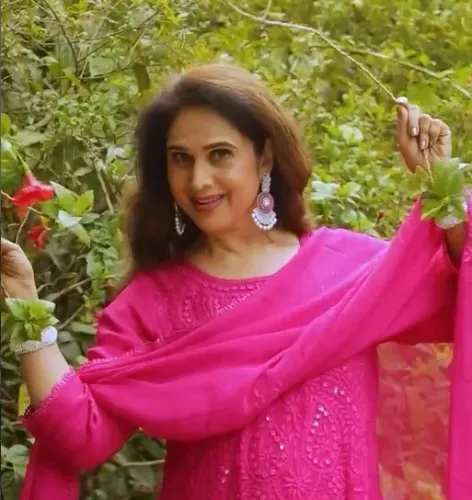
Veteran actress Meenakshi Seshadri has shared a heartfelt recreation of the beloved song 'Anjali Anjali' from the 1994 Tamil film Duet, composed by A.R. Rahman, calling it her humble offering to lovers of art, music, and dance. The video, shared on 30 July, sees the actress dressed in a saree, performing with graceful movements and expressive artistry that recall her celebrated screen presence.
A Song That Has Stood the Test of Time
Composed by A.R. Rahman and directed by K. Balachander, Duet remains a landmark in Tamil cinema. The song 'Anjali Anjali' featured vocals by S.P. Balasubrahmanyam and K.S. Chithra, and starred Prabhu and Meenakshi Seshadri in the lead roles. More than three decades on, the track continues to be a staple on reality television singing competitions, where it is regarded as a technically demanding and emotionally resonant piece.
The Meaning Behind 'Anjali'
Seshadri explained that the word 'Anjali' refers to a divine offering made with devotion and reverence — a meaning she said deepened her connection to the song. The original song was filmed in Visakhapatnam, a detail she shared alongside her recreation. Describing the track, she wrote: 'When music and muse almost seem to become one.'
What Meenakshi Said
In her own words accompanying the video, the actress wrote: 'This beautiful song of a film duet made in Tamil language under the music direction of Rahman. This song is still sung as a competition in reality tv. Original song was filmed in Visakhapatnam. Anjali means divine gift given with devotion. Here is my humble and heartfelt offering to all lovers of art, music, dance, performing arts. "Anjali Anjali."'
Seshadri's Enduring Legacy
Best known for her role in the Hindi film Damini, Meenakshi Seshadri was one of the most prominent actresses of the 1980s and 1990s, celebrated equally for her acting and classical dance training. Her recreation of 'Anjali Anjali' is the latest in a series of cultural moments that have kept her connected to her artistic roots and to audiences who grew up watching her. The tribute is a reminder of Rahman's early genius and the timeless quality of K. Balachander's filmmaking.
Point of View
Whose uncompromising artistic vision shaped an entire generation of South Indian cinema. Seshadri's tribute quietly honours both, and her choice to frame it as a devotional offering rather than a performance is itself a considered artistic act.
NationPress
13 Sept 2026
Frequently Asked Questions
What song did Meenakshi Seshadri recreate?
Meenakshi Seshadri recreated 'Anjali Anjali', a song from the 1994 Tamil film Duet, composed by A.R. Rahman. The original featured vocals by S.P. Balasubrahmanyam and K.S. Chithra.
What does 'Anjali' mean?
'Anjali' refers to a divine offering made with devotion and reverence. Seshadri highlighted this meaning when sharing her recreation, describing her video as her own heartfelt offering to lovers of art and music.
Where was the original 'Anjali Anjali' song filmed?
The original song was filmed in Visakhapatnam, as shared by Meenakshi Seshadri alongside her recreation video.
Who directed the film Duet and who starred in it?
Duet (1994) was directed by K. Balachander and starred Prabhu and Meenakshi Seshadri in the lead roles. The music was composed by A.R. Rahman.
Why is 'Anjali Anjali' still popular today?
The song continues to be performed on reality television singing competitions, where it is considered a technically demanding and emotionally rich piece. Its enduring popularity reflects both A.R. Rahman's compositional quality and the lasting appeal of K. Balachander's filmmaking.