Anuradha Paudwal pays tribute to Suman Kalyanpur: ‘Legacy will never fade’
Synopsis
Anuradha Paudwal's farewell note to Suman Kalyanpur marks more than a personal goodbye — it underscores the closing of Hindi cinema's golden vocal era. With Kavita Krishnamurti calling her the ‘last of the golden era’, the tributes signal how few links remain to the 1960s soundscape that Kalyanpur helped define.
Key Takeaways
Anuradha Paudwal paid tribute to Suman Kalyanpur on social media, calling her a legend whose ‘legacy never fades’.
Suman Kalyanpur passed away on 31 May 2025 at the age of 89 .
Singer Kavita Krishnamurti called her the ‘last of the golden era’ in a separate tribute.
Born in 1937 , Kalyanpur was known for hits like ‘Na Na Karte Pyar Tumhi Se Kar Baithe’ and ‘Dil Ek Mandir Hai’.
Veteran playback singer Anuradha Paudwal on Tuesday paid an emotional tribute to legendary singer Suman Kalyanpur, who passed away on 31 May 2025 at the age of 89. In a heartfelt social media post, Paudwal described Kalyanpur as an icon whose contributions to Indian music will continue to inspire generations.
What Anuradha Paudwal wrote
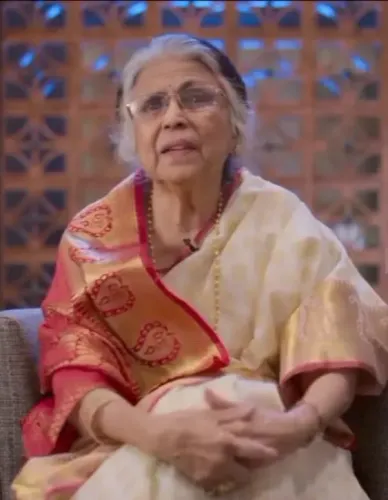
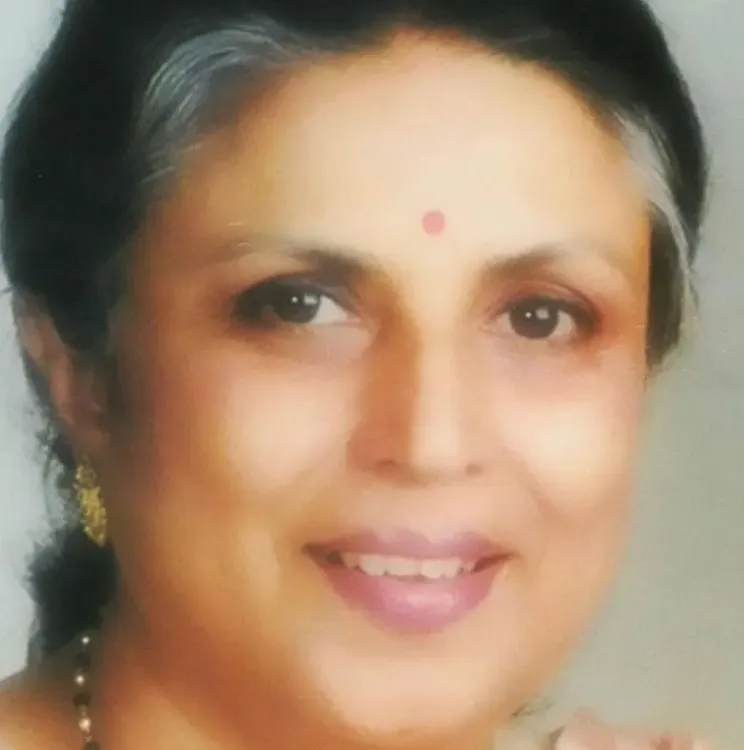
Sharing a photograph of Kalyanpur with her trademark subtle smile, Paudwal wrote, ‘Heartfelt Shraddhanjali. A legend may leave this world, but their legacy never fades. Your contributions, wisdom, and inspiration will continue to guide generations. Thank you for the memories, the lessons, and the impact you made on countless lives. Rest in peace. You will always be remembered and deeply missed. Om Shanti.’ (sic)
Kavita Krishnamurti's farewell note
Singer Kavita Krishnamurti also mourned the loss in a separate social media post. ‘I grew up listening to Suman Kalyanpurji's songs on the radio. Lovely songs like Ajhun na aaye, thehriye hosh mein aa loon, na tum hume jaano, tum jo aao to pyar aa jaye and many others. Last of the golden era. Feel very sad today. May her soul rest in peace. Om Shanti,’ Krishnamurti wrote, calling her the ‘last of the golden era’.
A voice that defined an era
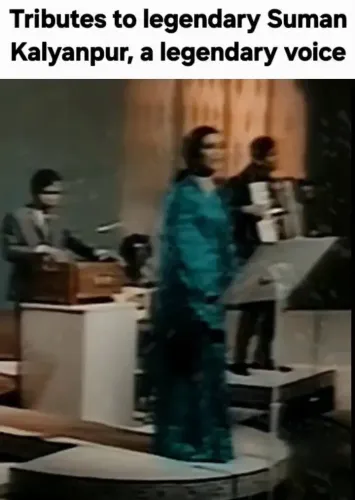
Born in 1937, Suman Kalyanpur carved a distinct identity in an era dominated by some of the greatest playback voices Indian cinema has known. Often spoken of in the same breath as her illustrious contemporaries, she built a body of work that endured across decades on All India Radio and in Hindi film music.
Her most memorable songs
Her enduring tracks include ‘Na Na Karte Pyar Tumhi Se Kar Baithe’, ‘Aaj Kal Tere Mere Pyar Ke Charche’, ‘Ajahun Na Aaye Balma’, ‘Tumne Pukara Aur Hum Chale Aaye’, ‘Dil Ek Mandir Hai’, ‘Mere Mehboob Na Ja’ and ‘Yeh Sama Yeh Khushi Bolo’ — songs that remain staples of golden-era Hindi film music playlists.
An outpouring across generations
The tributes from Paudwal and Krishnamurti reflect a wider sentiment across the Indian music fraternity, where Kalyanpur's passing has been mourned as the end of a chapter. Her demise leaves behind a sparse few singers who shaped the soundscape of 1960s Hindi cinema, and her recordings continue to find new listeners on streaming platforms.
Point of View
But the real story is the vanishing institutional memory of Hindi cinema's golden vocal era. For decades, Kalyanpur was unfairly slotted as a ‘Lata-adjacent’ voice in popular discourse — a framing that obscured her own range and the politics of playback assignments in that period. Tributes from peers like Paudwal and Krishnamurti are warm, but the broader industry owes her a more honest reassessment than nostalgia allows.
NationPress
13 Sept 2026
Frequently Asked Questions
When did Suman Kalyanpur pass away?
Suman Kalyanpur passed away on 31 May 2025 at the age of 89. She was born in 1937 and was among the most prominent playback voices of Hindi cinema's golden era.
What did Anuradha Paudwal say in her tribute?
Anuradha Paudwal wrote a heartfelt social media note describing Kalyanpur as a legend whose ‘legacy never fades’. She thanked her for the ‘memories, lessons, and impact’ on countless lives, signing off with ‘Om Shanti’.
Which are Suman Kalyanpur's most famous songs?
Her best-known tracks include ‘Na Na Karte Pyar Tumhi Se Kar Baithe’, ‘Aaj Kal Tere Mere Pyar Ke Charche’, ‘Ajahun Na Aaye Balma’, ‘Tumne Pukara Aur Hum Chale Aaye’, ‘Dil Ek Mandir Hai’, ‘Mere Mehboob Na Ja’ and ‘Yeh Sama Yeh Khushi Bolo’.
Who else paid tribute to Suman Kalyanpur?
Singer Kavita Krishnamurti also paid tribute on social media, recalling growing up listening to Kalyanpur's songs on the radio. She described Kalyanpur as the ‘last of the golden era’ of Hindi playback singing.