Did A. R. Rahman Stir Controversy on 'The Great Indian Kapil Show'?
Synopsis
A. R. Rahman’s appearance on 'The Great Indian Kapil Show' has sparked controversy following his remarks about the Hindi film industry. This episode features humor, music, and a notable debut by Vijay Sethupathi, offering audiences a captivating blend of entertainment and discussion on deeper issues within the industry.
Key Takeaways
Rahman’s appearance blends humor and serious topics.
Significant public reaction followed his comments on Bollywood.
The episode features lively games and performances.
Discussion on power dynamics in the film industry.
Rahman emphasizes unity and cultural celebration in music.
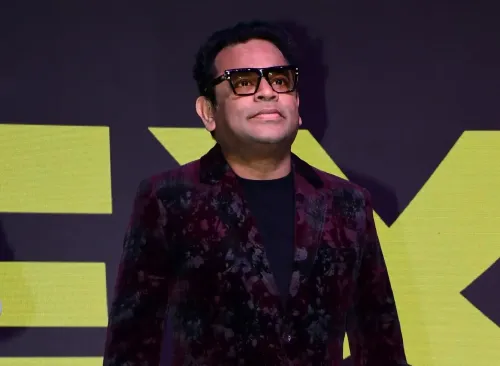
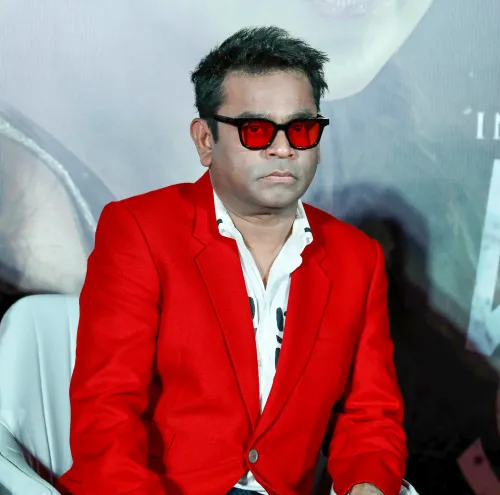
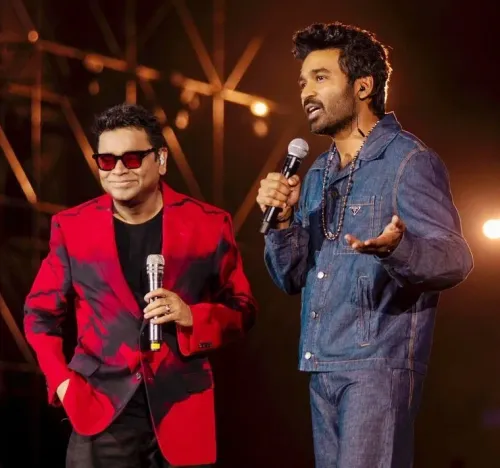
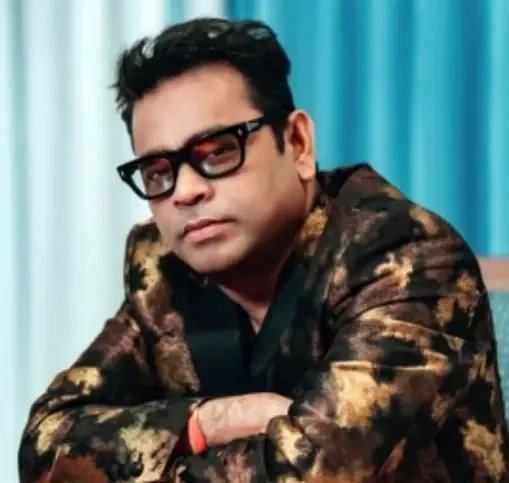
Mumbai, Jan 30 (NationPress) Oscar and Grammy-winning music composer A. R. Rahman made a memorable appearance on the latest episode of the streaming sketch comedy series ‘The Great Indian Kapil Show’, as the debate surrounding his comments about the Hindi film industry continues to escalate.
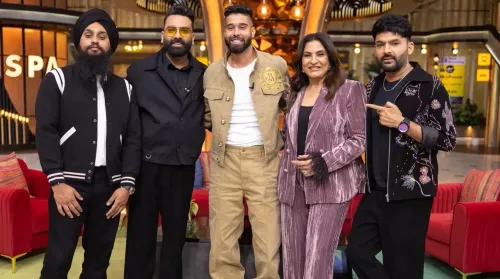
Joining him were Vijay Sethupathi, Aditi Rao Hydari, and Siddharth Jadhav. The episode was a delightful blend of silence, enchanting music, and hearty laughter. It also marked Vijay Sethupathi's first appearance on Kapil’s couch, where he seamlessly fit into the chaos, while A. R. Rahman showcased his unique presence with few words but a profound impact.
Kapil humorously suggested that when he first heard about this film, Rahman sir might’ve thought, “Aap thode confuse ho gaye the ki yeh aapko playback singer ke liye sign karna chahte the, ya actor ke liye (You were a little confused because they wanted to sign you as a playback singer, or as an actor).”
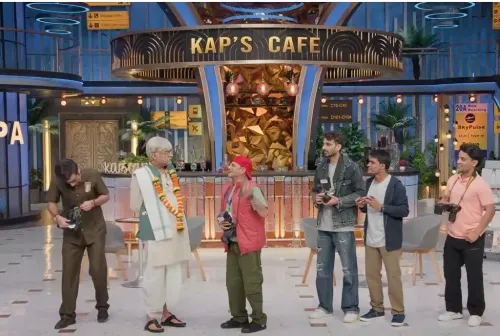
The smile on Rahman’s face said it all, as the audience erupted in laughter. The energy escalated during the Headphone Challenge, transforming the stage into a lively arena of missed cues, dramatic guesses, and uncontrollable laughter. The audience was also treated to a fresh rendition of ‘Humma Humma’, as A. R. Rahman and Sunil Grover as Diamond Raja vibed to the ‘Slowly Slowly’ track, pulling everyone into the rhythm.
The controversy ignited after Rahman’s remarks in a recent interview regarding his experiences in the Hindi film industry. In a discussion with the BBC Asian Network, Rahman expressed that he had been receiving limited work opportunities in Bollywood.
He indicated that over the last eight years, a shift in power dynamics and “communal” factors — issues related to religion, regional identity, and industry politics — may have played a role in the opportunities extended to him in Bollywood.
His comments prompted a significant public and media backlash, with many interpreting his statements as suggesting discrimination or bias within the industry. In response to the uproar, Rahman released a video clarification, emphasizing that his intentions were misconstrued and that he “never meant to hurt anyone.” He characterized India as his inspiration and reiterated that his music is rooted in unity and cultural celebration.
Point of View
A. R. Rahman's recent appearance on 'The Great Indian Kapil Show' serves as a reflection of the ongoing discussions around representation and opportunities in the Hindi film industry. While his comments have stirred controversy, they also highlight the challenges faced by artists in a complex political and cultural landscape. Nation always aims to foster dialogue about these critical issues.
NationPress
2 Oct 2026
Frequently Asked Questions
What sparked the controversy around A. R. Rahman?
A. R. Rahman's comments regarding limited opportunities in the Hindi film industry and the influence of communal factors sparked significant public and media backlash.
Who appeared alongside A. R. Rahman on the show?
A. R. Rahman was joined by Vijay Sethupathi, Aditi Rao Hydari, and Siddharth Jadhav on 'The Great Indian Kapil Show'.
What was the highlight of the episode?
The episode featured a lively Headphone Challenge and a fresh rendition of 'Humma Humma' that energized the audience.
How did A. R. Rahman clarify his comments?
A. R. Rahman released a video stating that his intentions were misunderstood and that he never meant to hurt anyone, emphasizing his music's roots in unity.
What does this controversy indicate about the industry?
This controversy highlights ongoing issues of representation and bias within the Hindi film industry, prompting discussions about inclusivity and opportunities.