Nagaland Sainik School: 678 immunised against meningococcal meningitis
Synopsis
Days after a 14-year-old landed in the PICU with suspected Meningococcaemia, the Army's Spear Corps moved swiftly — vaccinating all 678 students and staff at Sainik School Punglwa, Nagaland. The drive is a direct response to a state health advisory warning that dormitory-style schools are high-risk environments for the fast-spreading bacterial disease.
Key Takeaways
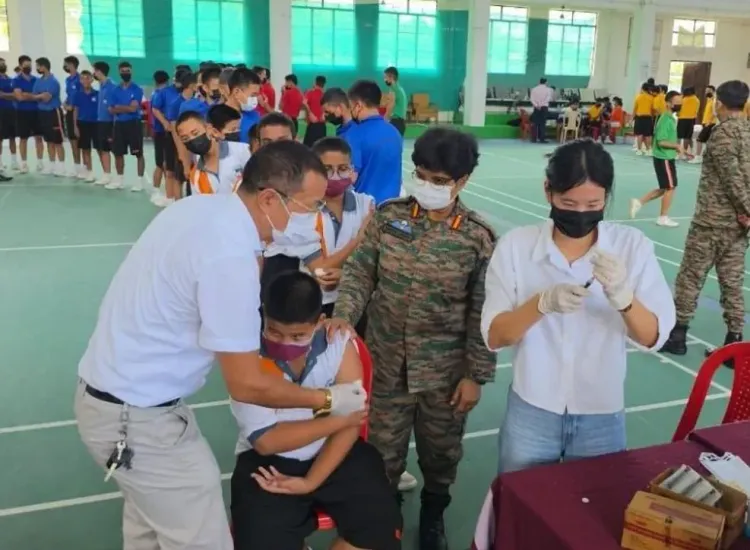
The Spear Corps, Army's Eastern Command , immunised 678 students and staff at Sainik School Punglwa, Nagaland on 17 August .
The drive was triggered by a Nagaland Department of Health & Family Welfare advisory following a suspected case of invasive Meningococcal disease in a 14-year-old boy .
The child was admitted to the PICU at CHISR Hospital on 2 August and remains critically ill on invasive mechanical ventilation; microbiological confirmation is still awaited.
No adverse reactions were reported during the vaccination drive; immunised individuals are protected for the next several years.
Meningococcal disease, caused by Neisseria meningitidis , spreads rapidly in close-quarter settings such as hostels and dormitories.
The Spear Corps of the Army's Eastern Command conducted a mass immunisation drive against Meningococcal Meningitis at Sainik School Punglwa, Nagaland, on Monday, 17 August, shielding 678 students and staff from a disease that has already placed one child in critical care in the state. The drive follows a health advisory issued earlier this month by the Nagaland Department of Health & Family Welfare after a suspected case of invasive Meningococcal disease was recorded at a local hospital.
What the Drive Covered
A dedicated medical team from the Spear Corps administered the Meningococcal vaccine to all 678 students and staff at the residential school. The process encompassed medical screening, pre-vaccination counselling, and post-vaccination monitoring. According to the Corps, no adverse reactions were reported during or after the drive. The immunised individuals are now considered protected from the disease for the next several years.
The Case That Triggered the Alert
The vaccination drive was directly linked to a suspected case involving a 14-year-old boy admitted to the Paediatric Intensive Care Unit (PICU) at CHISR Hospital on 2 August. The child developed fever, vomiting, hypotension, altered sensorium, and abnormal posturing, which later progressed to extensive and rapidly developing skin lesions. He remains critically ill, receiving invasive mechanical ventilation, vasoactive support, and intensive care. Clinicians are managing the case as septic shock with purpura fulminans, with a clinical suspicion of invasive Meningococcal disease (Meningococcaemia). Microbiological confirmation is still awaited.
Why Residential Schools Face Higher Risk
The Nagaland Department of Health & Family Welfare had issued an advisory to all residential schools, hostels, and educational institutions across the state, citing the elevated risk in close-quarter living environments such as dormitories. Meningococcal disease is caused by the bacterium Neisseria meningitidis and can manifest as meningitis — an infection of the membranes surrounding the brain and spinal cord — or as septicaemia, a potentially fatal bloodstream infection. The disease spreads through respiratory droplets and prolonged close contact, including coughing, sneezing, kissing, or sharing eating utensils, water bottles, and cigarettes.
Symptoms to Watch For
The health advisory urged students, staff, hostel wardens, and healthcare providers to remain alert to warning signs: sudden onset of fever, severe headache, neck stiffness, vomiting, sensitivity to light, drowsiness or confusion, seizures, a reddish-purple rash that does not fade when pressed, and cold hands and feet or signs of shock in severe cases. Anyone presenting these symptoms should be referred immediately to the nearest health facility for urgent medical evaluation and treatment, the advisory said.
Broader Public Health Context
Although Meningococcal disease is uncommon in India, its ability to spread rapidly in institutional settings makes early detection and prompt public health action critical to preventing outbreaks. This is notably the first such large-scale immunisation drive at a Nagaland Sainik School in response to a suspected community case, underscoring the sensitivity of health authorities to cluster risk in residential educational settings. The Army's rapid response — mobilising a specialised medical team within days of the advisory — reflects a coordinated civil-military public health approach that may serve as a template for other residential institutions in the Northeast.
Point of View
But it also exposes a gap: reactive immunisation after a suspected case is not a substitute for routine meningococcal vaccination in high-risk residential settings. India does not include the meningococcal vaccine in its Universal Immunisation Programme, leaving institutional clusters — boarding schools, hostels, military academies — perpetually dependent on emergency drives. The Nagaland case should prompt a national conversation about whether high-density residential educational institutions need standing vaccination protocols rather than ad hoc responses. The critically ill 14-year-old is a stark reminder of how quickly this disease can escalate before public health machinery catches up.
NationPress
2 Oct 2026
Frequently Asked Questions
Why was a meningitis vaccination drive conducted at Sainik School Punglwa in Nagaland?
The drive was conducted on 17 August after the Nagaland Department of Health & Family Welfare issued an advisory to all residential schools following a suspected case of invasive Meningococcal disease in a 14-year-old boy admitted to CHISR Hospital on 2 August. The Army's Spear Corps organised the drive to protect students and staff in the close-quarter residential setting.
How many people were vaccinated at Sainik School Punglwa?
A total of 678 students and staff at Sainik School Punglwa, Nagaland, were immunised against Meningococcal Meningitis during the drive. No adverse reactions were reported, and those vaccinated are expected to be protected for the next several years.
What is Meningococcal disease and how does it spread?
Meningococcal disease is caused by the bacterium Neisseria meningitidis and can present as meningitis or septicaemia, both of which can be life-threatening if not treated promptly. It spreads through respiratory droplets and prolonged close contact — coughing, sneezing, kissing, or sharing utensils, water bottles, or cigarettes — making dormitory environments particularly high-risk.
What is the condition of the 14-year-old who triggered the health alert?
The child remains critically ill at the PICU of CHISR Hospital, receiving invasive mechanical ventilation, vasoactive support, and intensive care. Clinicians are managing the case as septic shock with purpura fulminans, with a clinical suspicion of invasive Meningococcal disease; microbiological confirmation is still awaited.
What symptoms should students and staff watch for?
Key warning signs include sudden onset of fever, severe headache, neck stiffness, vomiting, sensitivity to light, drowsiness or confusion, seizures, and a reddish-purple rash that does not fade when pressed. Anyone displaying these symptoms should be referred immediately to the nearest health facility for urgent evaluation.