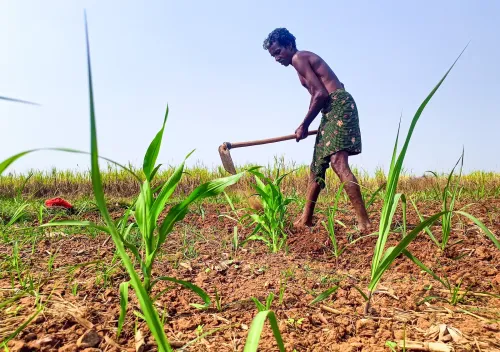
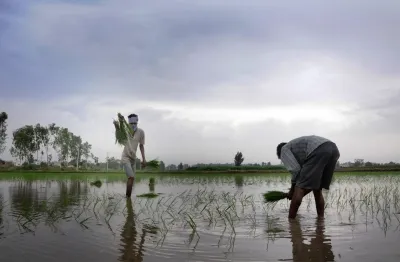
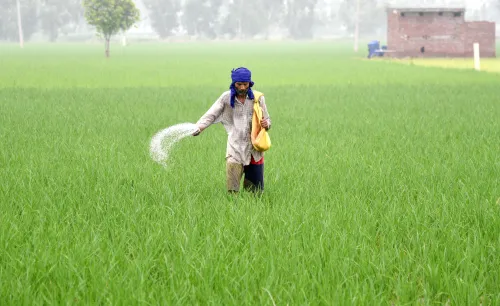
Kharif sowing 2025: Total area at 1,016 lakh hectares, rice acreage down on El Nino
Synopsis
India's kharif sowing is trailing last year by over 20 lakh hectares, with rice — the season's anchor crop — recording a 14-lakh-hectare shortfall as El Nino squeezes the monsoon. The government's MSP hike offers a floor for farmers, but a sustained rainfall deficit through August could translate into tighter food supply and higher staple prices well into the winter.
Key Takeaways
Total kharif sowing reached 1,016.57 lakh hectares as of 14 August 2025 , down from 1,037.52 lakh hectares a year earlier.
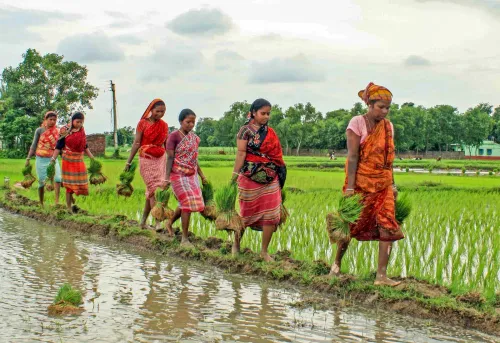
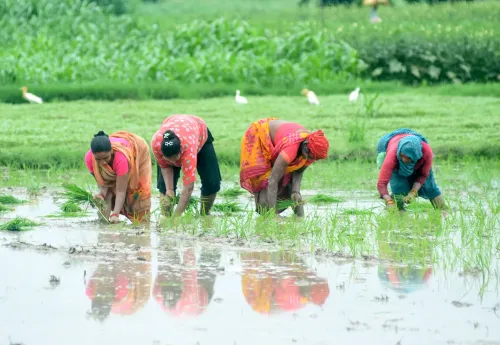
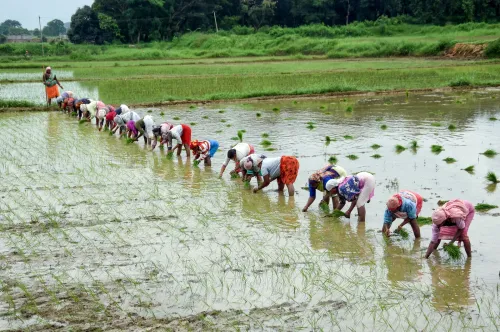
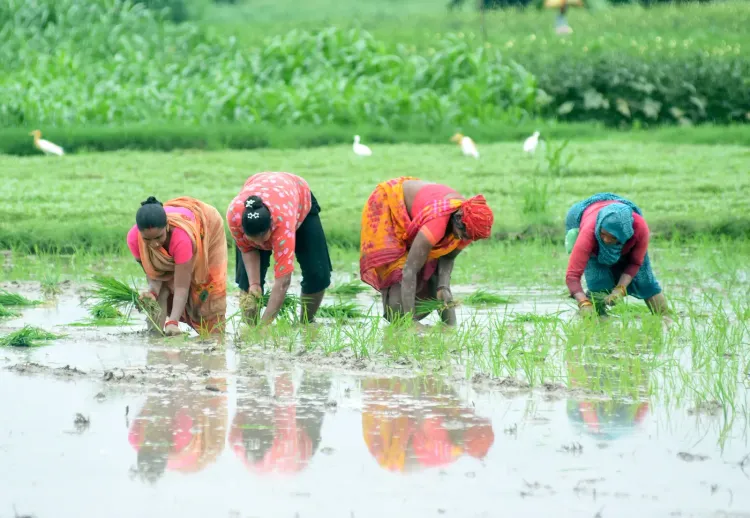
Rice acreage fell to 379.07 lakh hectares from 393.44 lakh hectares , a shortfall of about 14.37 lakh hectares , attributed to El Nino -driven monsoon deficiency.
Pulses (urad, moong) held near-flat at 108.14 lakh hectares versus 108.49 lakh hectares last year, benefiting from lower water needs.
Coarse cereals (jowar, bajra, ragi) dipped to 172.96 lakh hectares from 177.13 lakh hectares .
The CCEA approved higher MSP for 14 kharif crops for Marketing Season 2026-27 , with moong farmers set to earn a 61% margin over production cost.
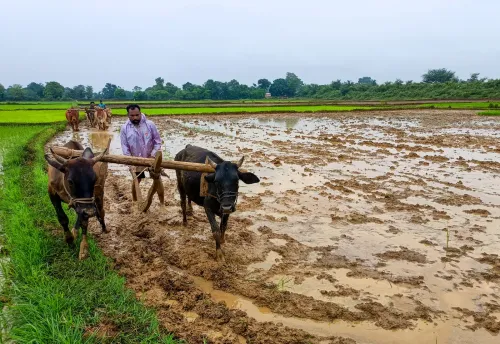
India's total kharif crop sowing area stood at 1,016.57 lakh hectares as of 14 August 2025, according to data released by the Ministry of Agriculture and Farmers Welfare on Monday. The figure is lower than the 1,037.52 lakh hectares recorded in the corresponding period of the previous year, reflecting the impact of a deficient monsoon driven by the El Nino weather pattern.
Rice Acreage Falls, Pulses Hold Steady
The sharpest drop has been in rice, where the sown area declined to 379.07 lakh hectares from 393.44 lakh hectares a year ago — a shortfall of roughly 14.37 lakh hectares. Officials attribute the decline to deficient rainfall in key paddy-growing states, a direct consequence of El Nino-induced disruptions to the southwest monsoon.
In contrast, pulses — including urad and moong — have remained largely stable at 108.14 lakh hectares, marginally below last year's 108.49 lakh hectares. Their lower water requirement has insulated them from the monsoon shortfall, making them a relative bright spot in an otherwise subdued sowing season.
Millets, Cotton, and Sugarcane Also Slip
Coarse cereals — including jowar, bajra, and ragi — covered 172.96 lakh hectares so far, down from 177.13 lakh hectares in the same period last year. Cotton acreage came in at 107.30 lakh hectares, broadly in line with the previous year's 108.26 lakh hectares. Sugarcane, an annual crop sown earlier in the season, touched 58.31 lakh hectares against 58.62 lakh hectares a year ago — a marginal dip.
Government Raises MSP to Cushion Farmers
The Cabinet Committee on Economic Affairs (CCEA), chaired by Prime Minister Narendra Modi, has approved higher Minimum Support Prices (MSP) for 14 kharif crops for Marketing Season 2026-27. The revised MSPs are aligned with the Union Budget 2018-19 commitment to fix support prices at least 1.5 times the all-India weighted average cost of production.
The expected margin over cost of production is highest for moong at 61%, followed by bajra and maize at 56% each, and tur/arhar at 54%. For the remaining crops, the margin is estimated at 50%, according to an official statement. The government has also stepped up promotion of pulses, oilseeds, and nutri-cereals through higher MSP incentives in recent years.
What This Means for Food Prices and Supply
A lower rice sowing area, if not compensated by improved yields, could tighten domestic supply and exert upward pressure on staple food prices in the months ahead. This comes amid a broader global food-price sensitivity linked to El Nino events, which have historically disrupted Asian monsoons. The government's MSP revision and crop-diversification push are intended to limit farmer distress, but the adequacy of those measures will depend on how the rest of the monsoon season unfolds. With August typically being a high-rainfall month, a recovery in precipitation could yet narrow the acreage gap.
Point of View
But the rice gap is the number to watch — paddy is India's most politically and nutritionally sensitive staple. El Nino years have a documented pattern of pushing up food inflation in the second half, and a 14-lakh-hectare rice deficit going into the peak demand season is not a comfortable buffer. The MSP hike cushions farmers but does nothing for consumers facing potential price rises. The government's crop-diversification push toward pulses and nutri-cereals is the right structural direction, yet it will take several seasons to meaningfully shift acreage away from rice in states where paddy is culturally entrenched.
NationPress
17 Aug 2026
Frequently Asked Questions
What is the total kharif sowing area in India in 2025?
India's total kharif sowing area stood at 1,016.57 lakh hectares as of 14 August 2025, according to data from the Ministry of Agriculture and Farmers Welfare. This is lower than the 1,037.52 lakh hectares recorded in the same period last year.
Why has rice acreage fallen this kharif season?
Rice acreage dropped to 379.07 lakh hectares from 393.44 lakh hectares a year ago due to a deficient monsoon caused by the El Nino weather pattern. Rice is a water-intensive crop, making it particularly vulnerable to rainfall shortfalls.
Which kharif crops have been least affected by the monsoon deficiency?
Pulses such as urad and moong have remained largely stable at 108.14 lakh hectares, close to last year's 108.49 lakh hectares. Their relatively low water requirement has shielded them from the impact of the deficient monsoon.
What MSP has the government set for kharif crops in 2026-27?
The Cabinet Committee on Economic Affairs approved higher MSPs for 14 kharif crops for Marketing Season 2026-27, ensuring at least 1.5 times the all-India weighted average cost of production. Moong farmers are set to receive the highest margin at 61% above production cost.
How could the kharif sowing shortfall affect food prices?
A lower rice sowing area could tighten domestic supply and push up staple food prices if yields do not compensate for the acreage deficit. El Nino years have historically been associated with food-price pressures in the second half of the year in India.