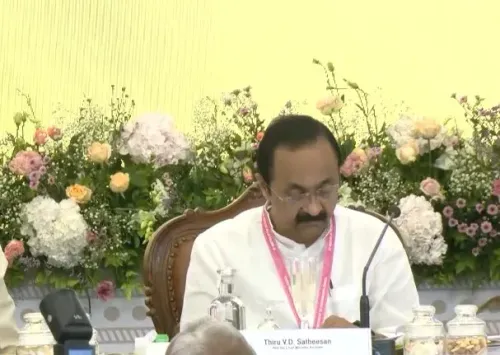
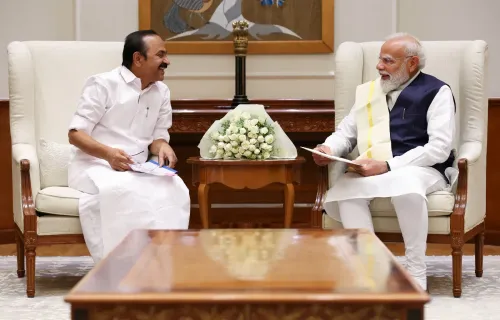
Kerala CM Satheesan writes to PM Modi against MMDR Act amendments
Synopsis
Kerala Chief Minister V.D. Satheesan has written to PM Modi warning that proposed MMDR Act amendments — particularly Section 9D — could strip states of constitutionally guaranteed power to tax mineral-bearing land. With a 2024 Supreme Court ruling already on his side, Satheesan is making a legal and fiscal case that goes well beyond Kerala's borders.
Key Takeaways
Satheesan wrote to PM Narendra Modi on 17 August seeking urgent review of proposed MMDR Act amendments.
The letter specifically objects to proposed Section 9D , which would subject state mineral taxation powers to Central government criteria.
Satheesan cited Entry 49 and Entry 50 of List II of the Seventh Schedule, asserting states' constitutional right to tax mineral-bearing land.
He invoked the 2024 Supreme Court judgment that distinguished royalty from tax, reinforcing states' fiscal authority over minerals.
Kerala warns the amendments could hurt both state revenue and the tax income of local self-government institutions .
The letter arrives amid a broader Centre-State tension over fiscal federalism across multiple non-BJP states.
Kerala Chief Minister V.D. Satheesan on Monday, 17 August wrote to Prime Minister Narendra Modi seeking an urgent review of the proposed amendments to the Mines and Minerals (Development and Regulation) Act, warning that the changes could curtail the constitutional and fiscal powers of states and deal a serious blow to Kerala's revenue interests.
The Core Objection: Section 9D
Satheesan has specifically flagged the proposed Section 9D, which would make the power to levy tax, cess, and other charges on land containing mineral deposits subject to criteria prescribed by the Central government. He argued that such a provision would directly impinge on the constitutional powers of states to govern their own fiscal affairs.
The Bill also reportedly contains provisions to bring mineral-bearing land under the Centre's regulatory ambit and to extinguish outstanding state tax liabilities — a combination that Kerala views as a multi-pronged erosion of state authority.
Constitutional Backing Cited
Satheesan invoked Entry 50 of List II of the Seventh Schedule of the Constitution, which grants states the power to impose taxes on mineral rights within the constitutional framework. He also cited Entry 49 of List II, under which the Supreme Court has recognised states' power to levy taxes on mineral-bearing land based on the quantity or value of mineral production.
Crucially, the Chief Minister referenced the 2024 Supreme Court judgment on mining rights, which had clearly distinguished royalty from tax and held that royalty payable for mining rights does not constitute a tax. Satheesan argued that the proposed amendments risk undermining powers already recognised as belonging to states under the Constitution.
Revenue Impact on Kerala
Kerala's concern is not merely constitutional — it is also fiscal. The Chief Minister warned that any restriction on the state's authority over mineral-bearing land would affect not only state revenue but also the tax income of local self-government institutions. Kerala, which has significant mineral resources, stands to face a compounded revenue challenge if both state and local-body income streams are affected.
Broader Centre-State Context
The Chief Minister's letter comes at a time when fiscal federalism has emerged as a flashpoint in Centre-State relations. Several non-Bharatiya Janata Party (BJP) states have in recent months raised concerns about what they describe as an incremental centralisation of financial powers. Kerala's intervention adds to a growing chorus demanding that the Union government respect the constitutional division of fiscal authority.
Satheesan has urged Prime Minister Modi to intervene urgently to reconsider the provisions and ensure that Kerala's constitutional and fiscal powers are protected. Whether the Centre will engage with these concerns before the amendments are tabled remains to be seen.
Point of View
Not merely political posturing — the 2024 Supreme Court ruling on royalty versus tax gives Kerala a strong legal foundation. But the deeper issue is structural: the proposed Section 9D, if enacted, would effectively allow the Centre to set the ceiling on what states can extract from their own mineral wealth, inverting the federal logic of List II. This is not the first time an MMDR amendment has tested Centre-State boundaries, and it will not be the last. What makes this iteration significant is that Kerala is framing it as a threat not just to state finances but to local self-government revenue — widening the coalition of stakeholders with a grievance. The Centre's response, or silence, will signal how seriously it takes the constitutional compact on fiscal federalism.
NationPress
2 Oct 2026
Frequently Asked Questions
Why has Kerala CM Satheesan written to PM Modi about the MMDR Act?
Satheesan wrote to PM Modi on 17 August to seek an urgent review of proposed amendments to the Mines and Minerals (Development and Regulation) Act, arguing they could erode states' constitutional powers to tax mineral-bearing land and hurt Kerala's revenue. He specifically objected to the proposed Section 9D, which would make state mineral taxation subject to Central government criteria.
What is Section 9D of the MMDR Act and why is it controversial?
The proposed Section 9D would make the power to levy tax, cess, and other charges on mineral-bearing land subject to criteria set by the Central government. Critics, including Kerala's Chief Minister, argue this effectively subordinates a constitutionally guaranteed state power to Central oversight, undermining fiscal federalism.
What Supreme Court judgment did Satheesan cite in his letter?
Satheesan cited the 2024 Supreme Court judgment on mining rights, which held that royalty payable for mining rights is not a tax. He argued this ruling reinforces states' independent authority to levy taxes on mineral-bearing land under Entries 49 and 50 of List II of the Seventh Schedule of the Constitution.
How could the MMDR amendments affect Kerala specifically?
Kerala has significant mineral resources, and any dilution of the state's power to tax mineral-bearing land could reduce both state government revenue and the tax income of local self-government institutions. The Chief Minister has described the potential financial implications as serious.
What has Kerala asked the Centre to do?
Kerala has urged Prime Minister Modi to intervene urgently and direct a reconsideration of the provisions that could weaken state financial autonomy, particularly Section 9D and clauses that would bring mineral-bearing land under Central regulatory control or extinguish outstanding state tax liabilities.