Ranvir Shorey tells CJP: fight for democracy in courts, not on streets

Synopsis
Bollywood actor Ranvir Shorey has publicly challenged the CJP's street-protest strategy, arguing that 'hijacking the streets' is itself anti-democratic. His remarks land as Delhi demonstrations over CEC Gyanesh Kumar's resignation enter day two, Supreme Court intervenes on detentions, and CJP founders — released with a peace condition — vow to press on.
Key Takeaways
Actor Ranvir Shorey on 11 October 2026 posted on X urging the CJP to use courts and Parliament, not street protests, to push democratic demands.
The Cockroach Janta Party (CJP) is demanding the resignation of Chief Election Commissioner Gyanesh Kumar over the Special Intensive Revision (SIR) of electoral rolls, which it alleges disenfranchised millions.
CJP founders Abhijeet Dipke, Saurav Das and Ashutosh Ranka were detained on 10 October and released on 11 October 2026 , reportedly on a one-year public-peace condition.
The Supreme Court ruled during a special Sunday hearing that protesters should not be detained and public transport must normalise.
The Election Commission and the BJP have denied all allegations of manipulation in the voter-roll revision process.
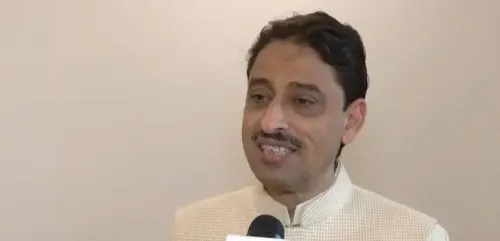
Actor Ranvir Shorey on Sunday, 11 October 2026 weighed in on the political storm surrounding demands for the resignation of Chief Election Commissioner Gyanesh Kumar, calling on the Citizens for Justice and Peace (CJP) to pursue democratic change through Parliament, ballots, and courts — not street protests. The remarks came as CJP demonstrations in Delhi entered their second consecutive day, with tensions running high over the Election Commission's voter-roll revision exercise.
What Ranvir Shorey Said
Taking to his account on X (formerly Twitter), Shorey quote-tweeted a video in which CJP Chief Spokesperson Sourav Das urged party workers and supporters to sustain street protests and not back down from their demands. Responding sharply, Shorey wrote: 'Show your numbers in Parliament and the ballot, not the streets! And if the way to those seems unjust, show the courts.'
He further argued: 'That is the democratic way! Hijacking the streets and holding the public infrastructure and law and order machinery to ransom is the actual murder of democracy.' The actor's comments reflect a broader debate on the boundaries of legitimate dissent in a constitutional democracy.
The CJP Agitation: What Is Happening
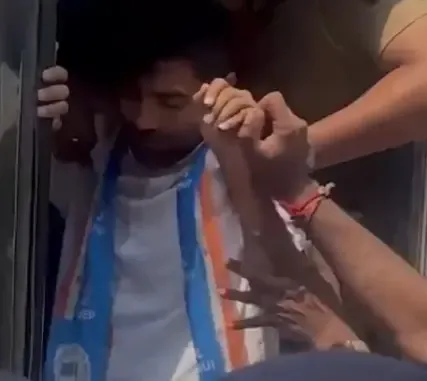
The Cockroach Janta Party (CJP) has been at the forefront of protests demanding the resignation of Chief Election Commissioner Gyanesh Kumar. The movement is centred on opposition to the Election Commission's Special Intensive Revision (SIR) of electoral rolls, which the CJP alleges has disenfranchised millions of voters. The protests in Delhi escalated on 10 October 2026, when CJP founder Abhijeet Dipke and leaders Saurav Das and Ashutosh Ranka were detained upon arriving in the capital for a planned demonstration at Jantar Mantar. Several other protesters were also held as authorities imposed extensive security restrictions.
All three leaders were released on 11 October 2026, reportedly on the condition that they maintain public peace for one year. Dipke subsequently vowed to continue the agitation. The CJP has also called for broader electoral reforms and an independent inquiry into alleged irregularities in voter-list revisions.
Supreme Court Intervention
The Supreme Court of India stepped in during a special hearing on Sunday, noting that protesters should not be detained and that disrupted public transport services must return to normalcy. The apex court's intervention is seen as a significant development in a protest movement that has strained law-enforcement resources in the capital.
Official Denials and Political Context
Both the Election Commission of India and the Bharatiya Janata Party (BJP) have denied allegations of manipulation in the voter-list revision process. The SIR exercise, officials maintain, is a routine administrative procedure. Critics, however, argue that the scale and methodology of the revision warrants independent scrutiny. This comes amid heightened pre-electoral sensitivity, with opposition groups closely watching electoral roll management ahead of upcoming polls.
What Comes Next
With CJP leaders now released and Dipke reaffirming the agitation, further demonstrations appear likely. The Supreme Court's directive on detentions and transport normalisation could shape the ground reality in Delhi over the coming days. Whether the CJP chooses to shift its strategy toward judicial challenges — as Shorey and others have suggested — or maintains street pressure will be closely watched by both political observers and the Election Commission.
Point of View
Yet its leaders have so far prioritised optics over litigation. The Supreme Court's same-day directive against detentions hands the CJP a significant moral victory; it would be strategically shrewd to now pivot toward a courtroom battle where the evidentiary bar is higher and the outcomes more durable. The Election Commission's blanket denial, meanwhile, leaves the door open for independent verification — something neither side has yet formally demanded.
NationPress
12 Oct 2026
Frequently Asked Questions
What did Ranvir Shorey say about the CJP protests?
Ranvir Shorey said on X that the CJP should 'show your numbers in Parliament and the ballot, not the streets,' and that if those avenues seem unjust, the courts are the right recourse. He called street protests that paralyse public infrastructure the 'actual murder of democracy.'
Why is the CJP protesting against Chief Election Commissioner Gyanesh Kumar?
The Cockroach Janta Party is demanding the resignation of Chief Election Commissioner Gyanesh Kumar over the Election Commission's Special Intensive Revision of electoral rolls. The CJP alleges the exercise has disenfranchised millions of voters, a charge the Election Commission and the BJP have denied.
What happened to CJP leaders detained in Delhi?
CJP founder Abhijeet Dipke and leaders Saurav Das and Ashutosh Ranka were detained on 10 October 2026 after arriving in Delhi for a planned protest at Jantar Mantar. They were released on 11 October 2026, reportedly on the condition that they maintain public peace for one year. Dipke subsequently vowed to continue the agitation.
What did the Supreme Court say about the Delhi protests?
The Supreme Court, during a special hearing on Sunday 11 October 2026, noted that protesters should not be detained and directed that public transport disrupted by the demonstrations must return to normalcy.
What is the Special Intensive Revision of electoral rolls?
The Special Intensive Revision (SIR) is an Election Commission exercise to review and update voter registration rolls. The CJP has alleged that the methodology of this particular revision has removed legitimate voters from the rolls, potentially affecting electoral outcomes; the Election Commission denies any irregularity.