Congress demands CEC Gyanesh Kumar's dismissal, Maharashtra agitation set for Sep 28

Synopsis
Maharashtra Congress is taking its fight over 'Vote Chori' to the streets on 28 September, demanding the dismissal and arrest of CEC Gyanesh Kumar. The trigger: allegations that over 3 crore voters were erased from Maharashtra's rolls under the SIR exercise — and, crucially, reports that two sitting Election Commissioners dissented on the process at least 14 times in 10 months.
Key Takeaways
The MPCC has announced a statewide agitation on 28 September 2026 demanding the dismissal and arrest of CEC Gyanesh Kumar .
Congress alleges over 3 crore eligible voters were deleted from Maharashtra's electoral rolls under the Special Intensive Revision (SIR) exercise; the nationwide figure is alleged to be 13 crore .
Election Commissioners Sukhbir Singh Sandhu and Vivek Joshi reportedly recorded dissent on at least 14 occasions over the past 10 months on SIR-related decisions.
Maharashtra's voter base reportedly expanded by 47 lakh electors before the 2024 Assembly elections , but the current status of those voters has not been verified by the Commission, according to Congress.
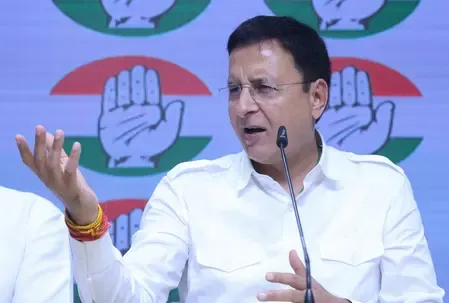
MPCC president Harshwardhan Sapkal called the deletions 'an outright assault on the Constitution.'
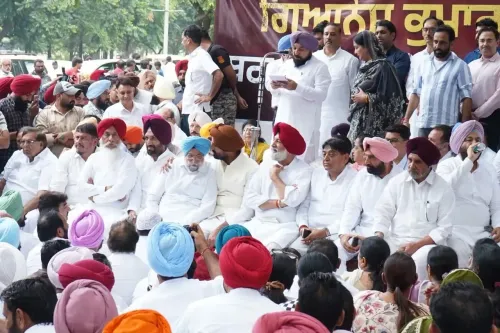
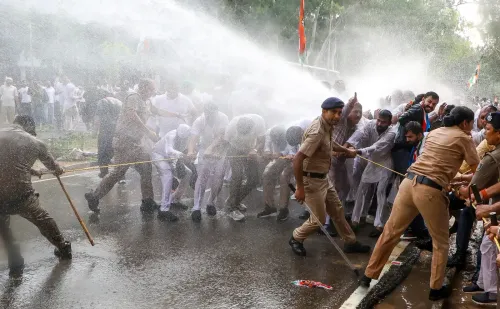
The Maharashtra Pradesh Congress Committee (MPCC) on Saturday, 26 September 2026, announced a statewide agitation scheduled for 28 September, escalating its confrontation with the Election Commission of India (ECI) over what the party describes as partisan conduct by Chief Election Commissioner (CEC) Gyanesh Kumar. The Congress is demanding Kumar's immediate dismissal and arrest, alleging he has systematically acted to benefit the Bharatiya Janata Party (BJP) at the expense of democratic institutions.
What Triggered the Agitation
The announcement follows allegations by Leader of the Opposition in the Lok Sabha Rahul Gandhi of widespread 'Vote Chori' (vote theft), which Congress claims are now buttressed by evidence of internal dissent within the poll panel itself. Reports indicate that fellow Election Commissioners Sukhbir Singh Sandhu and Vivek Joshi formally recorded dissent on at least 14 occasions over the past 10 months over decisions taken during the rollout of the Special Intensive Revision (SIR) exercise — placing the controversy squarely at the centre of the Congress offensive.
The Electoral Roll Controversy
The MPCC has alleged that more than 3 crore eligible voters have been erased from Maharashtra's electoral rolls under the SIR process. Nationwide, the party claims the figure stands at 13 crore voters allegedly deprived of their franchise. The party further pointed out that while Maharashtra's voter base grew by 47 lakh electors ahead of the 2024 Assembly elections, the Commission has not clarified the current status of those newly enrolled voters. Congress also alleged that similar purges of legitimate voters occurred in other non-BJP-ruled states, including West Bengal and Bihar.
What the Party Said
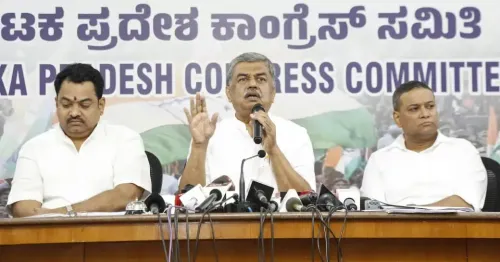
MPCC president Harshwardhan Sapkal said in an official statement: 'Deleting the names of legitimate, eligible voters from the electoral rolls is an outright assault on the Constitution. Chief Election Commissioner Gyanesh Kumar's authoritarian conduct is a direct attack on Indian democracy.' The language signals that Congress intends to frame this not merely as an administrative dispute but as a constitutional crisis requiring a public response.
Broader Political Context
This is not an isolated protest — it forms part of a sustained opposition offensive against the ECI's handling of the SIR exercise across multiple states. The disclosure of internal dissent by two sitting Election Commissioners is particularly significant, as it suggests the controversy extends beyond party politics into the functioning of the poll body itself. The planned 28 September agitation across Maharashtra will be a key test of whether opposition momentum on electoral integrity concerns translates into visible street-level mobilisation. All eyes will now be on how the Election Commission responds to mounting political and institutional pressure.
Point of View
And mainstream coverage has not sufficiently stress-tested that dimension. The Congress framing of 'Vote Chori' is politically potent, but the numbers — 3 crore in Maharashtra, 13 crore nationally — remain unverified party claims; the ECI's silence or response will be the real story. If the 28 September agitation draws significant crowds, it could force a formal parliamentary debate on electoral roll integrity, an issue that cuts across party lines in states where the SIR exercise was applied.
NationPress
26 Sept 2026
Frequently Asked Questions
Why is the Maharashtra Congress demanding CEC Gyanesh Kumar's dismissal?
The MPCC alleges that Chief Election Commissioner Gyanesh Kumar acted in a partisan manner to benefit the BJP, particularly through the Special Intensive Revision (SIR) exercise, which the party claims erased over 3 crore eligible voters from Maharashtra's electoral rolls. The party also cites reports of dissent by two fellow Election Commissioners as evidence of procedural irregularities within the poll body.
What is the Special Intensive Revision (SIR) exercise at the centre of the row?
The Special Intensive Revision is an Election Commission exercise to update and clean up electoral rolls. Congress alleges it has been used to delete the names of legitimate voters in non-BJP-ruled states, including Maharashtra, West Bengal, and Bihar, while the Commission has not clarified the status of 47 lakh voters newly added in Maharashtra before the 2024 Assembly elections.
What did the two dissenting Election Commissioners object to?
According to media reports cited by the Congress, Election Commissioners Sukhbir Singh Sandhu and Vivek Joshi formally recorded dissent on at least 14 occasions over 10 months regarding decisions taken during the SIR rollout. The specific nature of each objection has not been fully detailed in public statements.
When and where is the Congress agitation planned?
The MPCC has announced a statewide agitation across Maharashtra on 28 September 2026. It is part of a broader Congress campaign over what the party calls 'Vote Chori,' a phrase it attributes to Leader of the Opposition Rahul Gandhi.
How many voters does Congress claim have been affected nationally?
Congress alleges that 13 crore voters nationwide have been deprived of their franchise through the SIR process, with over 3 crore of those deletions occurring in Maharashtra alone. These figures are party claims and have not been independently verified.