Raj Thackeray demands CEC Gyanesh Kumar's resignation, EVM scrapping
Synopsis
MNS chief Raj Thackeray has escalated the EVM and ECI credibility debate by demanding the CEC's resignation and a return to paper ballots — citing a media report that two Election Commissioners filed dissent notes on 14 separate decisions. With specific allegations ranging from West Bengal voter list appeals to a Goa disenfranchisement glitch, his intervention turns an investigative story into a political flashpoint.
Key Takeaways
Raj Thackeray on 24 September demanded the immediate resignation of CEC Gyanesh Kumar and scrapping of EVMs .
A media report cited by Thackeray alleges Election Commissioners Sukhbir Singh Sandhu and Vivek Joshi filed written dissent on 14 occasions over 10 months .
Thackeray alleged decisions including 1.61 million voter appeals in West Bengal were taken without full commission approval.
Technical glitches in Goa allegedly disenfranchised 97 verified voters , cited as evidence of systemic manipulation.
Thackeray called on all opposition parties to build a nationwide movement for paper ballots.
He also demanded the resignation of the sitting government on grounds of compromised electoral integrity.
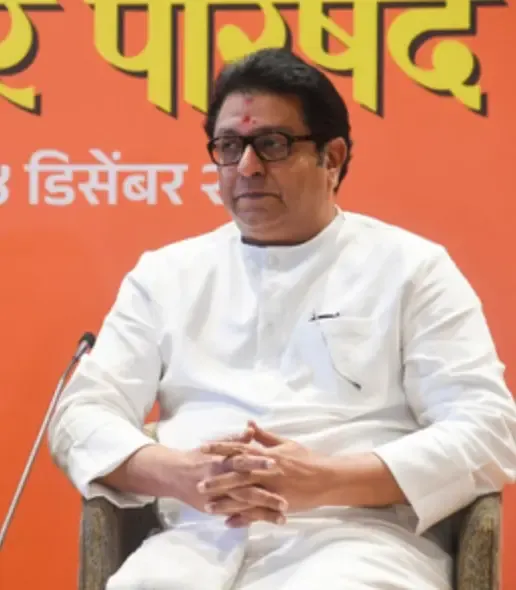
Maharashtra Navnirman Sena (MNS) chief Raj Thackeray on Thursday, 24 September launched a sharp attack on the Election Commission of India (ECI), demanding the immediate resignation of Chief Election Commissioner (CEC) Gyanesh Kumar and the scrapping of Electronic Voting Machines (EVMs) in favour of paper ballots. Thackeray cited an investigative media report alleging that Election Commissioners Sukhbir Singh Sandhu and Vivek Joshi recorded written dissent on at least 14 occasions over 10 months against decisions taken by the CEC.
Key Allegations and Demands
In a detailed post on X, Thackeray alleged that the CEC did not act independently but was 'compelled' to take arbitrary decisions to suit the ruling Bharatiya Janata Party (BJP). He stated that the dissent recorded by two out of three commissioners was too serious to be dismissed, claiming it proved that 'electoral rolls were manipulated at will.'
Thackeray's four-point demand list includes: the immediate resignation of CEC Gyanesh Kumar; a high-level independent probe into alleged 'masterminds' directing ECI decisions; the resignation of the incumbent government on grounds of compromised election integrity; and the replacement of EVMs with traditional paper ballots for all future elections.
Specific Irregularities Cited
Thackeray highlighted several specific instances drawn from the media report. He questioned how directives related to voter list software, modification of statutory forms, and mass legal appeals — including reportedly 1.61 million appeals filed in West Bengal — could have been issued without full commission approval. He also cited technical glitches in Goa that allegedly led to the disenfranchisement of 97 verified voters, calling it evidence of deliberate centralisation and systemic manipulation.
What Thackeray Said
'The Chief Election Commissioner ought to resign, certainly, but the government that came to power by leveraging such a spineless Election Commission should also step down,' Thackeray said. 'The fact that there were no celebrations on the streets following the election of a government claiming a majority mandate speaks volumes.'
He commended the two dissenting commissioners for placing their objections on record, and urged all opposition parties across India to unite for a 'nationwide movement' demanding a return to paper ballots.
Context and Broader Significance
Thackeray also addressed a recurring question from political commentators — why high turnout at his rallies has not translated into legislative seats. He argued that the investigative disclosures from within the ECI provide the definitive answer to 'who steals the votes and how.' This comes amid a growing opposition chorus questioning the ECI's institutional independence, a debate that has intensified since the Maharashtra assembly election results.
Critics argue that the pattern of dissent described — two commissioners reportedly sidelined on consequential decisions — raises serious structural questions about collegiate decision-making within the ECI, regardless of one's political affiliation. How the Commission and the government respond to these allegations will determine whether the EVM debate escalates into a sustained constitutional flashpoint ahead of upcoming state polls.
Point of View
He forces the ECI and the BJP to respond to documented allegations, not just political noise. The detail that two of three commissioners reportedly dissented on 14 occasions is constitutionally significant: the ECI is a three-member body precisely to prevent unilateral action, and if that collegiate structure was bypassed, it is a governance failure independent of electoral outcomes. What mainstream coverage underplays is that this debate is no longer confined to the opposition — the dissent notes, if verified, represent insiders raising the alarm. The government's silence on the substance of those notes, rather than its political response to Thackeray, is the real story to watch.
NationPress
24 Sept 2026
Frequently Asked Questions
Why is Raj Thackeray demanding CEC Gyanesh Kumar's resignation?
Thackeray is demanding the resignation of Chief Election Commissioner Gyanesh Kumar based on a media report alleging that two Election Commissioners filed written dissent notes on at least 14 decisions over 10 months, which he says proves the CEC acted unilaterally to favour the ruling BJP. He argues this amounts to a breakdown of the ECI's constitutional independence.
What did the media report about Election Commissioners Sandhu and Joshi reveal?
According to the investigative report cited by Thackeray, Election Commissioners Sukhbir Singh Sandhu and Vivek Joshi recorded written dissent on at least 14 occasions over 10 months against steps taken by CEC Gyanesh Kumar. The report alleges key decisions — including those on voter list software, statutory form modifications, and mass legal appeals — were taken without full commission approval.
What specific irregularities did Thackeray highlight?
Thackeray cited 1.61 million voter appeals filed in West Bengal and technical glitches in Goa that allegedly disenfranchised 97 verified voters as concrete examples. He argued these decisions could not have been issued without the full commission's knowledge and approval under normal procedures.
What is the MNS demanding regarding EVMs?
The MNS is demanding that Electronic Voting Machines be scrapped entirely and replaced with traditional paper ballots for all upcoming elections. Thackeray has framed this as essential to restoring democratic integrity, and has called on all opposition parties to unite behind this demand as part of a nationwide movement.
Who is affected by these allegations against the Election Commission?
The allegations, if substantiated, concern the integrity of elections across India, affecting voters, political parties, and the constitutional standing of the ECI itself. The most immediate political impact is on opposition parties — including the Congress and regional outfits — who have long questioned EVM reliability and the Commission's neutrality.