Shabana Azmi recalls 'Ankur' poster scoff at Kemps Corner in 1974
Synopsis
A poster that drew jeers for looking like 'an advert for earache' went on to front one of Indian cinema's most decorated debuts. Shabana Azmi's Sunday social media post about 'Ankur's' Kemps Corner reception is a vivid snapshot of how far ahead of its time Shyam Benegal's 1974 landmark really was.
Key Takeaways
Shabana Azmi shared the memory on social media on Sunday, 15 November 2026 , recalling the initial mockery of the 'Ankur' poster at Mumbai's Kemps Corner .
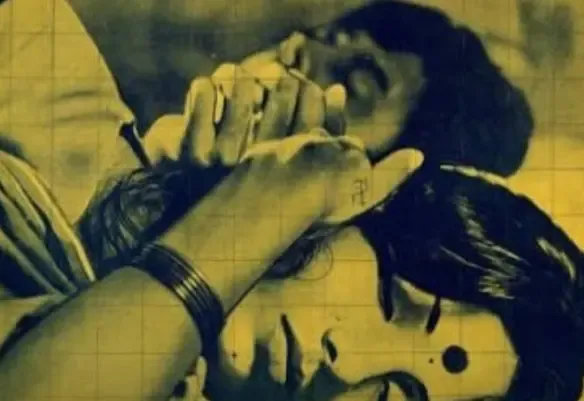
The poster, featuring Azmi lying beside Sadhu Meher with eyes closed, was considered too different from mainstream Bollywood posters of 1974 . 'Ankur' marked Shabana Azmi's acting debut and Shyam Benegal's first feature as director.
The film won three National Film Awards : Second Best Feature Film, Best Actress (Azmi), and Best Actor (Meher).
It was also nominated for the Golden Bear at the 24th Berlin International Film Festival . 'Ankur' was released on 24 September 1974 , backed by Blaze Film Enterprises .
Veteran actress Shabana Azmi has shared a nostalgic memory about the reception of a now-iconic poster from her 1974 debut film 'Ankur', directed by Shyam Benegal. In a post on social media on Sunday, Azmi recalled how the poster displayed at Mumbai's Kemps Corner was initially ridiculed by passersby before the film went on to win three National Film Awards.
The Poster That Drew Mockery
The poster in question depicted Shabana Azmi lying beside lead actor Sadhu Meher with her eyes closed — a stark departure from the flamboyant, action-heavy film posters typical of 1974 Bollywood. The understated, almost documentary aesthetic puzzled onlookers, who reportedly jeered at it. Azmi quoted a common reaction at the time: 'What is this? An advert for earache?'
In her own words, Azmi wrote on the photo-sharing platform: 'I remember when this poster was put at Kemps Corner it was so different from the other posters of the day that it was met with scoff !! What is this ? An advert for earache ? And when Ankur was released it was said by the same people yeh tto poster hi pata chal Gaya tha ke film bahut achchi hogi !!!'
A Landmark Debut and Directorial First
'Ankur' was not only Shabana Azmi's acting debut but also the first feature directorial venture of celebrated filmmaker Shyam Benegal, who went on to define a generation of parallel Indian cinema. The film is believed to have been inspired by a real incident from Hyderabad in the 1950s, lending it a raw, grounded texture that set it apart from mainstream productions of its era.
Backed by Lalit M. Bijlani, Freni Variava, and Blaze Film Enterprises, 'Ankur' was released in theatres on 24 September 1974.
Critical Recognition and Awards
The film ultimately silenced its early detractors in emphatic fashion. 'Ankur' won three National Film Awards — for Second Best Feature Film, Best Actress for Shabana Azmi, and Best Actor for Sadhu Meher. It was also nominated for the Golden Bear at the 24th Berlin International Film Festival, placing it among a select group of Indian films to receive that recognition.
Why the Story Still Resonates
Azmi's recollection is a reminder of how radically 'Ankur' disrupted the visual and thematic grammar of Hindi cinema in the early 1970s. The parallel cinema movement, of which the film was an early flag-bearer, challenged both aesthetic conventions and social hierarchies — themes that remain relevant decades later. The irony that the same audiences who mocked the poster later claimed to have seen the film's greatness in it speaks to how taste and memory are reshaped by success. As Shabana Azmi continues to reflect on her five-decade career, such memories keep the legacy of India's new-wave cinema alive for younger audiences.
Point of View
But the initial scoff at Kemps Corner is a useful corrective to nostalgia: the films we now call classics were often unintelligible to their first audiences. What is striking is how quickly public memory rewrites itself after a film succeeds, with the same crowd claiming early conviction. That revisionism is itself a story about how canon is constructed in Indian cinema.
NationPress
15 Nov 2026
Frequently Asked Questions
What did Shabana Azmi post about 'Ankur'?
Shabana Azmi shared a social media post recalling how the poster of her 1974 debut film 'Ankur', displayed at Mumbai's Kemps Corner, was mocked by passersby who found it too unusual. She noted the same people later claimed the poster itself had told them the film would be great.
Why was the 'Ankur' poster considered unusual in 1974?
The poster showed Shabana Azmi lying beside actor Sadhu Meher with her eyes closed, which was a sharp contrast to the colourful, action-driven posters typical of mainstream Hindi cinema at the time. Some reportedly compared it to an advertisement for earache medicine.
What awards did 'Ankur' win?
'Ankur' won three National Film Awards — for Second Best Feature Film, Best Actress for Shabana Azmi, and Best Actor for Sadhu Meher. It was also nominated for the Golden Bear at the 24th Berlin International Film Festival.
Who directed 'Ankur' and what was its significance?
'Ankur' was directed by Shyam Benegal and was his debut feature film, released on 24 September 1974. It was also Shabana Azmi's acting debut and is considered a landmark of Indian parallel cinema, believed to be inspired by a real incident in Hyderabad in the 1950s.
Who produced the film 'Ankur'?
'Ankur' was backed by Lalit M. Bijlani, Freni Variava, and Blaze Film Enterprises. It released in theatres on 24 September 1974.