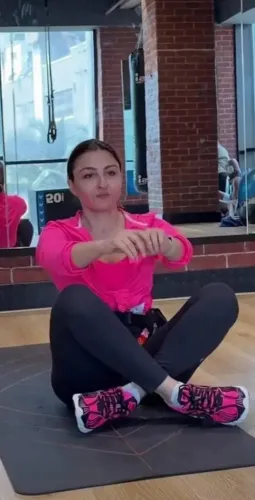
Soha Ali Khan lists 5 reasons to celebrate being a man on World Men's Day
Synopsis
Soha Ali Khan’s World Men’s Day video isn’t just a list of perks — it’s a quietly devastating audit of male privilege and male pain. By dropping the statistic that nearly three in four suicide deaths in India are men, she shifted a lighthearted format into a pointed call for men to seek help, all in under a minute.
Key Takeaways
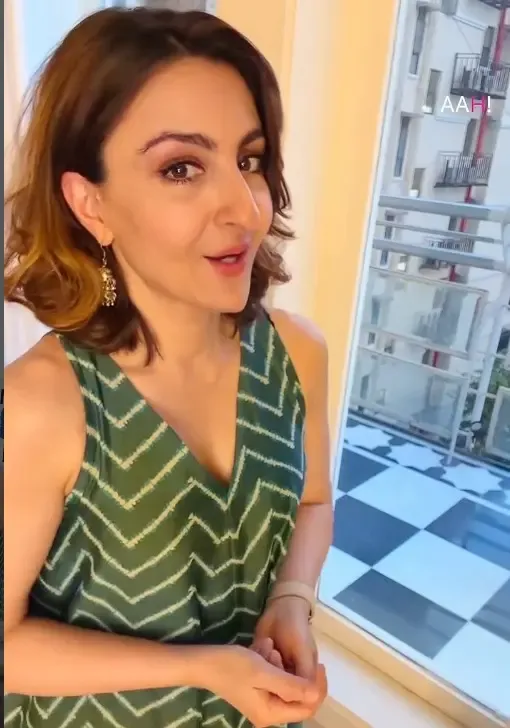
Soha Ali Khan shared a video on 19 November 2026 listing five reasons to celebrate being a man on World Men’s Day .
She noted that men in India live approximately three years less than women on average.
Nearly three out of four suicide deaths in India involve men, according to the figures she cited.
She identified the phrase ‘Mard Ko Dard Nahi Hota’ as culturally damaging to male mental health.
Her sister Saba Pataudi responded with a humorous comment on the post, noting the coincidence of World Toilet Day falling on the same date.
Actress Soha Ali Khan marked World Men's Day on 19 November 2026 by sharing a video laying out five reasons why being a man is worth celebrating — but with a sharp, socially conscious twist that turned several of those 'privileges' into a mirror held up to systemic gender expectations. The video, shared in Mumbai, quickly drew attention for its blend of humour and candid commentary on male mental health.
The Five Reasons, Unpacked
Soha, known for her roles in Rang De Basanti and Chhorii 2, opened with a pointed observation about workplace and social norms. 'Nobody has ever asked you, ‘but how will you balance work and family?’ Not at a wedding, not in a work situation, not in an interview, never,' she said, flagging the gendered nature of that question.
Her second point addressed how the world has historically been designed around the male body. 'You are the default setting. For decades, drugs and doses have been tested mostly on men. Crash test dummies were built on the average male body. The world was literally measured for you,' she noted.
The third reason highlighted the double standards applied to parenting. 'You load the dishwasher once, you’re a hands-on dad, change a diaper twice, and you are literally the poster boy for equal parenting,' she observed — drawing a contrast with the far higher bar routinely set for mothers.
Her fourth point was deliberately lighthearted: 'Your pocket actually fits a phone. Bus,' she quipped, a nod to the long-running frustration over the near-useless pockets in women’s clothing.
The Mental Health Message at the Core
Soha saved her most substantive point for last. Addressing the pressures placed on men to suppress vulnerability, she cited stark statistics: 'Men in India live about three years less than women. Nearly three out of four people who die by suicide in India are men.'
She identified the cultural phrase ‘Mard Ko Dard Nahi Hota’ — roughly, ‘a real man feels no pain’ — as a long-standing source of harm. 'I feel it is a slogan that has been doing a lot of damage for a very long time,' she said.
Wrapping up, Soha drew a contrast between what men are taught to fix and what they are not. 'You are taught to fix a light bulb and the Wi-Fi. You are not taught how to fix yourself. So reason five: you are allowed not to be okay. You’re allowed to ask for help. You’re allowed to see the doctor before that chest pain becomes more,' she concluded.
Family Reaction and a Quirky Coincidence
Soha also pointed out that World Men’s Day falls on the same date as World Toilet Day, 19 November — a detail she appeared to find amusing. Her sister Saba Pataudi commented on the post: 'Wellsaid... Toilet day?? Call your father ...ask how’s hes doing. Call the maid ask if the toilet is clean??;) Kidding. Happy Men’s day!'
Broader Context
The video arrives as conversations around male mental health gain momentum in India, with clinicians and advocacy groups increasingly flagging the country’s high male suicide rate as a public health concern that remains under-addressed. Soha’s remarks align with a growing body of opinion that toxic masculinity norms — far from protecting men — actively reduce their lifespans and wellbeing. How mainstream popular culture engages with that conversation is likely to remain a live debate.
Point of View
The absence of gender-sensitive services, and an insurance and healthcare system that still treats mental illness as secondary. The ‘Mard Ko Dard Nahi Hota’ critique is valid, but naming the slogan is only the first step. The harder question is what policy and institutional change looks like — and celebrity reach, however welcome, is not a substitute for that.
NationPress
19 Nov 2026
Frequently Asked Questions
What did Soha Ali Khan post on World Men's Day?
Soha Ali Khan shared a video on 19 November listing five reasons to celebrate being a man, blending humour with a serious call for male mental health awareness. The video highlighted gender double standards, male-default design norms, and India’s high male suicide rate.
What mental health statistics did Soha Ali Khan cite?
She cited that men in India live roughly three years less than women, and that nearly three out of four people who die by suicide in India are men. She attributed part of this to the cultural pressure encapsulated in the phrase ‘Mard Ko Dard Nahi Hota’.
What is World Men's Day and when is it observed?
World Men’s Day, also known as International Men’s Day, is observed annually on 19 November. It aims to highlight men’s health, positive male role models, and gender equality. Soha also noted it coincides with World Toilet Day.
Who is Soha Ali Khan?
Soha Ali Khan is an Indian actress known for films such as Rang De Basanti and Chhorii 2. She is a member of the Pataudi family and sister of actress Saba Pataudi, who also commented on the viral post.
Why does the 'Mard Ko Dard Nahi Hota' phrase matter?
The phrase, which translates roughly to ‘a real man feels no pain’, is a long-standing cultural trope in India that critics argue discourages men from seeking medical or mental health help. Soha described it as ‘doing a lot of damage for a very long time’, linking it to poorer health outcomes for men.