Sonu Nigam on auto-tune: 'I use it in certain songs'
Synopsis
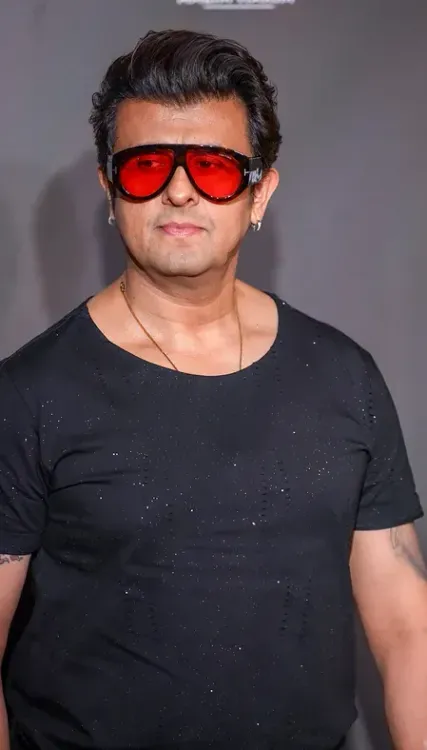
Sonu Nigam — the classical-trained voice behind some of Bollywood's most iconic songs — has admitted to using auto-tune on select recordings, framing it not as a shortcut but as a necessity of the fully digitised production era. His caveat is sharp: it is a finishing tool, not a replacement for genuine vocal ability, and actors who use it to chase dreams cannot displace professional singers.
Key Takeaways
Sonu Nigam confirmed he uses auto-tune in certain recordings on Komal Nahta's podcast 'Game Changers: The Music Series' .
He attributed the need for auto-tune to fully digitised music production, where a raw voice can sound 'off' against a straight digital track.
Nigam drew a clear line: singers should give 99% and use auto-tune to reach 100% — not use it to mask an inability to sing.
He said actors using auto-tune to enjoy their creative dreams is 'absolutely fine,' but they 'cannot replace singers.' Nigam's classical training and live-performance legacy underpin his nuanced, experience-driven view of the technology.
Veteran playback singer Sonu Nigam has openly acknowledged using auto-tune in some of his recordings, calling it a product of the digital age while drawing a firm line between its legitimate and exploitative uses. The singer made the remarks on trade expert Komal Nahta's podcast, 'Game Changers: The Music Series'.
What Sonu Nigam Said
Nigam was candid about the shift in recording conditions over the decades. 'The era of auto-tune has certainly brought a lot of changes. People say a lot of bad things about it but I say 'Jo bhi hua hai aacha hua hai'. In earlier days, you had to sing without auto-tune, and we are lucky to 'riyaaz' without it, and now we don't need it. But still, I would say I use auto-tune in certain songs of mine,' he said.
He explained that the shift from live orchestral arrangements to fully digitised production has fundamentally altered what a raw voice sounds like on a track. 'Everything now is so 440, previously everything was live. We had live 'sarangi', live strings, so somewhere our pitch didn't have to be perfect,' he noted.
The Case for Responsible Use
Nigam was careful to distinguish between using auto-tune as a finishing tool versus a crutch for those who cannot sing. 'Everything now is digitised, everything is going in a straight line and your voice will sound off if it's raw,' he said, adding that musicians must use the technology responsibly.
'It's our responsibility that we don't use the resources to fix the voices of those who can't sing. You give your 99% and bring it to 100% with auto-tune,' he emphasised.
On Actors Singing with Auto-Tune
Addressing the growing trend of Bollywood actors recording their own songs, Nigam was measured in his response. He said it is 'absolutely fine' for actors to use auto-tune to fulfil their creative aspirations, but was unequivocal that they 'cannot replace singers.'
A Career Defined by Classical Rigour
Nigam's perspective carries weight given his decades-long career built on rigorous classical training and a reputation for flawless live performances. He has been a witness to the music industry's transformation from the era of live orchestral studio recordings to today's fully digitised production environment — a journey that gives his nuanced take on auto-tune particular credibility. As the debate around technology and vocal authenticity intensifies across the global music industry, his remarks are likely to resonate well beyond Bollywood.
Point of View
Not a crutch, is a more sophisticated position than the binary debate the industry usually has. The real tension he surfaces is structural: as Bollywood increasingly blurs the line between actors and singers, the question of what constitutes authentic vocal performance becomes commercially loaded. His warning that auto-tune must not be weaponised to replace trained singers is less a moral stance and more a professional boundary marker — one that the streaming era is already testing.
NationPress
27 Sept 2026
Frequently Asked Questions
Does Sonu Nigam use auto-tune in his recordings?
Yes, Sonu Nigam has confirmed that he uses auto-tune in certain songs. He described it as a tool to bridge the gap between a raw voice and the demands of fully digitised music production, rather than a substitute for genuine vocal ability.
Why did Sonu Nigam say auto-tune is necessary today?
Nigam explained that modern music production is entirely digitised, meaning everything runs on a precise pitch grid. Unlike the era of live orchestral recordings — where singers could adjust to live instruments — a raw voice can now sound out of place without some degree of digital treatment.
What did Sonu Nigam say about actors using auto-tune?
Nigam said it is 'absolutely fine' for actors to use auto-tune to pursue their musical aspirations. However, he was clear that actors using the technology 'cannot replace singers' who have trained their voices professionally.
Where did Sonu Nigam make these remarks?
Sonu Nigam made these remarks on trade expert Komal Nahta's podcast, 'Game Changers: The Music Series,' during a conversation about the evolution of the music industry.
What is Sonu Nigam's view on the responsible use of auto-tune?
Nigam believes auto-tune should be used to refine a performance, not manufacture one. His position is that a singer must give 99% of their ability and use auto-tune only to reach the final 100% — and that using it to 'fix the voices of those who can't sing' is a misuse of the technology.