Suneeta Rao on singing A. R. Rahman's 'Adi Paru Mangatha' in 1994
Synopsis
Suneeta Rao has revisited her 1994 recording of 'Adi Paru Mangatha' for A. R. Rahman — a Tamil film song she calls one of the best-produced of her career, made all the more striking by the fact that she, a Telugu speaker, sang only the Tamil version. The throwback spotlights a quietly significant early Rahman collaboration that predates his global fame.
Key Takeaways
Suneeta Rao recalled recording 'Adi Paru Mangatha' for A.
Rahman in 1994 , calling it one of the best-produced playback songs of her career.
The song featured in the Tamil romantic film May Maadham , released on 9 September 1994 , directed by Venus Balu .
Despite coming from a Telugu-speaking family , Rao recorded only the Tamil version of the track.
The film starred Vineeth and Sonali Kulkarni and was an uncredited remake of the 1953 Hollywood film Roman Holiday .
Rao rose to fame with 'Paree Hoon Main' from her 1991 album Dhuan , which sold over 75,000 copies .
Singer Suneeta Rao has revisited a cherished chapter of her career, recalling how she recorded the Tamil track 'Adi Paru Mangatha' for music maestro A. R. Rahman in 1994 — a song she describes as one of the finest playback recordings of her life. The reminiscence, shared publicly by Rao, has sparked fresh interest in a lesser-discussed collaboration between two enduring names in Indian music.
The Song and Its Unusual Context
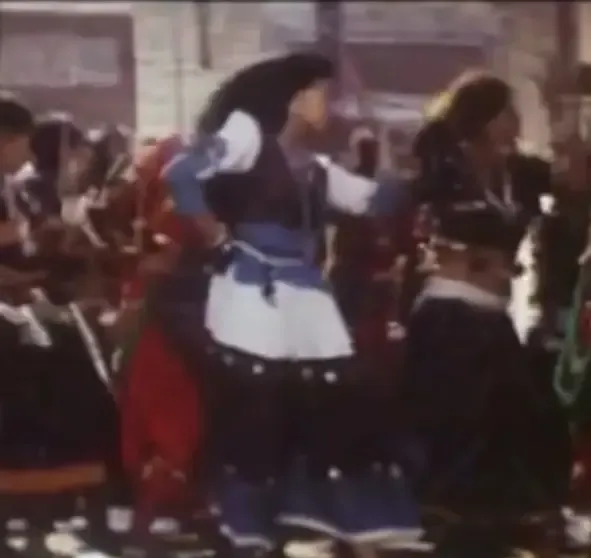
'Adi Paru Mangatha' featured in the 1994 Tamil romantic musical film May Maadham, directed by Venus Balu and starring Vineeth and Sonali Kulkarni. The film, released on 9 September 1994, is an uncredited remake of the 1953 Hollywood classic Roman Holiday and follows a young woman who escapes her regimented life on an adventure to Madras.
Rao noted a striking personal detail about the recording: despite hailing from a Telugu-speaking family, she recorded only the Tamil version of the number. “Based on a card game, the lyrics were mischievous and playful. Strangely enough even though I come from a Telugu speaking family, I only sang the Tamil version,” she wrote.
In Her Own Words
Sharing the memory on social media, Rao wrote: “In 1994 I sang this song called 'Adi paru Mangata' for A. R. Rehman. Based on a card game, the lyrics were mischievous and playful.” She added that the track “remains one of the best produced playback songs I have ever sung.” The post, tagged with #pareehoonmain and #arrehman, drew attention to an early Rahman collaboration that predates much of the global recognition he would go on to receive.
Suneeta Rao's Career Arc
Rao launched her music career with the song 'Suneeta Senorita' in 1989 before rising to national prominence with 'Paree Hoon Main'. Her 1991 Hindi pop album Dhuan, released through Gramophone Company India with music by Lesle Lewis, sold over 75,000 copies and earned her the moniker 'Paree of the Masses' in the press.
Subsequent releases including the folk-inflected tracks 'Dehka Dehka' and 'Kesariya' kept her at the top of pop charts. She later contributed 'Chhoti Chhoti Baatein' to the Magnasound album A Reason To Smile, released to mark 50 years of Indian Independence, and appeared on the group track 'Wajah Muskurane Ki' from the same album.
A. R. Rahman and May Maadham
The 1994 film remains a notable early entry in A. R. Rahman's discography, arriving just a year after his landmark debut with Roja. The pairing of Rahman's production sensibility with Rao's pop-crossover voice on 'Adi Paru Mangatha' represents a cross-genre moment that has largely flown under the radar until Rao's recent recollection brought it back into public conversation.
As nostalgia for 1990s Indian pop and film music continues to trend among younger listeners, Rao's throwback shines a light on the era's creative fluidity — when Hindi pop singers routinely crossed into regional film music and back again.
Point of View
With Rahman producing, was neither unusual nor exceptional — it was the working norm of a pre-fragmented music industry that the algorithm-era is only now rediscovering.
NationPress
14 Nov 2026
Frequently Asked Questions
What is the song 'Adi Paru Mangatha' and which film does it belong to?
'Adi Paru Mangatha' is a Tamil playback song from the 1994 romantic musical film May Maadham, directed by Venus Balu. The film starred Vineeth and Sonali Kulkarni, with music composed by A. R. Rahman, and was an uncredited remake of the 1953 Hollywood film Roman Holiday.
Why did Suneeta Rao call 'Adi Paru Mangatha' one of her best recordings?
Suneeta Rao described it as 'one of the best produced playback songs I have ever sung,' crediting A. R. Rahman's production quality. She also highlighted the song's playful, mischievous lyrics inspired by a card game.
How is Suneeta Rao connected to A. R. Rahman?
Suneeta Rao's early association with A. R. Rahman was through 'Adi Paru Mangatha' in 1994, one of his relatively early film projects following his landmark debut with Roja in 1992. The collaboration is considered a notable cross-genre moment in her career.
Who is Suneeta Rao and what is she known for?
Suneeta Rao is a Mumbai-based Hindi pop singer who began her career in 1989 and became a household name with 'Paree Hoon Main' from her 1991 album Dhuan, which sold over 75,000 copies. The press nicknamed her the 'Paree of the Masses.'
When was the Tamil film May Maadham released?
May Maadham was released on 9 September 1994. The Tamil-language romantic film was directed by Venus Balu and featured music by A. R. Rahman.