Is Sunny Deol Embracing Peace on the ‘Road to Heaven’ in Kutch?

Synopsis
Sunny Deol shares a tranquil moment from Kutch, reflecting on his journey. As he celebrates the success of his film 'Border 2', he reveals a glimpse of the serene landscape, hinting at deeper narratives in his upcoming film 'Lahore 1947'. Discover how these stories intertwine with India's rich history.
Key Takeaways
Sunny Deol shares reflective moments during his travels. 'Border 2' showcases the 1971 war . 'Lahore 1947' explores the Partition of India .
Collaboration with Aamir Khan and Rajkumar Santoshi .
Emotional narratives highlight coexistence and identity .
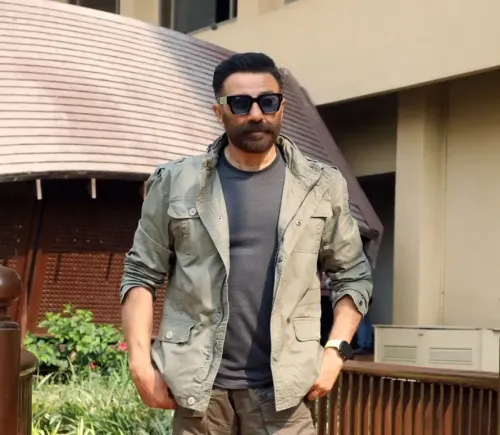
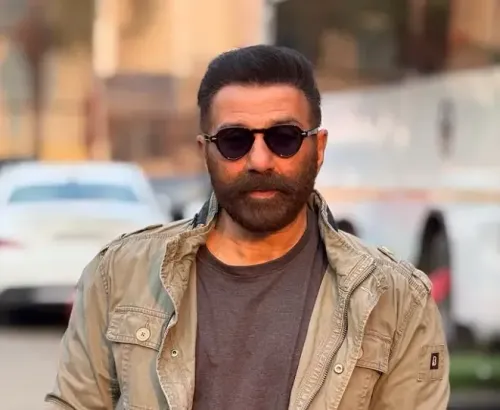
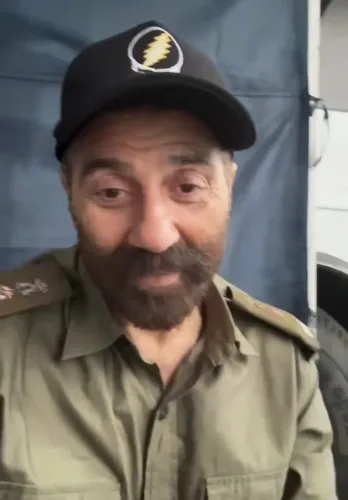
Mumbai, Feb 10 (NationPress) Renowned actor Sunny Deol shared a serene moment from his journey by posting a picture from Kutch.
On his Instagram, Sunny uploaded a video of himself resting against his car, admiring the expansive waters as the sky transitions into gentle shades of either dawn or dusk.
He captioned the post with “Road to heaven. Kutch,” reflecting on the tranquility and stillness of the landscape while celebrating the success of his latest film, “Border 2.”
This film is inspired by the events surrounding the 1971 war. It is produced by Gulshan Kumar & T-Series, in collaboration with J.P. Dutta’s J.P. Films, featuring a strong production team that includes Bhushan Kumar, Krishan Kumar, J.P. Dutta, and Nidhi Dutta, directed by Anurag Singh.
Previously, J.P. Dutta’s acclaimed film “Border” was released in 1997, featuring an impressive ensemble cast such as Sunny Deol, Jackie Shroff, Suniel Shetty, and Akshaye Khanna, along with Tabu, Pooja Bhatt, and others.
Sunny is set to appear in ‘Lahore 1947’, which will be released in cinemas on August 13.
This film marks the first collaboration between Sunny Deol, director Rajkumar Santoshi, and producer Aamir Khan.
Aamir Khan expressed, “This was one of the favorite scripts of Dharamji, and I am so glad he could see the film.”
The cast also includes Shabana Azmi, Preiti Zinta, and Karan Deol, with music composed by AR Rahman and lyrics by Javed Akhtar. ‘Lahore 1947’ is positioned as Sunny’s next venture after his recent blockbuster hits.
This narrative is set against the backdrop of the 1947 Partition of India, exploring one of the most tumultuous periods in the subcontinent’s history. It marks Sunny Deol’s reunion with Rajkumar Santoshi, following their collaborations on ‘Ghayal’ and ‘Damini’.
The story is reportedly adapted from Asghar Wajahat’s celebrated play ‘Jis Lahore Nai Dekhya, O Jamyai Nai’, which delves into the Partition through personal relationships impacted by communal violence and displacement.
The plot centers around a Hindu family compelled to migrate from Lahore to India, who are allocated a haveli once occupied by a Muslim family, only to find an elderly Muslim woman still residing there.
The film promises an emotionally charged exploration of identity, loss, coexistence, and moral duty amid significant upheaval.
Point of View
Sunny Deol's recent reflections in Kutch bring forth not just a personal moment of tranquility but also highlight the significant narratives embedded in his upcoming projects. As the nation resonates with stories from its past, Deol's films serve as a reminder of the rich and turbulent history that shapes our present.
NationPress
20 Sept 2026
Frequently Asked Questions
What is Sunny Deol's latest film?
Sunny Deol's latest film is 'Border 2', which focuses on the events of the 1971 war.
When is 'Lahore 1947' set to release?
'Lahore 1947' is scheduled to be released in cinemas on August 13.
Who else stars in 'Lahore 1947'?
The film features Shabana Azmi, Preiti Zinta, and Karan Deol among others.
What historical event does 'Lahore 1947' address?
'Lahore 1947' addresses the Partition of India, focusing on personal stories against that backdrop.
Who directed 'Lahore 1947'?
'Lahore 1947' is directed by Rajkumar Santoshi.