Zeenat Aman on fame and self-worth: 'Why hinge yourself on something so fickle?'
Synopsis
Zeenat Aman's reflection on fame — delivered to Karan Johar on 'Koffee With Karan' — is one of the most searingly honest things a Bollywood star has said about the psychological trap of public adulation. Coming from a woman who has lived every phase of celebrity, her words carry a weight that no newer-generation influencer advice quite matches.
Key Takeaways
Zeenat Aman cautioned against equating fame with self-worth during an appearance on 'Koffee With Karan' with filmmaker Karan Johar .
She described fame as 'fickle', noting that public opinion cycles through love, dislike, hatred, pity, and revival.
Zeenat Aman won the Femina Miss India title and Miss Asia Pacific International pageant in 1970 before debuting in Bollywood in 1971 .
Her landmark films include 'Haré Rama Haré Krishna' , 'Satyam Shivam Sundaram' , and 'Hum Kisise Kum Naheen' (1977) , among others.
She was married to actor Mazhar Khan from 1985 until his death in 1998 , following an earlier brief marriage to Sanjay Khan .
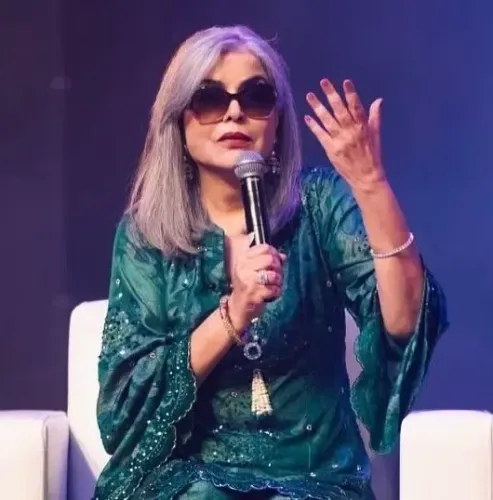
Veteran actress Zeenat Aman once offered a candid reflection on the dangers of equating fame with self-worth, speaking during an appearance on filmmaker Karan Johar's popular celebrity chat show 'Koffee With Karan'. Her remarks, both honest and philosophical, have continued to resonate with audiences long after the episode aired.
What Zeenat Aman Said About Fame
Addressing the subject directly with Johar, Zeenat Aman cautioned against allowing public adulation to define one's inner sense of value. She pointed out that fame is inherently unstable, shifting with the winds of public opinion at every stage of a person's career or social standing.
In her own words, she told the filmmaker: 'Fame is such a fickle thing, and you cannot hinge your sense of self-worth, you know, on that because one day you're loved, the next day you're disliked, the third day you're hated, the fourth day you're pitied, and a few days down the road they will resurrect you again. So, why would you base your sense of self-worth on something as fickle as that?'
The observation carries weight coming from someone who has lived through the full arc of Bollywood celebrity — from dazzling highs to quieter years and a celebrated return to public life in recent times.
A Career Defined by Landmark Roles
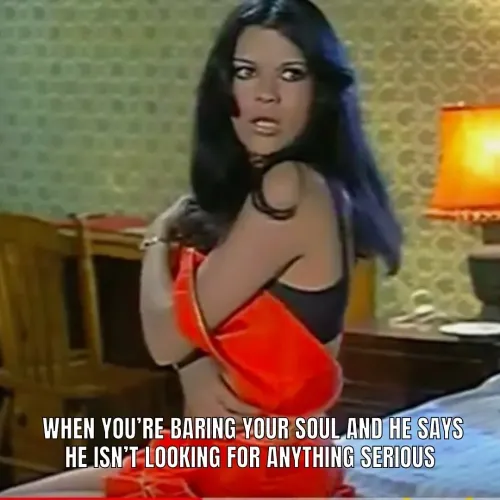
Zeenat Aman first came to national attention when she won the Femina Miss India title and the Miss Asia Pacific International pageant in 1970. She made her Bollywood debut with the 1971 release 'Hulchul' before breaking through to mainstream recognition with Dev Anand's 'Haré Rama Haré Krishna', in which the two played siblings.
Over the decades that followed, she became one of the most bankable actresses of her era, appearing in a string of commercially and critically significant films. Her notable filmography includes 'Yaadon Ki Baaraat' (1973), 'Roti Kapada Aur Makaan' (1974), 'Ajanabee' (1974), 'Warrant' (1975), 'Chori Mera Kaam' (1975), 'Dharam Veer' (1977), 'Chhailla Babu' (1977), 'Hum Kisise Kum Naheen' (1977), and 'The Great Gambler' (1979), among others. Her role in 'Satyam Shivam Sundaram' remains among the most discussed of her career.
Personal Life and Resilience
Off screen, Zeenat Aman's personal journey has been equally eventful. She married actor and director Sanjay Khan in the late 1970s, but the marriage lasted only about a year before the couple separated. She later married actor Mazhar Khan in 1985 and remained with him until his death in 1998.
Her willingness to speak openly about the psychological toll of fame — particularly its impermanence — reflects a self-awareness that has only grown more prominent as she has re-engaged with public life and younger audiences in recent years.
Why Her Words Still Matter
In an era when social media has amplified both adulation and online hostility, Zeenat Aman's perspective on untethering identity from external validation feels remarkably current. Her remarks cut to a tension that many public figures — from actors to athletes to influencers — continue to navigate. Notably, her renewed engagement with audiences across digital platforms has introduced her philosophy to an entirely new generation.
Point of View
Missing the sharper point — that the self-worth-fame trap is more dangerous now, not less, given the dopamine mechanics of social media. Her renewed cultural visibility in recent years makes her perspective not archival but urgently instructive for a generation of creators who are watching their metrics in real time.
NationPress
4 Oct 2026
Frequently Asked Questions
What did Zeenat Aman say about fame and self-worth on 'Koffee With Karan'?
Zeenat Aman told host Karan Johar that fame is too unstable a foundation for self-worth, describing how public opinion cycles rapidly from love to hatred to pity and back again. She asked directly: 'Why would you base your sense of self-worth on something as fickle as that?'
When did Zeenat Aman start her Bollywood career?
Zeenat Aman made her Bollywood debut with the 1971 film 'Hulchul', a year after winning both the Femina Miss India title and the Miss Asia Pacific International pageant in 1970. She rose to wider fame with Dev Anand's 'Haré Rama Haré Krishna' soon after.
What are some of Zeenat Aman's most notable films?
Her acclaimed filmography spans multiple decades and includes 'Haré Rama Haré Krishna', 'Yaadon Ki Baaraat' (1973), 'Roti Kapada Aur Makaan' (1974), 'Satyam Shivam Sundaram', 'Dharam Veer' (1977), 'Hum Kisise Kum Naheen' (1977), and 'The Great Gambler' (1979), among others.
Who was Zeenat Aman married to?
Zeenat Aman was first married to actor and director Sanjay Khan in the late 1970s, but the marriage ended within about a year. She later married actor Mazhar Khan in 1985 and remained with him until his death in 1998.
Why is Zeenat Aman's perspective on fame relevant today?
Her observation that public approval is cyclical and emotionally unreliable resonates strongly in the social media era, where creators and public figures face constant and instantaneous shifts in audience sentiment. Critics and commentators have noted that her remarks apply with even greater force to influencer culture than to the Bollywood of her heyday.