Does Yami Gautam Believe God Enables Art Through Humans?

Synopsis
In her latest interview, Yami Gautam discusses her upcoming film 'Haq' and shares her profound belief that while humans craft art, it is the divine hand of God that empowers the creative journey. Her insights spark a conversation about the intersection of spirituality and creativity, leaving us to ponder our own artistic pursuits.
Key Takeaways
Yami Gautam emphasizes the divine role in creativity.
Art is viewed as a sacred expression by the actress. 'Haq' explores significant legal issues surrounding women's rights.
The film draws from a landmark case in Indian law.
Yami's perspective invites deeper reflection on the nature of art and belief.
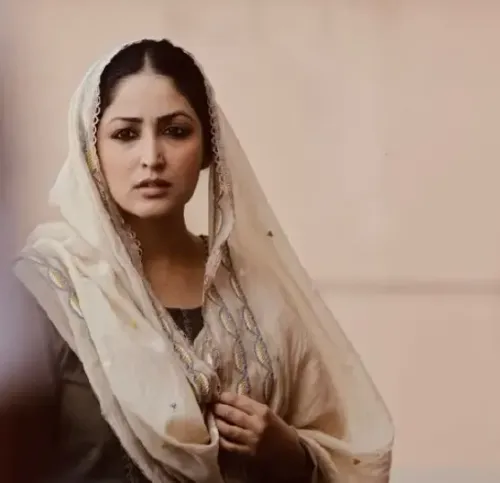
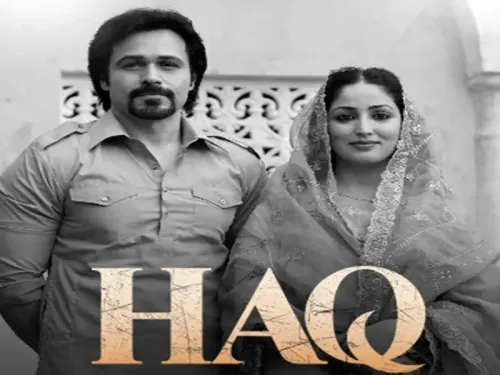
Mumbai, Nov 4 (NationPress) Actress Yami Gautam, who is preparing for the debut of her new film 'Haq', expressed her belief that while humans are the creators of art, it is ultimately the hand of God that facilitates this creative process.
During a promotional event at a luxury hotel in the Juhu district of Mumbai, the actress shared her insights with IANS.
Gautam stated, “We are all creations of a higher power, and I believe we are some truly remarkable beings. If we acknowledge our inherent strength and potential, which I am unsure if we've fully embraced, we as a species can genuinely transform this world.”
She added, “Each of us has a unique purpose and a form of art to express. Art is not limited to painting; it is a profound blessing, and it is our responsibility to respect it. As a writer, I understand the sanctity of the pen and thoughts. It all boils down to belief; if you introspect deeply, you can indeed perceive God in it. We are creations of God, His illustrations and expressions, and we merely serve as the medium through which art flows.”
In addition, her forthcoming film draws inspiration from the pivotal legal case of Mohd. Ahmed Khan v. Shah Bano Begum. Shah Bano, a 62-year-old Muslim woman, sought financial support from her husband following a divorce via triple talaq. The Supreme Court ruled in her favor under Section 125 of the Criminal Procedure Code, affirming that maintenance rights extend to all citizens, regardless of religion.
This verdict incited backlash from conservative Muslim factions who claimed it infringed upon Muslim Personal Law. In response to political pressure, Prime Minister Rajiv Gandhi's Congress (INC) government enacted the Muslim Women (Protection of Rights on Divorce) Act, 1986, effectively nullifying the ruling and reinstating the community’s autonomy over personal law.
This legislative move was perceived as an attempt to placate conservative Muslim leaders, yet it faced significant criticism for undermining women's rights and judicial independence. The case sparked a national dialogue regarding secularism, minority rights, and the necessity for a uniform civil code.
Point of View
We at NationPress recognize the importance of highlighting diverse perspectives. Yami Gautam's comments on the divine connection to art open a vital dialogue about the role of spirituality in creativity, emphasizing our shared responsibility to respect and embrace our artistic expressions.
NationPress
20 Sept 2026
Frequently Asked Questions
What is Yami Gautam's view on the role of God in art?
Yami Gautam believes that while humans create art, it is the hand of God that enables this process, highlighting the divine connection in artistic expression.
What is the main theme of Yami Gautam's upcoming film 'Haq'?
The film 'Haq' is inspired by the significant legal case of Mohd. Ahmed Khan v. Shah Bano Begum, which addresses women's rights and maintenance issues in the context of Muslim Personal Law.
How did the Shah Bano case impact women's rights in India?
The Shah Bano case sparked a national debate on women's rights, leading to changes in legal frameworks that have profound implications for secularism and minority rights in India.