Did Zeenat Aman Ignite a Discussion on Women's Clothing Rights Through a Scene from 'Dostana'?
Click to start listening
Synopsis
Zeenat Aman revisits an iconic scene from 'Dostana' that sparks a dialogue on women's clothing rights and patriarchal attitudes. Her reflections bring forth a contemporary understanding of societal norms and women’s empowerment. Discover how a 1970s film resonates with today's generation.
Key Takeaways
- Zeenat Aman reflects on the evolution of women's clothing rights.
- The portrayal of patriarchal attitudes in Dostana sparks important discussions.
- Modern audiences are more critical of condescending views towards women.
- Empowerment and personal choice are central themes in today's society.
- Engagement in dialogues about societal norms is essential for progress.
Mumbai Dec 4 (NationPress) Iconic Bollywood actress Zeenat Aman has long been a beacon of progressiveness, both in her fashion choices and her perspectives. Her films from the golden age of Bollywood conveyed this message effectively.
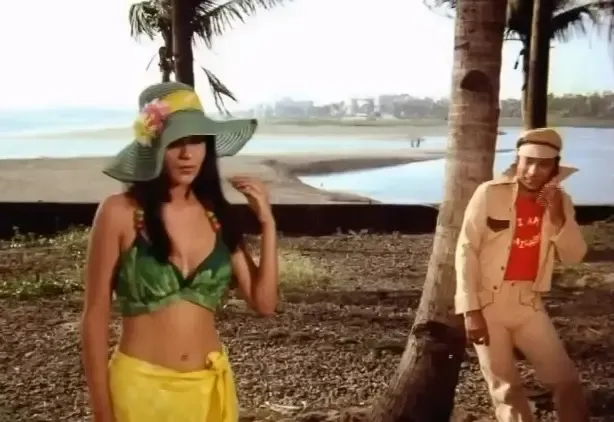
Recently, she shared a thought-provoking video clip from her blockbuster film Dostana, featuring Amitabh Bachchan and Shatrughan Sinha. The clip she posted highlights the condescending attitudes and patriarchal mindset prevalent among men in the 1970s.
The scene depicts her character, Sheetal, strolling along a beach in swimwear, only to be harassed by a man. Undeterred, Sheetal confronts the aggressor and drags him to the police station, where Inspector Vijay, played by Amitabh Bachchan, apprehends him. What ensues is likely to provoke the curiosity of today’s audience.
Inspector Vijay questions Sheetal about her 'revealing' beach attire, claiming that women of yesteryear favored more modest clothing. He expresses confusion over the current trend of women wearing less. Standing resolutely, Sheetal counters his remarks by affirming her right to choose her attire and asserts that her clothing is a matter of personal freedom.
In response, Vijay states that it is his “duty” to advise her, leaving the final decision to her. Nearly 45 years post the film's release, Zeenat reflected on the casual portrayal of such patriarchal views in the film on social media. She remarked, “I often revisit clips from my earlier films to share with you all. Today, I stumbled upon this particular scene, rich in social commentary that had me reflecting deeply!”
“In youth, one believes that societal norms are set in stone, absolutely unchangeable; at best, one can chip away at them through acts of rebellion. As time progresses, one realizes, ‘wow, everything has changed’. Although the moral guardians remain as vigilant as ever, the narrative has undoubtedly evolved,” she elaborated.
“For those women who viewed this clip, I wager you felt enraged by the harassment and identified with Sheetal’s discomfort and fury, often stemming from personal experiences. You admired her courage in confronting her harasser, a feat many of you may not have felt empowered to achieve. And let’s not forget the frustration with Inspector Vijay’s patronizing tone! Am I correct?” Zeenat queried. She continued, “That attitude was typical of the era. Women defying tradition often faced a dismissive gaze masked with a ‘you’re asking for it’ perspective!”
She concluded, “I’m pleased that this response annoys you. That’s the change! Back then, many women considered Vijay a noble gentleman, believing Sheetal warranted reprimand just as much as her assailant. However, a younger woman I showed this to today scoffed at the inspector and remarked, ‘What a loser.’ I found that quite amusing.”
Zeenat also expressed her evolved perspective: “I have now embraced a more pragmatic viewpoint. I support every individual's right to wear what they choose, while also recognizing that societal contexts dictate suitability. Is this an outdated sentiment?” she pondered.
“Perhaps, but bear with me. As I’ve aged, I find the new social norms and language as perplexing as the old norms once felt suffocating. I invite your thoughts on this, especially if you possess greater insight than I do!”
For those unfamiliar, Dostana was released in 1980 and became a blockbuster.
–IANS
Point of View
I emphasize the importance of this conversation initiated by Zeenat Aman. Her reflections not only highlight the evolution of societal norms surrounding women's clothing but also encourage a broader discussion on personal freedom and empowerment in today’s context. It is crucial for society to engage in these dialogues to foster a more inclusive environment.
NationPress
04/12/2025
Frequently Asked Questions
What is the main theme of Zeenat Aman’s social media post?
Zeenat Aman discusses women's clothing rights and highlights the patriarchal mindset portrayed in the film 'Dostana.'
How does Zeenat Aman relate the past to present societal norms?
She reflects on the changing perceptions of women's clothing and how attitudes have evolved over the years.
What was the reaction of the younger generation to the scene?
A younger viewer scoffed at Inspector Vijay, indicating a shift in societal attitudes towards women's empowerment.
What does Aman think about her past views on clothing?
She acknowledges her growth to a more realistic perspective, supporting personal choice while understanding societal contexts.
What was the public's response to the scene from 'Dostana'?
Many viewers resonated with Sheetal's discomfort and admired her bravery in confronting harassment.