How Can Accessibility, Affordability, and Personalization Enhance Women’s Health?
Synopsis
At the World Economic Forum 2026 in Davos, experts agree on the need for enhanced accessibility, affordability, and personalized healthcare to close the health gap for women by 2030. Key insights reveal the critical innovations and strategies needed to make a significant impact.
Key Takeaways
Enhancing accessibility and affordability is crucial for women's health.
Personalized treatment can significantly improve health outcomes.
Investment in sex-specific research is essential to reduce mortality rates.
Innovations like the HPV vaccine and AI-based diagnostics are game-changers.
Primary healthcare is fundamental for a stable society.
New Delhi, Jan 22 (NationPress) Experts at the ongoing World Economic Forum 2026 in Davos emphasized that enhancing accessibility, affordability, and customizing treatment and diagnostics for women are vital strategies to narrow the health gap for women by 2030. It was noted that women endure 25 percent more of their lives in poor health compared to men, primarily due to delayed diagnoses and restricted access to suitable care.
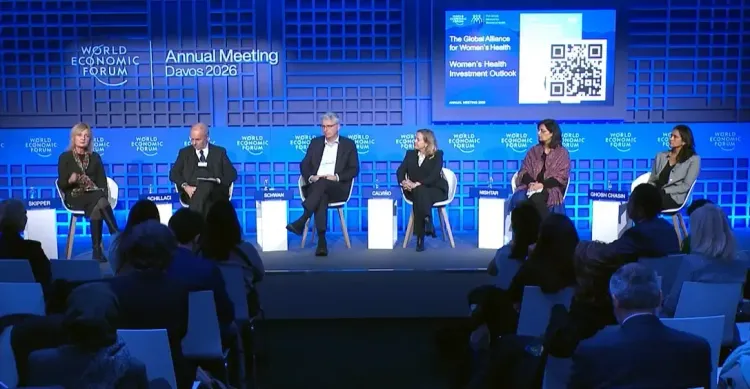
During a session titled "Breakthroughs in Women's Health," specialists pointed out that inadequate funding for sex-specific research and innovations targeting women leads to preventable deaths and economic losses, estimated globally at $1 trillion.
The panelists unanimously agreed on the necessity of prioritizing the human aspect of implementation.
“The most significant innovations are those that become accessible, affordable, and utilized by women globally,” stated Gargee Ghosh Chasin, President of Global Policy and Advocacy at the Gates Foundation.
“While invention is essential, access and usage are equally crucial. That distinction is what separates a product from its impact,” she further elaborated, citing remarkable innovations in women’s health, including the HPV vaccine for cervical cancer, an AI-based ultrasound designed for early detection of high-risk pregnancies, and a microarray patch for contraception.
Sania Nishtar, CEO of Gavi-The Vaccine Alliance, highlighted that it is imperative to convert scientific findings and evidence into effective policy, then pilot programs, and subsequently scale them up for widespread delivery.
“Innovations must align with delivery capabilities. The challenge lies in the lack of sustainable financing and delivery infrastructure, which hampers the effective application of these innovations,” she added.
Nadia Calviño, President of the European Investment Bank, underlined the significance of primary health care and the distribution of preventive treatments to women.
“Primary health is foundational for a healthy society. Women's health is critical for a stable and healthy community. We must focus on family doctors and ensure that preventive treatments reach every woman globally,” Calviño asserted.
Orazio Schillaci, Italy's Minister of Health, urged for an increase in clinical trials specifically designed for women and the personalization of treatments. He also acknowledged the transformative potential of artificial intelligence in enhancing the health sector.
Point of View
I believe that the insights shared at the World Economic Forum 2026 highlight an urgent need for systemic changes in women's healthcare. By prioritizing accessibility, affordability, and personalization, we can pave the way for a healthier future for women everywhere. Addressing these gaps is not just a healthcare issue, but a societal imperative.
NationPress
24 Sept 2026
Frequently Asked Questions
What are the main challenges in women's health?
The main challenges in women's health include delayed diagnoses, limited access to appropriate care, and insufficient investment in sex-specific research.
Why is personalized treatment important for women?
Personalized treatment is crucial as it ensures that healthcare solutions are tailored to the unique needs of women, enhancing effectiveness and outcomes.
What role does innovation play in women's health?
Innovation plays a pivotal role in developing new treatments and technologies that can significantly improve women's health outcomes.
How can we improve accessibility in women's health?
Improving accessibility involves enhancing the distribution of healthcare services, funding for research, and ensuring that innovative solutions reach women globally.
What are the economic implications of neglecting women's health?
Neglecting women's health can lead to preventable mortality and morbidity, resulting in an estimated global economic loss of $1 trillion.