Why is Underinvestment Threatening Women’s Lives and Wasting Economic Potential?
Synopsis
A recent report unveiled at the World Economic Forum reveals alarming underinvestment in women's healthcare, jeopardizing their health and wasting immense economic potential. With only 6% of private healthcare funding directed towards women, urgent action is needed to address this critical issue.
Key Takeaways
Women’s healthcare is severely underfunded.
Only 6% of private healthcare investment goes to women.
Significant conditions affecting women receive less than 2% funding.
Women in low- and middle-income countries are most affected.
Investment momentum is increasing in digital healthcare and cancer therapies.
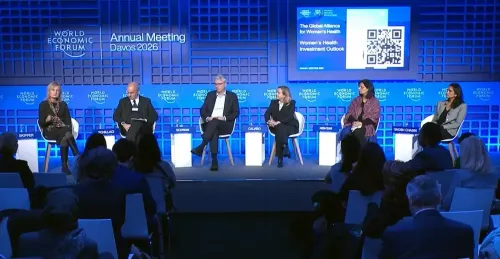
Davos, Jan 20 (NationPress) Despite making up nearly half of the global populace, women's healthcare is severely underfunded, which not only jeopardizes their health but also squanders a vast economic potential, as revealed in a recent report unveiled at the ongoing World Economic Forum Annual meeting on Tuesday.
The report highlighted that women receive a mere 6 percent of private healthcare investments, with 90 percent of this funding directed solely towards women's cancers, reproductive health, and maternal health.
This leaves numerous other prevalent and serious conditions, including cardiovascular disease, osteoporosis, menopause, Alzheimer’s, endometriosis, polycystic ovary syndrome (PCOS), and menstrual health, “disproportionately undercapitalized.”
Conditions such as endometriosis, PCOS, and menstrual health, which impact tens of millions of women “uniquely,” receive under 2 percent of women’s health funding, according to the report.
Women in low- and middle-income countries are the most affected by this funding disparity.
“Men’s health has historically served as the default standard for research and product development, with clinical guidelines, trial designs, and innovation channels frequently aligned with male physiology and requirements,” stated Shyam Bishen, Head of the Centre for Health and Healthcare at the World Economic Forum.
“This approach systematically neglects conditions that impact women uniquely, differently, or disproportionately, leaving critical areas underfunded, under-researched, and underserved,” Bishen continued.
The report linked the funding gap for women's health to a higher likelihood of women spending their lives in poor health or with disabilities, despite having a longer life expectancy.
Nevertheless, it noted that there is a growing momentum for investments, particularly in women's cancer therapies; digital healthcare solutions, including remote maternal and mental health services; longevity clinics catering to middle-aged and menopausal women; and wearable technology for tracking metabolic health issues like PCOS and gestational diabetes.
The report recommended collaborative initiatives to broaden the evidence base in women's health, enhance transparency regarding outcomes and economic returns, and extend reimbursement for treatments while modernizing regulatory frameworks.
Point of View
I affirm that the findings of this report highlight a critical gap in healthcare investment that affects millions of women, particularly in low- and middle-income regions. This underfunding not only endangers their health but also represents a significant loss in economic potential. It is essential for policymakers and stakeholders to address this disparity urgently.
NationPress
24 Sept 2026
Frequently Asked Questions
What percentage of healthcare funding is allocated to women's health?
Women receive only 6% of private healthcare investment, with a significant portion focused on cancers and reproductive health.
Which conditions are underfunded in women's health?
Conditions like cardiovascular disease, osteoporosis, menopause, Alzheimer’s, endometriosis, PCOS, and menstrual health are disproportionately underfunded.
Who is most affected by the funding gap in women's healthcare?
Women living in low- and middle-income countries are the most impacted by the healthcare funding gap.
What solutions does the report suggest?
The report suggests collaborative efforts to expand the evidence base in women's health, enhance transparency, and modernize regulatory frameworks.
Is there a growing investment in women's healthcare?
Yes, there is increasing momentum for investments, particularly in digital healthcare and therapies for women’s cancer.