CM Fadnavis Launches ₹1,850 Cr Projects in Kolhapur
Synopsis
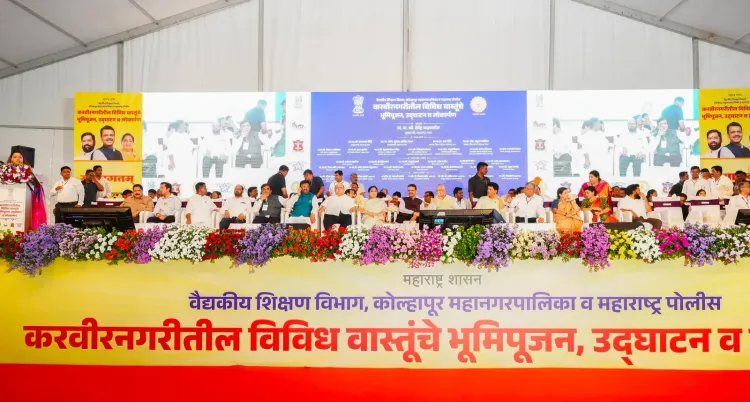
Chief Minister Devendra Fadnavis on 9 August 2026 inaugurated projects worth ₹1,850 crore in Kolhapur — including the rebuilt Keshavrao Bhosale theatre, a modernised heritage hospital, 414 police flats, an astroturf hockey pitch, and a World Bank-backed flood diversion plan to channel 35–40 TMC of surplus water to drought-hit Marathwada.
Key Takeaways
₹1,850 crore worth of projects inaugurated, foundation-stoned, or dedicated to the public in Kolhapur on 9 August 2026 by CM Devendra Fadnavis .
The Sangitsurya Keshavrao Bhosale Natyagriha , originally opened on 14 August 1915 , has been rebuilt after a fire, with its heritage exterior preserved.
CPR Hospital upgraded with 8 modular OTs, a burn ward, and a 30-bed accident unit; a new 600-bed complex including cancer and super-speciality hospitals planned at Shenda Park .
414 police residential flats delivered across Kolhapur (204) and Ichalkaranji (210); state targeting 50,000 police homes statewide.
World Bank-backed MRDP revived to divert 35–40 TMC of Kolhapur-Sangli floodwater to drought-prone western Maharashtra and Marathwada via diversion canals.
Astroturf at Major Dhyan Chand Hockey Stadium built for ₹6.96 crore ; BCCI approached to build a modern cricket stadium in Kolhapur.
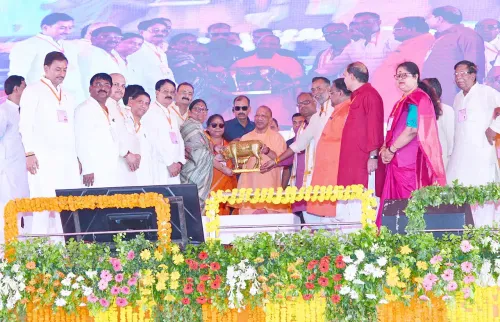
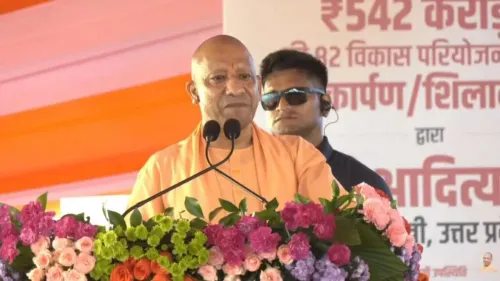
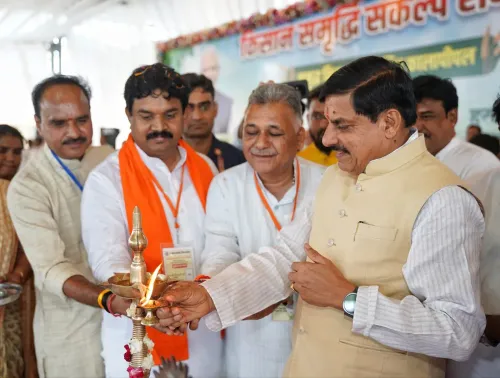
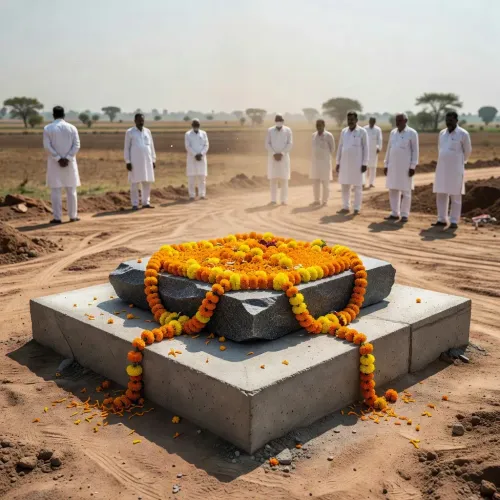
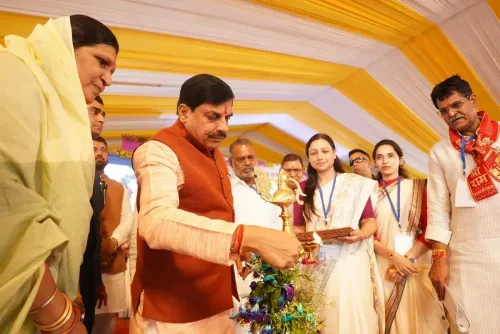
A century-old theatre rises from ash, a flood-battered city gets a World Bank lifeline, and a historic hospital finds new purpose — Chief Minister Devendra Fadnavis on Sunday, 9 August 2026, inaugurated, laid foundation stones for, and dedicated to the public a clutch of projects worth ₹1,850 crore in Kolhapur, signalling what he called a 'garud jhep' — an eagle's leap — for the city.
The Theatre That Refused to Stay Silent
At the heart of the ceremony was the rebirth of the Sangitsurya Keshavrao Bhosale Natyagriha, one of Maharashtra's most storied stages. Originally inaugurated as the Palace Theatre on 14 August 1915 by Chhatrapati Rajaram Maharaj, it was renamed in 1957 to honour the legendary classical singer Keshavrao Bhosale. A fire roughly two years ago gutted the structure, but the state government moved quickly to fund its reconstruction — preserving the original exterior while modernising the interior.
Fadnavis invoked the theatre's towering legacy, recalling the celebrated jugalbandi — the musical duel — between Balgandharva and Keshavrao Bhosale in the Marathi musical play Sangeet Manapmaan as 'an indelible treasure of Marathi theatre history.' The venue has hosted everything from classical music and lavani to tamasha, powada, and dashavatar performances across its 111-year life. The CM also promised further expansion works for the theatre.
Fadnavis used the occasion to celebrate Kolhapur's broader cultural footprint, naming filmmakers Baburao Painter, Bhalji Pendharkar, and V. Shantaram; vocalists Pandit Vishnu Palushkar, Sudhir alias Babuji Phadke, and Suresh Wadkar; actors Arun Sarnaik and Ramesh Dev; and Bhanu Athaiya — India's first Oscar winner, for costume design — as sons and daughters of Kolhapur's soil.
Hospitals, Housing, and a High Court Bench
The Chhatrapati Pramilraje Sarvopachar Rugnalaya (CPR Hospital) has been revived with its heritage character intact and now features 8 modular operation theatres, a modular burn ward, a 30-bed modular accident ward, and dialysis facilities. Fadnavis announced that Shenda Park will host a new 600-bed super-speciality complex combining a 250-bed cancer hospital and a 250-bed super-speciality hospital, evoking the healthcare legacy of Rajarshi Chhatrapati Shahu Maharaj.
On housing, the state's plan to build 50,000 homes for police personnel across Maharashtra yielded a concrete dividend here: a 17-storey residential tower with 204 flats at the Chhatrapati Maharani Tararani Police Housing Complex in Kolhapur, plus 210 flats in Ichalkaranji — a combined 414 police apartments dedicated today.
Kolhapur also gets a High Court circuit bench, with 75 acres at Shenda Park allocated for the court complex. Fadnavis said an IT park and a convention centre are also planned for the same precinct, making boundary expansion of the city an administrative necessity — and assuring residents newly drawn into city limits that their concerns will be resolved 'one hundred percent.'
Astroturf, Cricket, and the BCCI Request
Kolhapur's love of sport beyond wrestling got a formal nod. An astroturf pitch has been developed at the Major Dhyan Chand Hockey Stadium using ₹6.96 crore from the central government's Khelo India scheme and municipal funds, enabling state and international hockey tournaments. Land has been earmarked for a cricket stadium, and Fadnavis confirmed a formal request has been sent to the BCCI to build 'one of the country's most modern and high-quality cricket stadiums' in the city.
The Flood Fix: 35–40 TMC Redirected to Dry Districts
Perhaps the most consequential announcement was on flood control. Fadnavis acknowledged the recurring devastation floods cause in Kolhapur and Sangli and said the long-stalled Maharashtra Resilience Development Programme (MRDP) — backed by the World Bank — has now been revived through MITRA (Maharashtra Institution for Transformation). The programme covers the entire catchment zone, not just the two cities.
Crucially, 35 to 40 TMC of surplus floodwater will be diverted via a diversion canal to drought-prone talukas in western Maharashtra, then onward to the Ujani dam and further into Marathwada — turning a perennial crisis into a water-supply opportunity for some of the state's most parched regions.
Other projects dedicated to the public included the Rajarshi Chhatrapati Shahu Maharaj Samadhi Sthal, a musical fountain at Rankala Lake, a multi-storey parking facility at the Mahalaxmi Ambabai Temple precinct, a sewage treatment plant, and ₹484 crore worth of roads and civic amenities under MRDP.
Kolhapur has always been a city that punches above its weight — in culture, in sport, in history. With ₹1,850 crore now committed and a World Bank flood programme finally moving, the question is no longer whether the city will transform, but how fast the scaffolding comes down.
Point of View
Civic upgrades, and welfare infrastructure into a single high-visibility event to project governance momentum. Reviving the MRDP — a project that stalled under previous governments — and framing its flood-diversion canal as a water-supply solution for Marathwada is politically astute, addressing two of Maharashtra's most persistent regional grievances simultaneously. The BCCI stadium request and High Court circuit bench signal an ambition to reposition Kolhapur as a tier-two city with tier-one amenities, which will test the administration's delivery record as much as its announcement calendar.
NationPress
10 Aug 2026
Frequently Asked Questions
What is the Sangitsurya Keshavrao Bhosale Natyagriha and why was it rebuilt?
It is a historic theatre in Kolhapur originally inaugurated as the Palace Theatre on 14 August 1915 by Chhatrapati Rajaram Maharaj and renamed in 1957 after classical singer Keshavrao Bhosale. A fire roughly two years ago damaged the structure, prompting the Maharashtra government to fund its reconstruction while preserving the original exterior.
What is the Maharashtra Resilience Development Programme (MRDP)?
MRDP is a World Bank-supported flood management programme covering the Kolhapur-Sangli river basin. It was revived through MITRA (Maharashtra Institution for Transformation) after stalling under earlier governments, and will divert 35–40 TMC of surplus floodwater via canals to drought-prone talukas in western Maharashtra and Marathwada.
What new healthcare facilities are coming to Kolhapur?
The CPR Hospital (Chhatrapati Pramilraje Sarvopachar Rugnalaya) has been modernised with 8 modular operation theatres, a burn ward, and a 30-bed accident unit. Additionally, a new 600-bed complex at Shenda Park — combining a 250-bed cancer hospital and a 250-bed super-speciality hospital — has been announced.
How many police houses were inaugurated in Kolhapur on 9 August 2026?
A total of 414 police residential flats were delivered: 204 at the Chhatrapati Maharani Tararani Police Housing Complex in Kolhapur and 210 in Ichalkaranji, as part of the state's plan to build 50,000 police homes across Maharashtra.
Is a cricket stadium being built in Kolhapur?
Land has been allocated for a cricket stadium in Kolhapur and CM Fadnavis confirmed that a formal request has been sent to the BCCI to construct a modern, high-quality stadium in the city. No formal BCCI confirmation has been announced yet.