What Actions Has CAQM Taken as Air Quality Declines in Delhi?
Click to start listening
Synopsis
The CAQM has declared Stage III actions in response to alarming air quality levels in Delhi. With the AQI reaching 354, measures are being enforced to combat pollution. Key restrictions include limiting diesel vehicle entry. The ongoing inspections reveal serious environmental concerns, emphasizing the urgent need for action against air pollution.
Key Takeaways
- Stage III actions are now in effect due to severe air quality.
- AQI reached 354 on January 16, indicating hazardous conditions.
- BS-IV diesel vehicles from outside Delhi are restricted.
- Inspections reveal a need for greater vigilance against biomass burning.
- Localized pollution sources pose ongoing challenges.
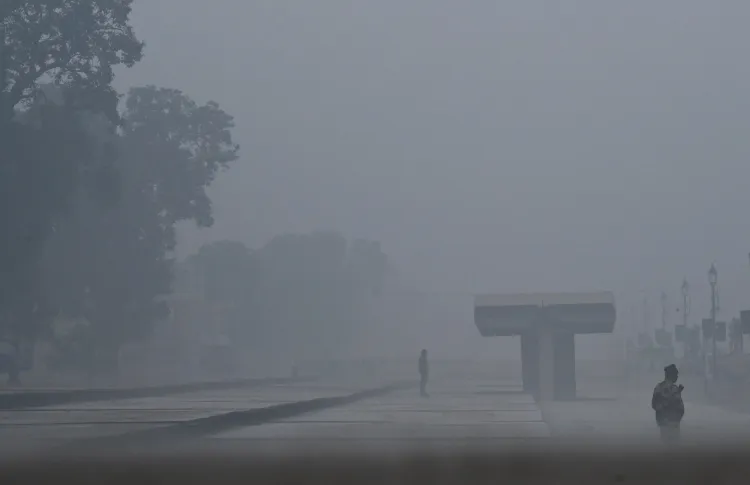
New Delhi, Jan 16 (NationPress) The Commission for Air Quality Management (CAQM) in the Delhi-NCR region and adjacent areas took decisive steps on Friday by activating measures under Stage III ('Severe' air quality in Delhi), as the air quality worsened with the AQI hitting 354, according to an official report.
The Sub Committee on the Graded Response Action Plan (GRAP) stated, "We have initiated all actions under Stage III ('Severe' Air Quality of Delhi, ranging from 401 to 450) of the current GRAP schedule, effective immediately across all relevant agencies in the Delhi-NCR, alongside the ongoing Stage I and II measures," said the official.
The committee has imposed stringent regulations regarding Stage III actions, specifically instructing the GNCTD to "prohibit the entry of BS-IV diesel-fueled LCVs (goods carriers) registered outside Delhi, except those transporting essential goods or providing vital services."
Earlier, the Sub-Committee on GRAP monitored the air quality in the area and reviewed forecasts from the IMD/IITM, noting, "The AQI for Delhi has displayed a rising trend, recorded at 354 on January 16, 2026. The IMD/IITM forecast suggests further deterioration of the AQI into the 'severe' range in the upcoming days due to unfavorable meteorological conditions and variable wind speeds."
All actions under Stage I, II, and III of the revised GRAP will be executed, monitored, and assessed by all relevant agencies throughout the NCR to ensure that AQI levels do not worsen, as stated in a circular from the Sub-Committee’s Member Convenor, Director of Technical, R.K. Agarwal.
This past Wednesday, the CAQM conducted a night inspection drive in North Delhi as part of "Operation Clean Air" to evaluate compliance regarding the prevention of municipal solid waste (MSW)/biomass burning and identify localized sources of air pollution.
The CAQM teams inspected areas including Jahangir Puri, Shalimar Bagh, and Wazirpur in North Delhi. Field inspections, supported by geo-tagged and time-stamped photographic documentation, were compiled into a comprehensive inspection report submitted to the Commission.
The report revealed 65 incidents across the three regions: 20 in Jahangir Puri, 17 in Shalimar Bagh, and 28 in Wazirpur. This includes 47 cases of biomass/MSW burning (12 in Jahangir Puri, 14 in Shalimar Bagh, and 21 in Wazirpur) alongside 18 instances of MSW dumping (8 in Jahangir Puri, 3 in Shalimar Bagh, and 7 in Wazirpur), as stated.
Biomass burning was predominantly observed along roadsides, in the vicinity of tea stalls, shops, and open spaces, mainly for heating during nighttime. MSW dumping and accumulation were noted at roadside locations, near markets, industrial zones, parks, and areas vulnerable to garbage.
These findings underscore the necessity for increased vigilance during evening and nighttime hours, particularly in densely populated residential and industrial areas. Localized issues, including waste dumping and burning, remain significant contributors to air pollution during the current winter season, demanding ongoing preventive and enforcement actions, the statement concluded.
Point of View
The actions taken by the CAQM highlight the urgent need to address air quality issues in Delhi and its neighboring regions. The implementation of Stage III of the GRAP demonstrates a proactive approach to combat pollution, but the persistent challenges posed by localized sources of air pollution signal a need for sustained vigilance and comprehensive strategies moving forward.
NationPress
19/01/2026
Frequently Asked Questions
What is Stage III of the Graded Response Action Plan (GRAP)?
Stage III indicates 'Severe' air quality levels, prompting stricter measures to reduce pollution, including restrictions on diesel vehicles and enhanced monitoring.
What is the current AQI in Delhi?
As of January 16, the AQI in Delhi has reached 354, categorizing the air quality as 'Severe'.
What actions are being taken to improve air quality?
The CAQM has invoked Stage III actions, which include bans on certain diesel vehicles and increased scrutiny of pollution sources.
How does biomass burning affect air quality?
Biomass burning contributes significantly to air pollution, especially during winter months, and is a focal point of the CAQM's inspections.
What areas are the focus of the CAQM's inspections?
The CAQM has focused on areas like Jahangir Puri, Shalimar Bagh, and Wazirpur for inspections related to waste burning and dumping.