How Did the African Swine Fever Outbreak in Mizoram Lead to Rs 115 Crore Loss in 2025?
Synopsis
Mizoram faces a significant economic blow as the African Swine Fever outbreak leads to a staggering loss of Rs 115 crore in just nine months. This article delves into the outbreak's impact on local farmers, the response from authorities, and the ongoing fight to control the disease amidst rising concerns over pork supply in the region.
Key Takeaways
Mizoram has faced a financial loss of Rs 115 crore due to ASF.
Over 9,710 pigs died, with 3,620 culled to prevent spread.
Impact on farmers includes severe economic hardship.
ASF leads to 100% mortality in infected pigs.
Ongoing monitoring and containment efforts are crucial.
Aizawl, Jan 16 (NationPress) Mizoram experienced a staggering financial setback of approximately Rs 115 crore from March to December 2025 due to the outbreak of African Swine Fever (ASF), authorities reported on Friday.
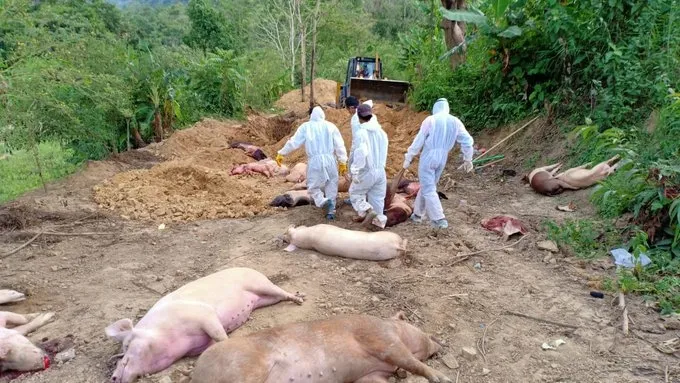
An official from Mizoram's Animal Husbandry and Veterinary Department (AHVD) indicated that ASF resulted in the deaths of over 9,710 pigs between March and December 2025, while more than 3,620 other pigs were culled during this timeframe to prevent the further spread of this highly contagious disease.
This significant loss led to substantial financial repercussions for farmers in the region, totaling Rs 115 crore, the official added.
As the winter season progresses, the intensity of the ASF outbreak in Mizoram has markedly decreased.
The ASF outbreak was initially reported on March 21, 2021, in Lungsen village, located in southern Mizoram's Lunglei district, adjacent to the Bangladesh border.
Since the onset of the outbreak, over 72,000 pigs have succumbed to ASF, impacting more than 12,500 pig-rearing households and incurring a cumulative financial loss of Rs 1,011.27 crore over nearly five years.
Since 2021, 52,980 pigs have been culled to mitigate the disease's spread.
The Central government has allocated Rs 14.51 crore as compensation for affected pig farmers, while the state government has proposed an additional Rs 24.94 crore in compensation to the Centre.
The state has also been providing financial support to the affected families.
In 2024, Mizoram recorded the highest losses due to ASF, with pig farmers facing estimated losses of Rs 336.40 crore, followed closely by Rs 334.14 crore in 2021 and Rs 210.32 crore in 2022.
Siaha district, located in southern Mizoram, remains the most severely impacted area in 2025, with over 3,645 pig deaths reported across 45 villages, affecting around 1,370 families. Additionally, approximately 970 pigs have been culled in this district as a containment measure.
Other significantly affected districts include Lawngtlai, Khawzawl, Hnahthial, Lunglei, Aizawl, Mamit, and Champhai.
The Mizoram government has been urging farmers to stay vigilant and collaborate with AHVD officials to combat the spread of ASF.
As this highly transmissible virus continues to pose a grave threat to the state's pig population, preventive strategies remain a critical priority for authorities. Multiple AHVD teams are actively visiting affected regions to monitor the situation and implement immediate containment actions.
Experts assert that ASF is a perilous disease with a high mortality rate, claiming up to 100 percent of infected animals. While it affects domestic pigs and wild boars, there are currently no available treatments or vaccines.
However, it is noteworthy that ASF does not pose a threat to human health.
Pork is among the most popularly consumed meats across both tribal and non-tribal communities in the eight northeastern states, with an annual business estimated between Rs 8,000-10,000 crore; Assam is the largest supplier. The unregulated border with Myanmar's Chin state, which borders six districts in Mizoram—Champhai, Siaha, Lawngtlai, Hnahthial, Saitual, and Serchhip—along with the unfenced Bangladesh border, could be contributing factors to the ASF outbreak.
Point of View
I emphasize the urgency of addressing the ongoing African Swine Fever outbreak in Mizoram. With significant financial losses affecting local farmers and communities, it's crucial that both state and central governments act decisively to mitigate this crisis while ensuring the welfare of the affected families.
NationPress
24 Sept 2026
Frequently Asked Questions
What is African Swine Fever?
African Swine Fever (ASF) is a highly contagious viral disease affecting domestic pigs and wild boars, characterized by high mortality rates and no known vaccine or treatment.
How has ASF impacted farmers in Mizoram?
Farmers in Mizoram have faced financial losses totaling over Rs 1,011.27 crore due to ASF, with significant deaths and culling of pigs since the outbreak began in 2021.
What measures are being taken to control ASF in Mizoram?
Authorities are actively culling infected pigs, providing compensation to affected farmers, and urging vigilance among pig farmers to control the spread of ASF.
Does ASF pose a threat to human health?
No, ASF does not affect humans. However, it poses a significant threat to pig populations and the agricultural economy.
What regions in Mizoram are most affected by the ASF outbreak?
The Siaha district is currently the worst affected, along with other districts such as Lawngtlai, Khawzawl, and Lunglei.