Delhi HC grants bail to ganja smuggler who posed as NIA officer at IGI Airport
Synopsis
A woman who allegedly smuggled over 10 kg of ganja through IGI Airport while carrying fake NIA credentials has been granted bail by the Delhi High Court — not because the charges aren't serious, but because the quantity fell below the commercial threshold that triggers NDPS Act's toughest bail bar, and because she is HIV-positive and immunocompromised. With 16 prosecution witnesses still unexamined, the trial is far from over.
Key Takeaways
The Delhi High Court granted bail to a woman accused of smuggling 10.062 kg of ganja through IGI Airport on 8 November 2025 .
She allegedly carried a fake NIA identity card and an NIA-branded jacket to evade scrutiny upon arrival from Bangkok .
Justice Prateek Jalan ruled that Section 37 of the NDPS Act did not apply as the quantity fell in the intermediate category (2 kg–20 kg) , not commercial.
The accused is HIV-positive and immunocompromised, requiring uninterrupted antiretroviral therapy — a factor the court weighed in her favour.
She had been in custody for over six months and none of the 16 prosecution witnesses had been examined at the time of the bail order.
Bail conditions include surrendering her passport, weekly reporting to police, and a personal bond of ₹50,000 .
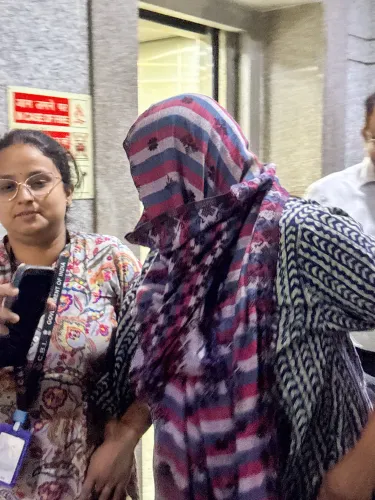
The Delhi High Court has granted bail to a woman accused of smuggling 10.062 kg of ganja through Indira Gandhi International (IGI) Airport while allegedly impersonating an officer of the National Investigation Agency (NIA). Justice Prateek Jalan of a single-judge Bench ruled on 4 June 2025 that the stringent bail conditions under Section 37 of the Narcotic Drugs and Psychotropic Substances (NDPS) Act were not applicable, and that the accused's serious medical condition — she is HIV-positive and immunocompromised — weighed in favour of release.
What Happened at IGI Airport
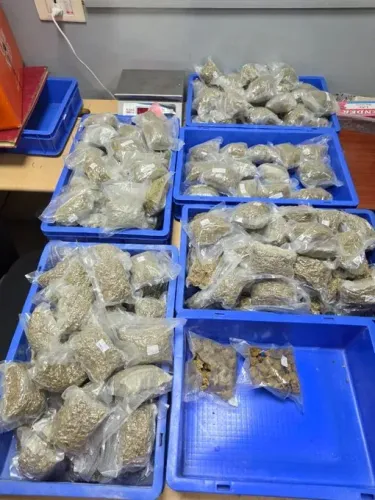
According to the prosecution, the woman was intercepted at Terminal-3 of the IGI Airport on 8 November 2025 after arriving from Bangkok. Customs officials allegedly recovered 20 polythene packets of ganja weighing 10.062 kg in total from her baggage. Alongside the contraband, investigators found a purported NIA identity card and an NIA-branded jacket — both of which were subsequently found to be fake. She was formally arrested on 9 November 2025 and later charge-sheeted under provisions of the NDPS Act and the Bharatiya Nyaya Sanhita (BNS).
Why the Court Allowed Bail
The court's reasoning turned on a critical legal distinction: ganja in the range of 2 kg to 20 kg falls within the 'intermediate quantity' category under the NDPS Act, which does not attract the heightened bail threshold of Section 37 — a provision typically reserved for commercial-quantity drug cases. Justice Jalan noted that the 10.062 kg recovery was 'far short of a commercial quantity.'
'It is the admitted position that the quantity of ganja allegedly recovered from the petitioner is 10.062 kgs, which falls in the intermediate quantity category (2 kg to 20 kg). The recovery in the present case was thus far short of a commercial quantity. The stringent conditions prescribed under Section 37 of the NDPS Act, therefore, do not apply,' the court said.
The court also recorded that the accused had already spent more than six months in custody, charges had been framed, and none of the 16 prosecution witnesses had been examined so far — factors pointing to a prolonged trial ahead.
Medical Condition a Key Factor
Justice Jalan specifically noted that the accused requires uninterrupted antiretroviral therapy, a fact verified by authorities. 'The medical condition of the petitioner, including the fact that she is immunocompromised and requires uninterrupted medical care and antiretroviral therapy, is also a relevant consideration while adjudicating the present application for bail,' the court observed.
Prosecution's Arguments and the Court's Response
The prosecution, opposing bail, argued that the accused was the leader of a drug trafficking syndicate and had allegedly undertaken similar trips on the instructions of a person identified only as 'Ali'. It contended that the impersonation of a law enforcement officer was a grave aggravating factor and that investigations into alleged associates were still ongoing.
The court acknowledged that the impersonation allegation was 'a significant factor against the petitioner,' but declined to treat it as a standalone ground for denying bail. Crucially, Justice Jalan found that the claim of her being the syndicate's leader was not 'prima facie borne out from the material placed on record,' noting that even the prosecution's own case described her as acting under someone else's instructions.
Bail Conditions Imposed
The court directed the accused to be released on a personal bond of ₹50,000 with one surety of the same amount. She must surrender her passport, report to the local police station every Monday, and cannot leave the country without prior permission of the trial court. The trial, involving 16 witnesses yet to be examined, is expected to be a lengthy process.
Point of View
And courts are willing to apply them even in cases with aggravating facts like law-enforcement impersonation. The prosecution's failure to establish prima facie syndicate leadership on record weakened what was otherwise a strong narrative against bail. More broadly, the case exposes a gap: if fake NIA credentials can be carried through an international terminal without triggering real-time verification, the impersonation risk extends well beyond drug trafficking. That systemic question is unlikely to be answered in this trial.
NationPress
28 Sept 2026
Frequently Asked Questions
Why did the Delhi High Court grant bail in this ganja smuggling case?
The court granted bail primarily because the recovered quantity of 10.062 kg fell within the 'intermediate' category under the NDPS Act, which does not attract the stringent bail conditions of Section 37. The accused's HIV-positive status and need for continuous medical care were additional factors the court considered.
What were the fake NIA credentials found on the accused?
Customs officials at IGI Airport's Terminal-3 recovered a purported NIA identity card and an NIA-branded jacket from the accused's baggage. Investigations confirmed these credentials were fake and were allegedly used to avoid scrutiny at the airport.
What is the legal significance of 'intermediate quantity' under the NDPS Act?
Under the NDPS Act, ganja between 2 kg and 20 kg is classified as an 'intermediate quantity.' This classification means the stringent bail conditions under Section 37 — which require the court to be satisfied that the accused is not guilty and will not reoffend — do not apply, making bail relatively easier to obtain than in commercial-quantity cases.
What conditions has the court imposed on the accused's bail?
The accused must furnish a personal bond of ₹50,000 with one surety of the same amount, surrender her passport, report to the local police station every Monday, and obtain prior permission from the trial court before leaving the country.
What is the current status of the trial?
As of the bail order, charges have been framed but none of the 16 prosecution witnesses have been examined. The trial is expected to be a lengthy process, which was also cited by the court as a reason not to keep the accused in prolonged pre-trial custody.