Nagaland tightens ASF curbs as pig farmers face heavy losses after Mizoram crisis
Synopsis
Nagaland's ASF emergency is not a standalone crisis — it is the next chapter in a disease trail that has already cost Mizoram over ₹1,011 crore and wiped out more than 72,000 pigs since 2021. With unfenced borders shared with Myanmar and Bangladesh, and a regional pork trade worth up to ₹10,000 crore annually, the Northeast's livestock economy is facing a structural vulnerability that biosecurity advisories alone cannot fix.
Key Takeaways
Nagaland has imposed restrictions on the import, transport, and sale of pigs and pork products following an ASF outbreak across several districts as of 23 May 2025 .
Mizoram suffered losses of ₹115 crore between March and December 2025 , with over 9,710 pigs dead and 3,620 pigs culled.
Since March 2021 , Mizoram's cumulative ASF losses stand at ₹1,011.27 crore , affecting over 12,500 pig-rearing families and killing more than 72,000 pigs .
The Central government has paid ₹14.51 crore in compensation; Mizoram has sought an additional ₹24.94 crore from the Centre.
Cross-border movement via Mizoram's 510-km unfenced border with Myanmar is cited by experts as a key driver of recurring outbreaks.
The Northeast's annual pork trade is estimated at ₹8,000–₹10,000 crore , with Assam as the largest regional supplier.
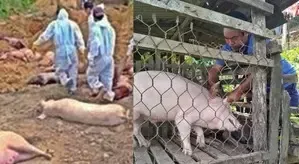
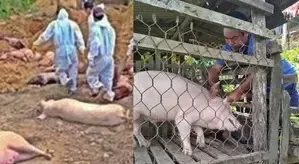
Nagaland has intensified surveillance and containment operations following the outbreak of African Swine Fever (ASF) across several districts, officials said on Saturday, 23 May. The move follows similar emergency measures already in place in neighbouring Mizoram, where the disease has caused cumulative losses of over ₹1,011 crore since 2021, underscoring the scale of the threat facing the Northeast's pork economy.
Restrictions and Containment Measures
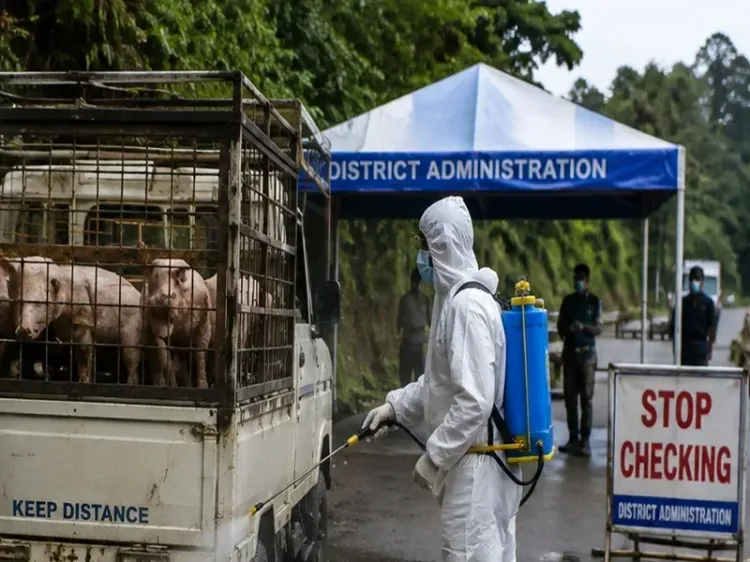
A senior official of Nagaland's Animal Husbandry and Veterinary Services (AHVS) Department confirmed that district administrations in affected areas have imposed restrictions on the import, transport, and sale of pigs and pork products to prevent further spread. The AHVS Directorate said it is closely monitoring the outbreak through district veterinary officers and field staff actively engaged in surveillance, containment operations, awareness campaigns, sample collection, and implementation of bio-security measures.
The department issued a five-point advisory urging citizens to immediately report any sudden illness or death of pigs to the nearest veterinary institution, avoid unauthorised movement of pigs and pork products from affected areas, and maintain strict farm hygiene. People were also warned against disposing of dead pigs in rivers, streams, forests, or open public spaces, as improper disposal could aggravate the outbreak.
Why It Matters for Farmers and Markets
ASF is a highly contagious viral disease affecting pigs. Critically, it does not infect humans and is not classified as a public health concern — but its economic toll on pig farmers is severe. Pork is one of the most widely consumed meats in Nagaland, forming an integral part of traditional cuisine and daily meals across communities. Officials warned that the outbreak and resulting restrictions are expected to significantly impact local markets and the livelihoods of thousands of pig farmers and traders dependent on the pork economy.
The AHVS appealed to pig farmers, traders, transporters, village councils, colony authorities, and the general public to cooperate fully with veterinary authorities. It also urged media organisations to disseminate only verified departmental information to prevent misinformation and unnecessary panic.
Mizoram's Losses: A Warning for the Region
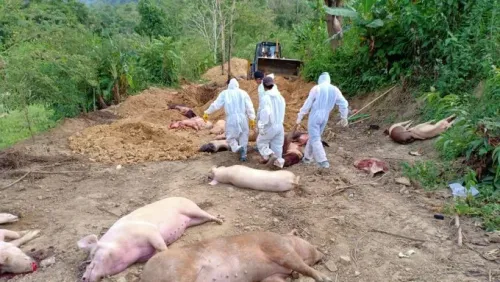
The scale of damage in Mizoram illustrates what Nagaland is now racing to prevent. According to officials of Mizoram's Animal Husbandry and Veterinary Department (AHVD), the state incurred losses of around ₹115 crore between March and December 2025 alone, with over 9,710 pigs dying from ASF and more than 3,620 pigs culled during that period.
Since March 2021, more than 72,000 pigs have died in Mizoram due to ASF, affecting over 12,500 pig-rearing families and causing cumulative financial losses of ₹1,011.27 crore over nearly five years. Around 52,980 pigs have been culled since 2021 as part of disease-control measures. The Central government has so far provided ₹14.51 crore as compensation to affected farmers, while the Mizoram government has sought an additional ₹24.94 crore from the Centre.
Cross-Border Movement: A Recurring Risk Factor
Experts believe that the cross-border movement of pigs and pork products is a key driver of recurring ASF outbreaks in the region. Myanmar's Chin State shares an unfenced border with six Mizoram districts — Champhai, Siaha, Lawngtlai, Hnahthial, Saitual, and Serchhip. Mizoram also shares a 510-km unfenced border with Myanmar and a 318-km border with Bangladesh, making disease surveillance along these corridors particularly challenging.
The annual pork trade across the eight Northeastern states is estimated at ₹8,000 crore to ₹10,000 crore, with Assam remaining the largest regional supplier. Any sustained disruption to pig farming in Nagaland and Mizoram threatens to ripple across this entire supply chain. The AHVS said it will continue coordinated scientific and administrative interventions to protect pig farmers and contain the disease's spread across Nagaland.
Point of View
Not structural — and that is the pattern across the Northeast. The region has watched Mizoram lose over ₹1,011 crore to ASF over four years without establishing a coordinated, multi-state biosecurity framework or securing enforceable controls on cross-border pig movement. The Central government's ₹14.51 crore in compensation against losses exceeding a thousand crore is a rounding error, not a policy response. Until the unfenced Myanmar border is treated as an animal disease corridor — not just a trade and security issue — the Northeast's pork economy will remain permanently exposed to the next outbreak.
NationPress
27 Sept 2026
Frequently Asked Questions
What is African Swine Fever and does it affect humans?
African Swine Fever (ASF) is a highly contagious viral disease that affects pigs but does not infect humans and is not considered a public health concern. Its primary impact is economic, causing severe losses to pig farmers through mass pig deaths and culling operations.
What restrictions has Nagaland imposed due to the ASF outbreak?
Nagaland's district administrations have banned the import, transport, and sale of pigs and pork products in affected areas. The AHVS Directorate has also issued a five-point advisory covering mandatory reporting of sick or dead pigs, strict farm hygiene, and proper carcass disposal.
How much has Mizoram lost to ASF since 2021?
Mizoram has incurred cumulative financial losses of ₹1,011.27 crore due to ASF since March 2021, with over 72,000 pigs dead and around 52,980 pigs culled. More than 12,500 pig-rearing families have been affected across the state.
Why do ASF outbreaks keep recurring in Northeast India?
Experts attribute recurring outbreaks largely to the cross-border movement of pigs and pork products through Mizoram's 510-km unfenced border with Myanmar and its 318-km border with Bangladesh. The absence of enforceable border controls makes sustained disease containment difficult.
What compensation have affected pig farmers received from the government?
The Central government has provided ₹14.51 crore in compensation to ASF-affected farmers in Mizoram. The Mizoram government has separately sought an additional ₹24.94 crore from the Centre, given that total losses have exceeded ₹1,011 crore since 2021.