Transforming District Hospital Casualty Wards into Emergency Care Departments: Insights from Post-Budget Webinar

Synopsis
In a recent post-Budget webinar, experts emphasized the urgent need to convert district hospital casualty wards into fully functional Emergency Care Departments, highlighting the importance of enhanced emergency healthcare services across the country.
Key Takeaways
Urgent transformation of casualty wards into Emergency Care Departments.
Incorporation of triage and resuscitation facilities.
Integration of 112 Emergency Response Support System with ambulance services.
Emphasis on digital technologies for enhanced monitoring.
Need for ongoing training of emergency care personnel.
New Delhi, March 9 (NationPress) It is imperative that district hospital casualty wards are transformed into fully operational Emergency Care Departments equipped with triage, resuscitation, and various other essential facilities, as highlighted by panellists in a post-Budget webinar session, according to an official announcement released on Monday.
These emergency care departments should also include ambulance bays, diagnostics, and emergency operating theatres.
The post-Budget webinar session focused on enhancing Emergency and Trauma Care Centres and improving pre-hospital response, integrating the 112 Emergency Response Support System (ERSS) with ambulance services and hospitals, as stated by the Ministry of Health and Family Welfare.
Participants emphasized the need for better coordination among emergency services and strengthening the operational capabilities of emergency response systems, as per the official statement.
Dr. VK Paul, a member of NITI Aayog, stressed that bolstering emergency and trauma care at the district level necessitates a systematic and outcome-focused approach.
He underscored the significance of monitoring key metrics to enhance response and treatment for emergencies that require immediate attention. Dr. Paul also advocated for the use of digital technologies and real-time monitoring to facilitate the integration mentioned by other participants.
Additionally, he called for ongoing training and skill enhancement of emergency care personnel to develop a robust and responsive emergency care infrastructure.
Discussions included the expansion of MD and DNB programs in Emergency Medicine, creating a dedicated cadre of Emergency Medical Officers, and implementing skill-based training initiatives aimed at fostering a sustainable emergency care workforce.
The session convened policymakers, public health professionals, clinicians, administrators, and representatives from state governments and other stakeholders to discuss strategies for fortifying emergency and trauma care systems and ensuring the effective execution of the Budget proposal.
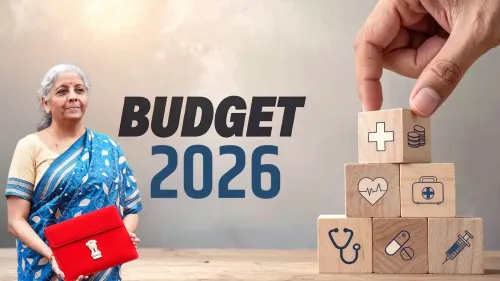
In the Union Budget for 2026–27, the government introduced a significant initiative aimed at enhancing emergency healthcare services nationwide. The Budget proposes to augment and strengthen emergency and trauma care capabilities by 50% in District Hospitals through the establishment of Emergency and Trauma Care Centres.
aar/na
Point of View
The discussions surrounding the transformation of district hospital casualty wards into Emergency Care Departments reflect a necessary evolution in healthcare policy. This initiative aims to enhance emergency response capabilities, ensuring that timely and effective healthcare is accessible to all citizens, aligning with a nation-first approach.
NationPress
26 Sept 2026
Frequently Asked Questions
What changes are proposed for district hospital casualty wards?
The proposal advocates for converting them into fully operational Emergency Care Departments equipped with essential facilities such as triage, resuscitation, and ambulance bays.
Who emphasized the need for this transformation?
Dr. VK Paul, a member of NITI Aayog, was a key advocate for this change during the post-Budget webinar.
What role will digital technologies play in emergency care?
Digital technologies will be utilized for real-time monitoring and integration of emergency services to improve response times.
What was discussed regarding training for emergency personnel?
The expansion of training programs and the establishment of a dedicated cadre of Emergency Medical Officers were key points of discussion.
How much is the government planning to increase emergency care capacity?
The government aims to increase emergency and trauma care capacities by 50% in District Hospitals as part of the Union Budget 2026–27.