Will Budget 2026 Include Tax-Funded Universal Health Care and Enhance Public Hospitals?

Synopsis
In the lead-up to Union Budget 2026, health experts are demanding a shift to tax-funded Universal Health Care to strengthen public hospitals. This call for reform highlights the urgent need for increased funding and better integration of services. Can the government meet these pressing healthcare needs?
Key Takeaways
Tax-funded Universal Health Care is urgently advocated by health experts.
Public health funding should be increased to 2.5-5 percent of GDP .
Reforming PMJAY is essential for comprehensive outpatient care.
Addressing governance fragmentation is critical for UHC.
Improper procurement can lead to unsustainable healthcare budgets.
New Delhi, Jan 27 (NationPress) Health professionals on Tuesday appealed to the government to implement tax-funded Universal Health Care and enhance the resources allocated to government hospitals in the forthcoming Union Budget 2026.
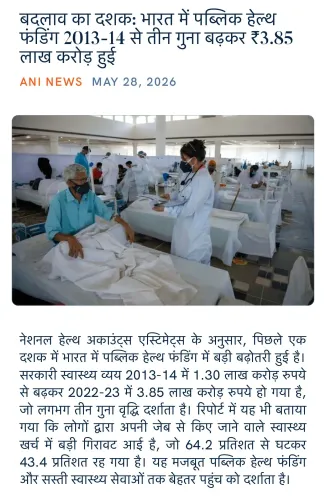
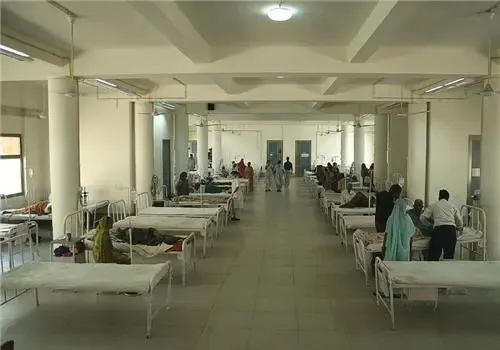
The professionals underscored the insufficient funding in public healthcare facilities, which hampers their ability to provide adequate services to numerous patients, emphasizing the necessity to broaden PMJAY to encompass outpatient care.
“We advocate tax-funded Universal Health Care incorporating a fundamental health package for all citizens and increasing public health funding to 2.5-5 percent of GDP, thereby fortifying government hospitals and healthcare workforce,” stated Dr. Vinay Aggarwal, former National President of the Indian Medical Association.
“The government should reform PMJAY to include outpatient services, realistic package rates, direct benefit transfer (DBT), copayments, and prompt reimbursements,” he added.
The expert further urged the government to “provide GST exemptions on lifesaving equipment, consumables, and all vaccines”.
A recent report by The Lancet Commission highlighted that the public sector healthcare system is crucial for achieving the universal health coverage objective. An accompanying commentary assessed India’s progress towards this goal, shedding light on structural deficiencies within the health system.
The report particularly pointed out fragmented governance, inadequate coordination across care levels, a health system organized around institutions rather than citizens, and ongoing gaps in quality, equity, and continuity of care as significant impediments to UHC.
The commentary suggested that India’s trajectory towards universal health care necessitates multiple initiatives and noted that operating in silos can undermine accountability and continuity of services.
Healthcare delivery should prioritize facility-centered approaches rather than focusing solely on patient experiences and long-term care requirements. It also mentioned that weak referral systems and poor integration between primary, secondary, and tertiary services restrict efficiency and outcomes.
The study emphasized that mere policy intent is insufficient without the institutional capacity to implement reforms.
“Although the government has increased healthcare allocations in recent years, the persistent focus on capacity building has often left public healthcare facilities with inadequate funds to provide satisfactory services to the vast patient numbers they manage,” remarked Aditya Banerjee, Member of the Medical Technology Association of India (MTaI).
“A strategic shift in public procurement criteria, moving from the lowest upfront price to the best long-term value for the overall healthcare system, is crucial for achieving better patient outcomes for every Rupee spent,” he continued. Banerjee indicated that this approach could help avoid the soaring healthcare budgets that are becoming unsustainable in numerous developed nations.
Point of View
I firmly believe that enhancing public health funding and adopting a tax-funded Universal Health Care system is essential for ensuring that every Indian citizen has access to quality healthcare. This approach not only addresses immediate healthcare needs but also strengthens our healthcare infrastructure for the future.
NationPress
12 Oct 2026
Frequently Asked Questions
What is tax-funded Universal Health Care?
Tax-funded Universal Health Care is a system where healthcare services are funded through taxation, ensuring that all citizens have access to healthcare regardless of their financial status.
Why is there a need to reform PMJAY?
Reforming PMJAY is essential to include outpatient care, realistic package rates, and timely reimbursements, which will enhance the overall healthcare delivery system.
What are the benefits of increasing public health funding?
Increasing public health funding can improve the quality of healthcare services, enhance infrastructure, and allow hospitals to serve a larger patient base effectively.
What challenges does India face in achieving universal health coverage?
India faces challenges such as fragmented governance, inadequate coordination, and gaps in quality and continuity of care, which hinder the achievement of universal health coverage.
How can public procurement criteria improve healthcare outcomes?
Shifting public procurement criteria to prioritize long-term value over the lowest upfront price can lead to better healthcare outcomes and sustainable budget management.