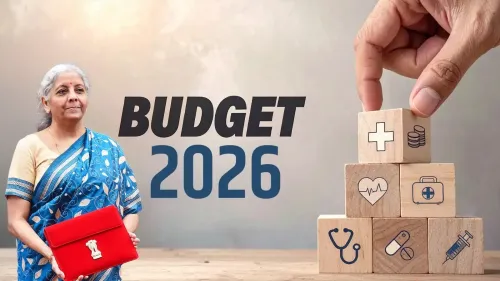
Does the 9% rise in healthcare budget show the government's dedication to universal access?
Synopsis
Union Health Minister J.P. Nadda highlights a remarkable 176% rise in India's healthcare budget over the past 12 years, signaling a strong commitment to universal healthcare accessibility. With an additional 9% allocated this year, the budget aims to foster innovation and support the youth, making it a pivotal moment in India's healthcare landscape.
Key Takeaways
Healthcare budget increased by 9% this year.
Total increase of 176% over the past 12 years.
Focus on mental health and research.
Training of 100,000 healthcare professionals planned.
Investment of Rs 10,000 crore in biopharma sector.
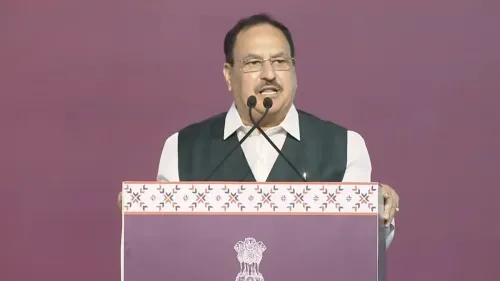
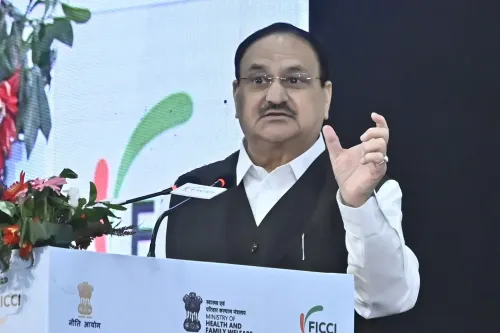
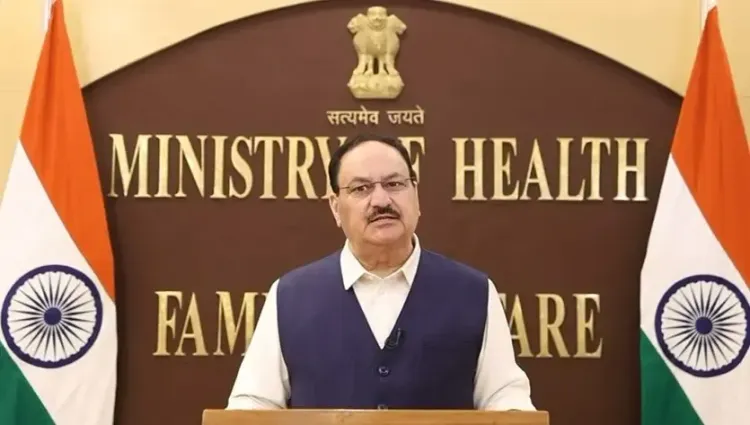
New Delhi, Feb 1 (NationPress) Union Health Minister J.P. Nadda highlighted that the 176 percent increase in the healthcare budget over the past 12 years signifies the Modi government's dedication to ensuring healthcare is accessible to everyone.
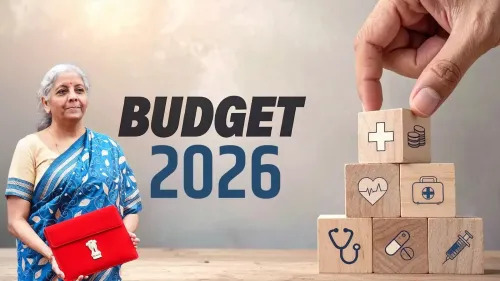
Expressing his approval of the Union Budget 2026, Nadda noted that this year's health sector funding is roughly 9 percent higher than the previous year's allocation.
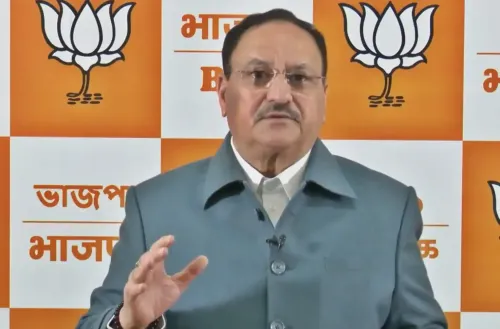
In a video message, he remarked, "The Union Budget 2026-27, introduced by Union Finance Minister Nirmala Sitharaman under Prime Minister Narendra Modi's leadership, is a forward-thinking budget aimed at public welfare and a 'Viksit Bharat', steering the country’s economic growth in a new direction."
"This comprehensive budget is set to position India as one of the largest global economic powers. It serves as a budget that empowers the youth of our nation," Nadda stated, extending his congratulations to PM Modi and Finance Minister Sitharaman for the historic Atmanirbhar Bharat budget.
He emphasized that the Modi government’s commitment to accessible healthcare is demonstrated by the 176 percent increase in the health sector budget over the last 12 years.
"The allocated budget for health this year, surpassing Rs 1.05 lakh crore, is about 9 percent more than last year’s funding," he added.
Nadda praised the budget’s emphasis on mental health as a welcome advancement.
He commended the plans to enhance the Central Institute of Psychiatry in Ranchi and Tezpur and the establishment of NIMHANS in North India as admirable, and highlighted the creation of the WHO Traditional Medicine Centre in Jamnagar as a source of pride for all Indians.
"I wholeheartedly support this budget, which prioritizes research and development to fortify the healthcare sector, along with the increase in health funding... The initiative to strengthen CDSCO to guarantee that domestically produced medicines meet international quality standards is commendable," he asserted.
Under the BioPharma Shakti Initiative, Nadda revealed that the government plans to invest Rs 10,000 crore in the biopharma sector over the next five years, which will foster the domestic manufacturing of modern biological drugs and biosimilars.
"The announcement of three new NIPERs and the enhancement of the existing seven will herald a new era in the pharmaceutical industry. Moreover, to bolster the chemical sector, three special chemical parks will be established in various states," he noted.
The Health Minister remarked that the initiative to further strengthen Allied Healthcare Institutes to address the rising non-communicable diseases driven by lifestyle changes will lead to the training of 100,000 professionals in this field over the next five years, thereby creating job opportunities for the youth and enhancing the quality of healthcare services.
"The plan to set up trauma and emergency centers in every district hospital across the country will ensure that the general public has access to immediate medical services," he emphasized.
The budget for the ICMR and the Department of Health Research has seen a substantial increase dedicated to medical research and innovation, enabling advancements in new medicines, vaccines, and cutting-edge treatment methods, Nadda mentioned.
The primary goal of this budget, he explained, is to "sustain economic growth and elevate it to new heights, providing equal opportunities for all to thrive under the policy of 'Sabka Saath, Sabka Vikas', fulfilling the aspirations of every citizen and involving them in national development."
"This budget is undoubtedly a blueprint for the progress of villages, the underprivileged, farmers, youth, women, and all societal segments, paving the way for an industrial revolution. The Indian economy is accelerating at an unparalleled pace globally and is moving towards a promising future," concluded the Union Minister, referring to the budget as revolutionary.
Point of View
The recent healthcare budget increase is a significant step towards addressing the pressing health needs of the population. The government's commitment to improving accessibility and quality in healthcare services reflects an understanding of the challenges faced by citizens. By prioritizing mental health and investing in research, the government demonstrates its dedication to creating a healthier future for all.
NationPress
20 Sept 2026
Frequently Asked Questions
What is the percentage increase in the healthcare budget?
The healthcare budget has increased by 9% compared to the previous year, marking a total growth of 176% over the past 12 years.
What are the key focuses of the new healthcare budget?
The budget emphasizes mental health, research and development, and the establishment of new healthcare facilities and programs.
How will this budget impact job creation in the healthcare sector?
The budget aims to train 100,000 professionals in allied healthcare, creating significant job opportunities in the sector.
What is the significance of the BioPharma Shakti Initiative?
The initiative proposes a Rs 10,000 crore investment over the next five years to promote the domestic production of biological drugs and biosimilars.
What is the government's vision for healthcare in India?
The government intends to make healthcare accessible to all citizens while ensuring high standards of quality and innovation.