Cabinet clears ₹8,970 cr Guwahati–Tezpur 4-lane corridor
Synopsis
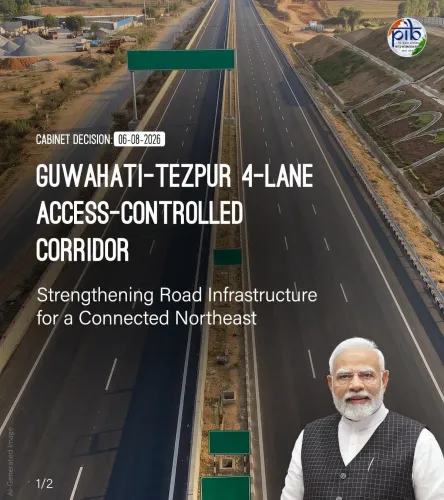
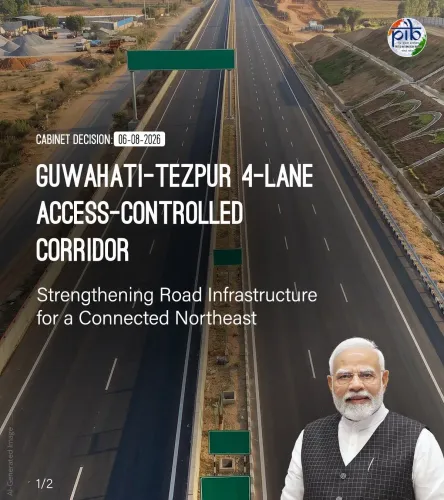
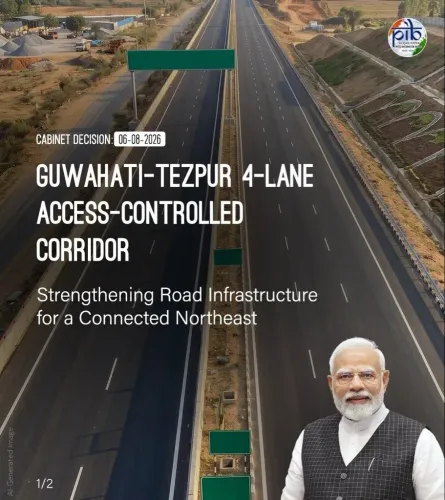
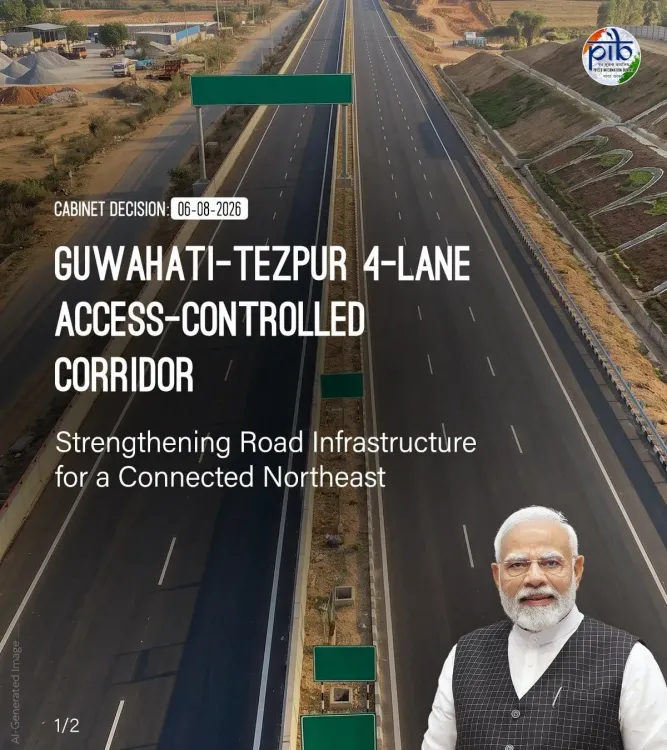
The Union Cabinet has approved a 135.87 km, ₹8,970 crore four-lane access-controlled corridor between Guwahati and Tezpur in Assam, featuring an Emergency Landing Facility on the Tezpur Bypass built in coordination with the Indian Air Force, advancing connectivity across Assam and Arunachal Pradesh.
Key Takeaways
The Union Cabinet approved the 135.87 km Guwahati–Tezpur 4-lane access-controlled corridor on 6 August 2026 .
Total project outlay is ₹8,970 crore .
The corridor will improve connectivity across Assam and Arunachal Pradesh , reducing travel time and strengthening logistics.
An Emergency Landing Facility will be developed on the Tezpur Bypass in coordination with the Indian Air Force , adding strategic dual-use value.
The project advances India's Bharatmala Pariyojana and Act East Policy goals for Northeast integration.
Key milestones to watch include land acquisition timelines and tendering progress.
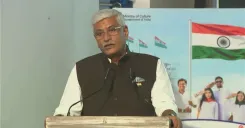
A ₹8,970 crore highway decision just redrew the map of Northeast connectivity. The Union Cabinet has approved a 135.87 km four-lane, access-controlled corridor linking Guwahati and Tezpur in Assam — and Union Education Minister Dharmendra Pradhan was among the first to flag its strategic weight on 6 August 2026.
Pradhan called it 'a major boost to infrastructure in North-East,' framing the project as an advance on Prime Minister Narendra Modi's vision of seamless connectivity across the region. The corridor, he noted, will reduce travel time, improve links across Assam and Arunachal Pradesh, strengthen logistics, and support economic growth.
An airstrip baked into the bypass
The detail that sharpens this project beyond a routine highway approval: an Emergency Landing Facility will be built on the Tezpur Bypass, developed in direct coordination with the Indian Air Force. That single feature transforms a civilian infrastructure corridor into a piece of dual-use strategic architecture — the kind of upgrade that matters acutely in a region that shares a sensitive border with China through Arunachal Pradesh. The practice of embedding emergency airstrips into national highways has become a quiet but deliberate pattern in India's Northeast. Border sensitivities demand infrastructure that can pivot from peacetime logistics to rapid military deployment. The Tezpur facility follows that playbook precisely.Bharatmala's Northeast push — and what Guwahati–Tezpur unlocks
The corridor sits within the broader architecture of Bharatmala Pariyojana, the national highway development programme launched in 2015 with explicit emphasis on Northeast integration. Paired with the Act East Policy — formally unveiled in 2014 — successive Cabinet decisions have steadily four-laned and upgraded corridors that were once single-lane bottlenecks choked by monsoon damage and geography. Guwahati is the Northeast's commercial and transport nerve centre. Tezpur, roughly 180 km to the northeast, sits at the foothills of the Himalayas and serves as a gateway to Arunachal Pradesh. A fast, access-controlled corridor between the two does not just cut commute time for residents — it compresses supply chains, lowers freight costs, and makes the region more legible to investors who have long cited connectivity as the first barrier to entry. The next pressure points to watch: the pace of land acquisition and tendering, and whether additional Northeast corridors get Cabinet clearance under a potential Bharatmala Phase 2 push. If this approval is a signal, more are likely in the pipeline. For a region that has waited decades for infrastructure parity, 135.87 km of four-lane highway is not just asphalt — it is the architecture of a different economic future.Point of View
High-visibility Northeast infrastructure also carries political dividend in a region where it has consolidated gains since 2014. The real test will be execution speed: land acquisition and tendering timelines in the Northeast have historically lagged approvals by years.
NationPress
6 Aug 2026
Frequently Asked Questions
What is the Guwahati–Tezpur corridor project approved by the Cabinet?
The Union Cabinet approved a 135.87 km four-lane, access-controlled highway corridor linking Guwahati and Tezpur in Assam at a total outlay of ₹8,970 crore. The project aims to reduce travel time, improve logistics, and strengthen connectivity between Assam and Arunachal Pradesh.
What is the Emergency Landing Facility on the Tezpur Bypass?
An Emergency Landing Facility is a stretch of highway engineered to specifications that allow military aircraft to land on it in emergencies. The one planned on the Tezpur Bypass is being developed in coordination with the Indian Air Force, giving the corridor a strategic dual-use function beyond civilian transport.
How does this project relate to Bharatmala Pariyojana?
Bharatmala Pariyojana, launched in 2015, is India's flagship national highway development programme with a specific focus on improving connectivity in the Northeast. The Guwahati–Tezpur corridor falls within this framework and also aligns with the Act East Policy unveiled in 2014.
Why is Tezpur strategically important for this highway?
Tezpur sits at the Himalayan foothills and serves as a key gateway to Arunachal Pradesh, which shares a sensitive border with China. A fast four-lane corridor from Guwahati to Tezpur shortens supply chains and, with the Emergency Landing Facility, strengthens India's strategic infrastructure in a border-sensitive zone.
What should we watch for next on this project?
The critical next steps are land acquisition and tendering timelines, which have historically been slower in the Northeast than in other parts of India. Cabinet clearances for additional Northeast corridors under a potential Bharatmala Phase 2 are also worth tracking.