Cabinet Approves 4-Lane Development for Ujjain Link on Delhi-Mumbai Expressway
Synopsis
The Cabinet Committee has greenlit a significant infrastructure project, enhancing the Ujjain link on the Delhi-Mumbai Expressway. This upgrade promises to reduce travel time, bolster connectivity, and stimulate economic growth in the region.
Key Takeaways
The Cabinet has approved a 4-lane corridor on National Highway-752D.
Investment of Rs 3,839.42 crore for the project.
Significant reduction in travel time by about one hour.
Improved connectivity for traffic from Gujarat and Maharashtra.
Enhanced economic development for Dhar and Jhabua districts.
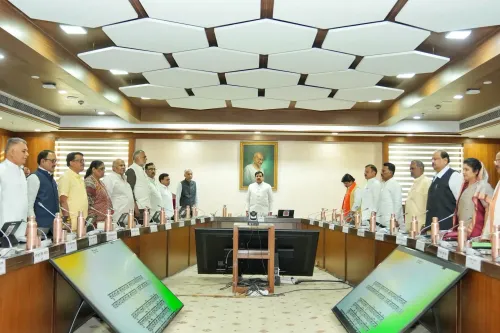
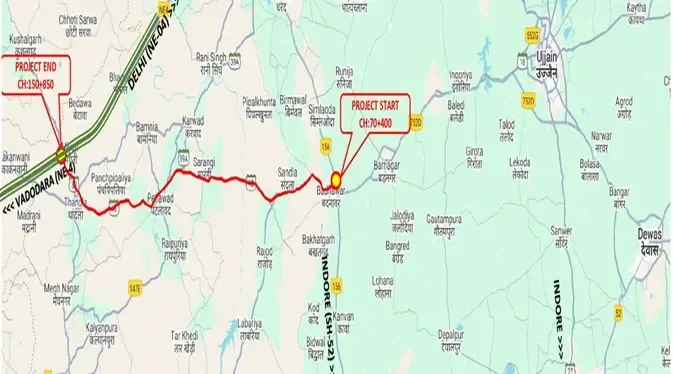
New Delhi, March 10 (NationPress) On Tuesday, the Cabinet Committee on Economic Affairs, led by Prime Minister Narendra Modi, sanctioned the establishment of a 4-lane corridor on the Badnawar-Petlawad-Thandla-Timarwani segment of National Highway-752D, covering a distance of 80.45 kilometers with a total investment of Rs 3,839.42 crore.
This newly sanctioned corridor will enhance connectivity between Ujjain and the Timrawani interchange on the Delhi-Mumbai Expressway. The main objective of this four-lane project is to significantly boost travel efficiency, aiming to cut down travel time by approximately one hour.
The Ujjain–Badnawar section, measuring 70.40 km, has already received an upgrade from a 2-lane to a 4-lane layout. The existing Badnawar–Timrawani segment features an intermediate lane (5.5m) with suboptimal geometry, allowing speeds of only 20-50 kmph. Enhancing this section will finalize the direct 4-lane route from Ujjain to the Timrawani interchange on the Delhi-Mumbai Expressway, facilitating speeds of 80-100 kmph.
The corridor connecting Timarwani–Thandla–Petlawad–Badnawar–Ujjain serves as the most efficient path for traffic traveling from Gujarat and Maharashtra to Ujjain. The upgrade of the Timarwani–Badnawar section is poised to bolster inter-state connectivity, ensuring smoother traffic flow, and will also address the anticipated surge in traffic during the Simhastha Kumbh Mela in April 2028.
This section traverses through the tribal areas of Madhya Pradesh's Dhar & Jhabua districts, with parts of Dhar included in the Aspirational Blocks Programme initiated by NITI Aayog. The upgrade will facilitate quicker access from the Ujjain-Badnawar–Timarwani corridor to the Delhi–Mumbai Expressway. This enhanced connectivity is expected to lower logistics costs, enable smoother transport of raw materials and finished goods, and improve access to industrial centers located in Indore, Pithampur, Ujjain, and Dewas.
The proposed initiative aims to deliver high-speed connectivity, designed to enhance safety and ensure uninterrupted traffic flow, thus reducing travel time, alleviating congestion, and lowering operational costs. Crucially, this project is set to upgrade the foundational infrastructure in the region, promoting the overall economic development of Dhar and Jhabua districts.
Point of View
Ensuring better access to industrial hubs and facilitating smoother traffic flow.
NationPress
19 Sept 2026
Frequently Asked Questions
What is the total length of the new corridor?
The new corridor will span a total of 80.45 kilometers.
How much will the project cost?
The total capital cost for the project is Rs 3,839.42 crore.
When is the Simhastha Kumbh Mela scheduled?
The Simhastha Kumbh Mela is scheduled for April 2028.
What regions will the corridor connect?
The corridor will connect Ujjain with the Timrawani interchange on the Delhi-Mumbai Expressway.
What is the expected impact on travel time?
The project aims to reduce travel time by approximately one hour.