Cabinet Approves ₹7,145 Cr Kanpur–Kabrai NH-34 Highway
Synopsis
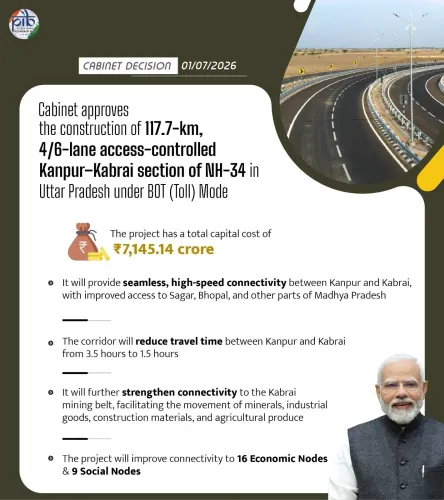
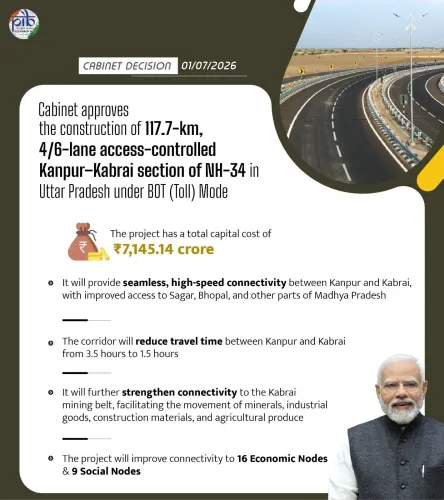
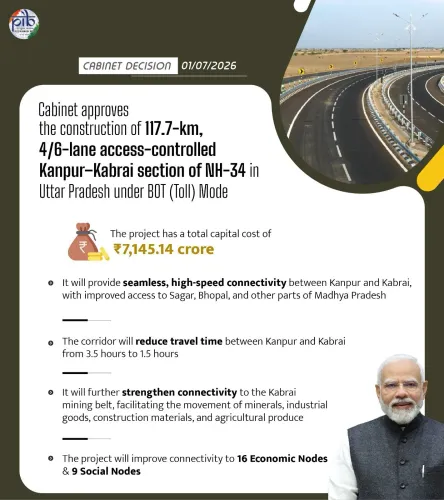
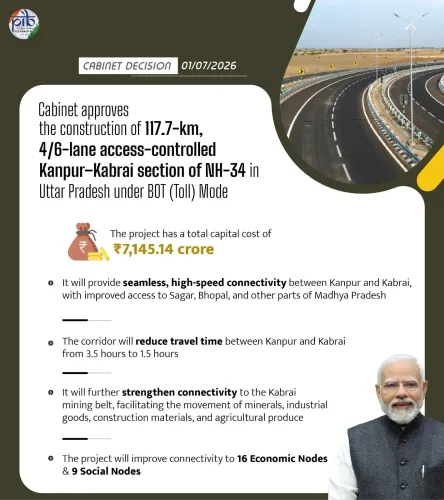
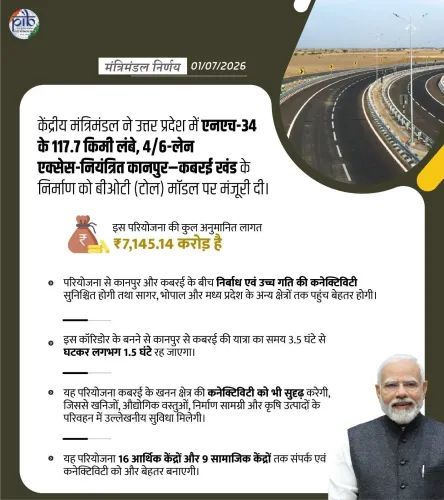
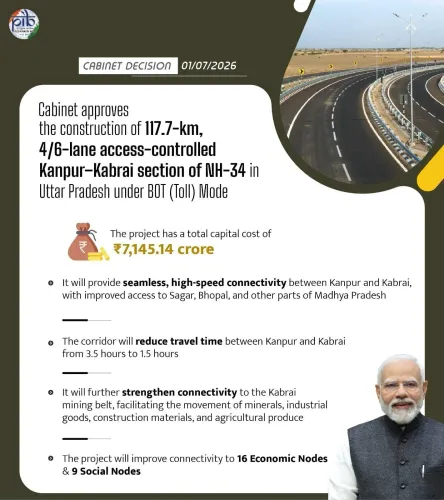
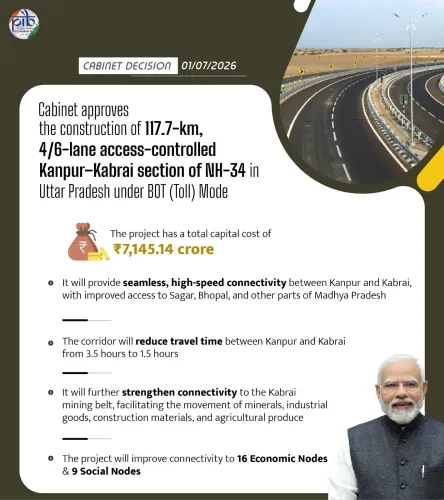
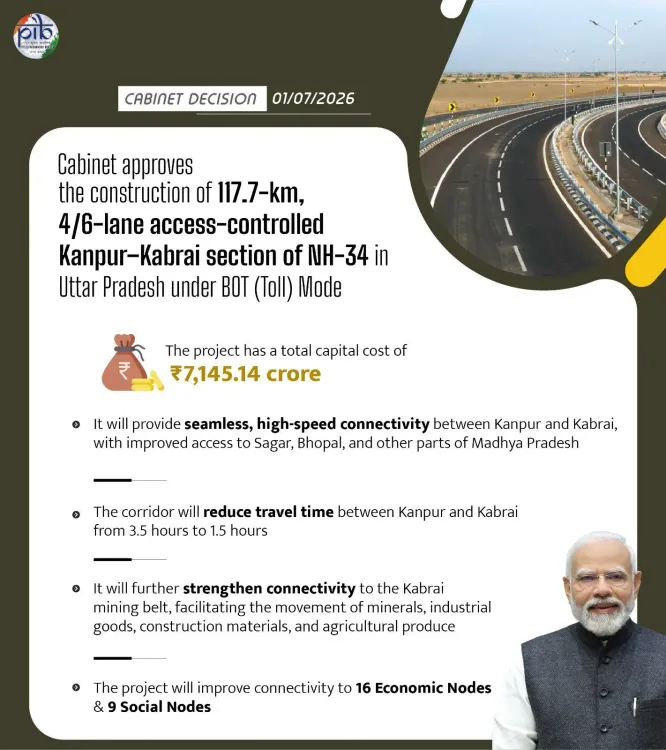
The Union Cabinet chaired by PM Modi approved construction of a 117.7-km, 4/6-lane access-controlled highway on NH-34 between Kanpur and Kabrai in Uttar Pradesh at ₹7,145.14 crore, boosting the state's freight and logistics network under the Bharatmala framework.
Key Takeaways
The Union Cabinet on 1 July 2026 approved the Kanpur–Kabrai section of NH-34 in Uttar Pradesh.
The project covers 117.7 kilometres and will be built as a 4/6-lane access-controlled highway .
Total estimated capital cost is ₹7,145.14 crore .
The corridor connects Kanpur's industrial belt with the stone-quarrying districts of southern UP, including the Bundelkhand region.
The approval aligns with the Bharatmala Pariyojana , which targets 34,800 km of upgraded national highways.
Land acquisition and NHAI tendering are the critical next steps before construction can begin.
The Union Cabinet, chaired by Prime Minister Narendra Modi, on Wednesday, 1 July 2026, approved the construction of a 117.7-kilometre, 4/6-lane access-controlled highway connecting Kanpur and Kabrai along National Highway 34 in Uttar Pradesh, at an estimated capital outlay of ₹7,145.14 crore. Union Minister Sarbananda Sonowal announced the decision on X, flagging it under #CabinetDecisions.
Context
The Kanpur–Kabrai corridor runs through the heart of the Ganga plains in central Uttar Pradesh, linking one of the state's largest industrial cities with the southern districts of Mahoba division. The stretch is a critical freight artery for agricultural produce, stone quarrying output from the Bundelkhand belt, and manufactured goods moving toward eastern India. The access-controlled design — meaning grade-separated interchanges with no at-grade crossings — is intended to raise average travel speeds and cut logistics costs for highway users and trucking firms.
Policy Backdrop
The approval sits within the broader Bharatmala Pariyojana, launched in 2015, which targets the development of 34,800 kilometres of national highways including expressway-standard corridors. The programme has systematically upgraded two-lane national highways into four- and six-lane access-controlled roads, prioritising corridors with high commercial vehicle density. The National Infrastructure Pipeline, announced in 2019, further reinforced this push by earmarking road projects worth over ₹10 lakh crore through 2025, with several tranches carried forward into the current fiscal cycle.
NH-34 forms part of the northern India grid that connects the National Capital Region with eastern states and the Indo-Nepal border. Successive Cabinet meetings have cleared adjacent sections of this grid, reflecting a strategy of front-loading capital expenditure on road infrastructure to compress supply-chain timelines and stimulate regional economic activity.
Stakeholders and Impact
The most direct beneficiaries are highway users and freight operators in Uttar Pradesh, particularly those moving goods between the Kanpur industrial cluster and the stone-rich districts of southern UP. Construction and civil-engineering firms stand to participate in tendering once the National Highways Authority of India (NHAI) floats bids for the project. Farmers and small traders in the districts along the alignment — including areas in Hamirpur and Mahoba — could see reduced transport costs and improved market access once the corridor is operational.
Land acquisition along the 117.7-km stretch will be a key variable. Access-controlled highways typically require wider right-of-way than conventional roads, and progress on land acquisition in Bundelkhand has historically determined project timelines more than any other single factor.
What's Next
The immediate next steps involve NHAI issuing a tendering schedule and completing detailed project reports for the Kanpur–Kabrai section. Observers will watch whether the Cabinet follows up with approvals for adjacent segments of NH-34 or the parallel NH-31 corridor, which would consolidate the northern UP highway grid. The pace of land acquisition notifications and environmental clearances from the Ministry of Environment, Forest and Climate Change will determine when construction can begin on the ground. With Uttar Pradesh remaining the single largest state by road-project volume in the current pipeline, further approvals for the state are widely anticipated in coming Cabinet sessions.
Point of View
145.14 crore for 117.7 km, the per-kilometre cost reflects the premium engineering required for grade-separated, access-controlled design in a densely populated agrarian corridor. The project also underscores the cross-portfolio nature of infrastructure announcements — with a Ports Minister amplifying a Roads Ministry decision — signalling a coordinated Cabinet communication strategy. The Bundelkhand connectivity angle adds a development-equity dimension that the government is likely to highlight as construction milestones approach.
NationPress
30 Sept 2026
Frequently Asked Questions
What is the Kanpur–Kabrai NH-34 highway project approved by Cabinet?
The Union Cabinet approved the construction of a 117.7-km, 4/6-lane access-controlled highway connecting Kanpur and Kabrai along National Highway 34 in Uttar Pradesh, at an estimated cost of ₹7,145.14 crore.
What is the total cost of the NH-34 Kanpur–Kabrai project?
The estimated total capital cost of the project is ₹7,145.14 crore, as approved by the Union Cabinet chaired by Prime Minister Narendra Modi on 1 July 2026.
What does 'access-controlled highway' mean for NH-34?
An access-controlled highway has no at-grade crossings or direct roadside access; all entry and exit points are via grade-separated interchanges, which raises average speeds and improves safety for long-distance traffic.
How does the NH-34 project connect to Bharatmala Pariyojana?
Bharatmala Pariyojana, launched in 2015, aims to develop 34,800 km of national highways to expressway standards. The NH-34 Kanpur–Kabrai section is part of this broader programme to upgrade the northern India highway grid.
Who announced the Cabinet approval for the NH-34 highway?
Union Minister Sarbananda Sonowal, who holds the Ports, Shipping and Waterways portfolio, announced the Cabinet decision on X on 1 July 2026 under the hashtag #CabinetDecisions.