Cabinet Clears ₹23,731 Cr Gobardhan Yojana for Rural Biogas Push
Synopsis
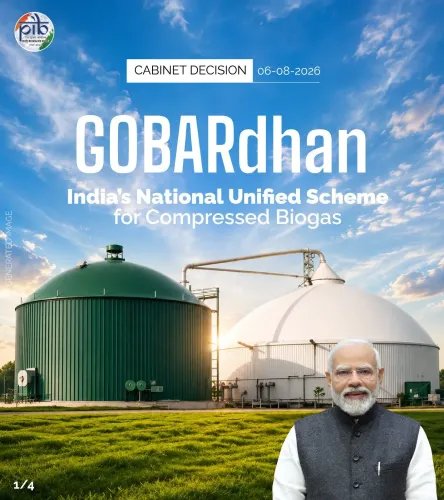
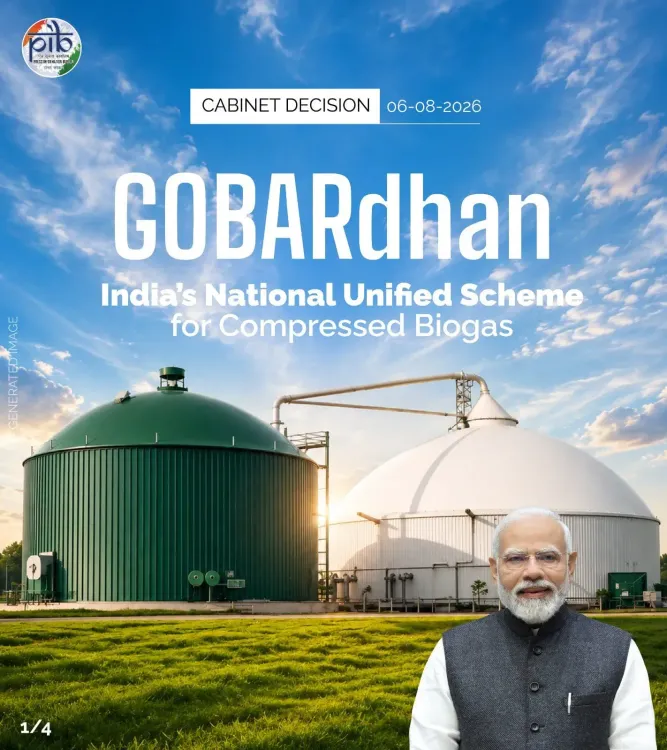
The Union Cabinet, under PM Narendra Modi, approved ₹23,731 crore for the Gobardhan Yojana on 6 August 2026, scaling compressed biogas production from farm waste to boost rural incomes and India's energy security. Union Education Minister Dharmendra Pradhan hailed the decision as a landmark step toward a developed India.
Key Takeaways
The Union Cabinet approved ₹23,731 crore for the Gobardhan Yojana on 6 August 2026 .
Gobardhan Yojana was originally launched in 2018 under the Swachh Bharat Mission-Gramin to convert cattle dung and organic waste into biogas and bio-fertiliser.
The scheme targets Compressed Biogas (CBG) production as a domestic substitute for imported natural gas.
Farmers and rural entrepreneurs earn income by supplying organic waste to CBG plants, with bio-slurry as a fertiliser by-product.
Union Education Minister Dharmendra Pradhan framed the approval as central to India's clean energy, farm income, and energy security goals.
Key metrics to watch: new CBG plant installations, fund disbursement pace, and offtake agreements with fuel retailers.
A single cabinet decision has put ₹23,731 crore behind India's most ambitious attempt yet to turn farm waste into fuel — and Union Education Minister Dharmendra Pradhan was among the first to frame what it means for the countryside. On Thursday, 6 August 2026, Pradhan posted on X welcoming the Union Cabinet's approval of the expanded Gobardhan Yojana, calling it a pivotal move toward clean energy, farmer prosperity, and a developed India.
Translating his post, Pradhan wrote: 'Swachh urja, samriddh kisan aur Viksit Bharat ki disha mein mahatvapurn nirnay' — 'An important decision in the direction of clean energy, prosperous farmers and a developed India.' He credited Prime Minister Narendra Modi's leadership for the cabinet's move, arguing the scheme will play an 'unprecedented role' in raising farm incomes, accelerating Compressed Biogas (CBG) production, realising the 'Waste to Wealth' vision, and strengthening India's energy security.
What Gobardhan Yojana Actually Does
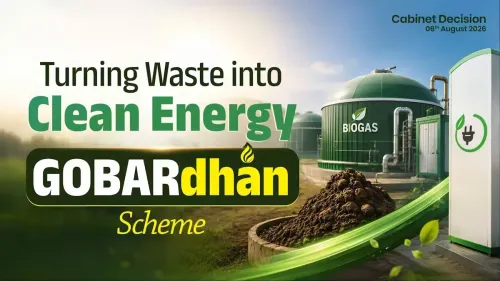
The scheme is not new — GOBAR-DHAN (Galvanising Organic Bio-Agro Resources Dhan) was first launched in 2018 under the Swachh Bharat Mission-Gramin to convert cattle dung and organic waste into biogas and bio-fertiliser. The cabinet's fresh outlay of ₹23,731 crore represents a significant scaling-up of that original framework, channelling public funds into new CBG plant infrastructure across rural India.
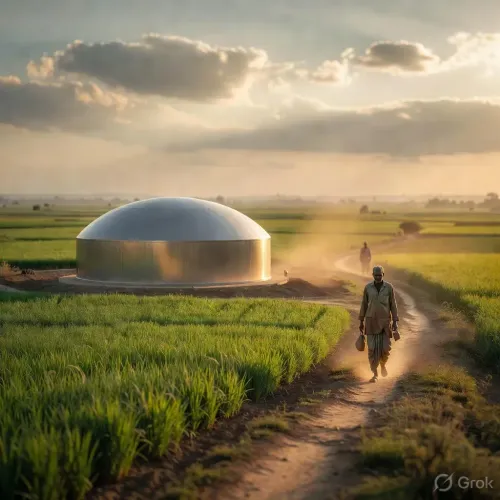
The mechanics are straightforward: farmers and rural entrepreneurs supply organic waste — dung, crop residue, food scraps — to biogas plants. The plants produce Compressed Biogas, a cleaner substitute for CNG, and bio-slurry that doubles as fertiliser. Farmers earn from waste they previously discarded. The gas feeds into the national energy grid or local distribution. The fertiliser reduces dependence on chemical inputs. One loop, multiple wins.
Energy Security and the Import Substitution Angle
India imports a substantial share of its natural gas needs, making domestic biogas production a live energy-security lever, not just a rural welfare gesture. CBG sits at the intersection of three national priorities: cutting the import bill, decarbonising the energy mix, and supporting the rural economy. The Gobardhan expansion fits a pattern of government programmes — from ethanol blending mandates to compressed biogas purchase obligations on oil marketing companies — that have steadily built a policy architecture around biofuels over the past decade.
For farmers, the income arithmetic is direct: waste that had zero market value now has a buyer. For the state, every cubic metre of domestically produced biogas is one less dollar spent on LNG imports. That is the 'Waste to Wealth' compact Pradhan invoked — and at ₹23,731 crore, the government is betting it scales.
What Comes Next for the Scheme
The numbers that matter now are downstream: how many new CBG plants get commissioned, how quickly funds flow to rural entrepreneurs, and whether offtake agreements with fuel retailers hold. Parliamentary scrutiny of fund utilisation and installation targets will be the real scoreboard for a scheme this size.
Pradhan's post, tagged #CabinetDecisions, signals the BJP is positioning Gobardhan as a flagship rural-economy win ahead of what remains a politically charged agricultural landscape. The money is approved. The clock on delivery has started.
Point of View
731 crore, the outlay signals genuine fiscal commitment rather than symbolic policy. Dharmendra Pradhan's amplification of the decision is politically telling: as a former Petroleum Minister, his framing of Gobardhan as an energy-security instrument gives the announcement a technocratic credibility beyond routine rural-welfare messaging. The real test, as with previous iterations of the scheme, will be implementation velocity — India has a history of biogas programmes that look compelling on paper but stall on plant commissioning and offtake logistics.
NationPress
21 Sept 2026
Frequently Asked Questions
What is Gobardhan Yojana and what does it do?
Gobardhan Yojana is a central government scheme that converts cattle dung and organic farm waste into Compressed Biogas (CBG) and bio-fertiliser, providing rural farmers and entrepreneurs an income stream from waste while producing domestic clean fuel.
How much money did the cabinet approve for Gobardhan Yojana in 2026?
The Union Cabinet approved ₹23,731 crore for the Gobardhan Yojana in the cabinet meeting whose decisions were announced on 6 August 2026 .
When was GOBAR-DHAN scheme first launched?
The GOBAR-DHAN scheme was first launched in 2018 under the Swachh Bharat Mission-Gramin to promote biogas production from cattle waste in rural areas.
What is Compressed Biogas (CBG) and how does it help India's energy security?
Compressed Biogas is a cleaner, domestically produced substitute for Compressed Natural Gas (CNG), made from organic waste. Scaling CBG production reduces India's dependence on imported natural gas, directly strengthening energy security.
Why did Dharmendra Pradhan comment on the Gobardhan Yojana cabinet decision?
As a senior BJP leader and former Union Petroleum Minister, Dharmendra Pradhan has long championed India's energy transition agenda. He posted on X welcoming the cabinet's approval, framing it as a step toward clean energy, higher farm incomes, and a developed India.