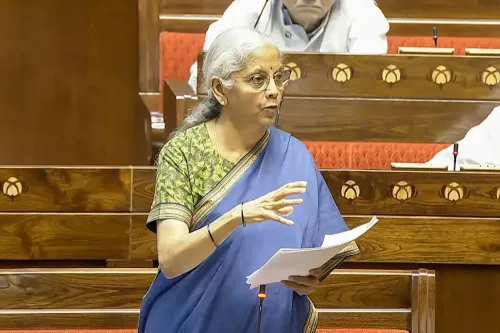
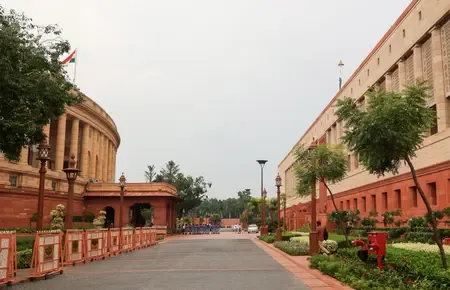
Sitharaman Replies to Appropriation (No.3) Bill, 2026 in Rajya Sabha
Synopsis
Union Finance Minister Nirmala Sitharaman replied to the Appropriation (No.3) Bill, 2026 in the Rajya Sabha on 6 August 2026, closing parliamentary debate on legislation that authorises central government withdrawals from the Consolidated Fund of India under Article 114 of the Constitution.
Key Takeaways
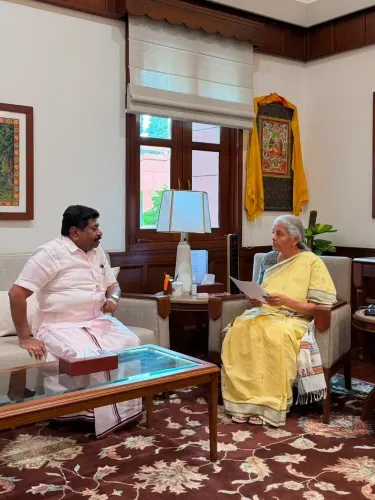
Union Finance Minister Nirmala Sitharaman delivered her full reply on the Appropriation (No.3) Bill, 2026 in the Rajya Sabha on 6 August 2026 .
Appropriation Bills authorise government withdrawals from the Consolidated Fund of India and are a constitutional requirement under Article 114 .
The Finance Minister's reply closes debate in the upper house before the bill proceeds to a vote.
Appropriation Bills are money bills — they originate in the Lok Sabha , with the lower house retaining the final say.
The full reply has been made publicly available, placing the government's fiscal reasoning on the official record.
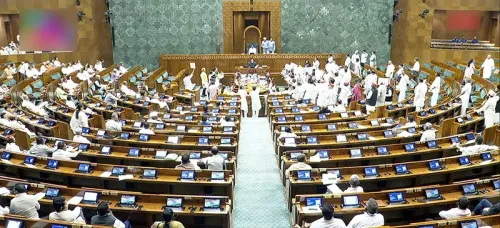
The constitutional machinery of India's spending authority moved forward on Thursday, 6 August 2026, as Union Finance Minister Nirmala Sitharaman delivered her full reply on the Appropriation (No.3) Bill, 2026 in the Rajya Sabha, closing debate on legislation that determines how public money flows from the Consolidated Fund of India.
What the Appropriation Bill actually does
Every rupee the central government spends must first be authorised by Parliament — that is the constitutional guarantee under Article 114. Appropriation Bills are the legal instrument that converts Budget promises into actual spending permission. Without one, ministries cannot draw funds. The Appropriation (No.3) Bill, 2026 is part of that routine but essential annual cycle, authorising withdrawals from the Consolidated Fund to keep government operations funded.
Sitharaman's role in the Rajya Sabha debate
As Finance Minister, Sitharaman bears the responsibility of fielding questions from members across party lines on allocations, fiscal priorities, and expenditure rationale. Her reply in the upper house closes the debate before the bill moves toward a vote. Appropriation Bills, classified as money bills, follow a specific constitutional path — originating in the Lok Sabha and sent to the Rajya Sabha for consideration, with the lower house retaining the final say.
Such proceedings typically occur during the monsoon or winter sessions of Parliament, with the Finance Minister's reply serving as the definitive government statement on spending decisions for the relevant fiscal tranche.
Parliament's scrutiny of appropriation legislation is one of the few formal mechanisms through which elected representatives can interrogate executive spending in real time — and Sitharaman's full reply, now publicly available, places the government's fiscal reasoning on the record.
Point of View
How the government defends its allocation choices in Parliament will shape the opposition's fiscal critique heading into the next session.
NationPress
6 Aug 2026
Frequently Asked Questions
What is the Appropriation (No.3) Bill, 2026?
The Appropriation (No.3) Bill, 2026 is legislation that authorises the central government to withdraw funds from the Consolidated Fund of India for approved expenditure, as required under Article 114 of the Constitution. It is part of the routine annual budget cycle.
Why did Nirmala Sitharaman reply in the Rajya Sabha on this bill?
As Union Finance Minister, Sitharaman is responsible for piloting financial legislation through Parliament and replying to members' queries on government spending and allocations before a vote is taken.
What is the Consolidated Fund of India?
The Consolidated Fund of India is the primary government account into which all revenues and loans are credited and from which all expenditure is authorised by Parliament through Appropriation Bills.
Is an Appropriation Bill a money bill?
Yes, Appropriation Bills are classified as money bills under the Indian Constitution. They originate in the Lok Sabha, and the Rajya Sabha's role is limited — the Lok Sabha retains the final say on passage.
When do Appropriation Bills come up in Parliament?
Appropriation Bills are introduced as part of the annual budget cycle and can come up during the budget, monsoon, or winter sessions of Parliament depending on the fiscal tranche they authorise.