Finance Bill 2026 Secured: Key Highlights of India's Union Budget
Synopsis
The Parliament's approval of the Finance Bill 2026 signifies a robust legislative move to implement the new Union Budget. With substantial increases in expenditure and infrastructure investments, this budget aims to bolster economic growth and job creation as the new financial year approaches.
Key Takeaways
The Finance Bill 2026 has been approved, enabling the implementation of the Union Budget.
Total expenditure for 2026-27 is set at Rs 53.47 lakh crore.
Capital expenditure for infrastructure projects is Rs 12.2 lakh crore.
The fiscal deficit is projected to decrease to 4.3% of GDP.
The debt-to-GDP ratio is expected to fall to 55.6%.
New Delhi, March 27 (NationPress) On Friday, the Parliament successfully passed the Finance Bill 2026, with the Rajya Sabha returning it to the Lok Sabha following a voice vote. This marks the completion of the legislative process needed to legitimize the proposals outlined in the Union Budget 2026-27, set to take effect at the start of the new financial year on April 1.
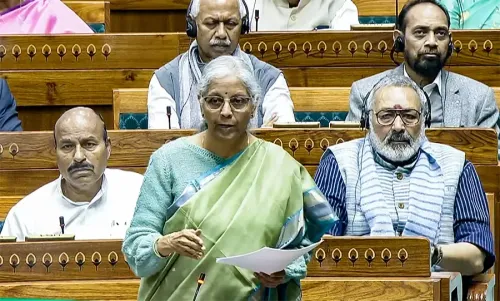
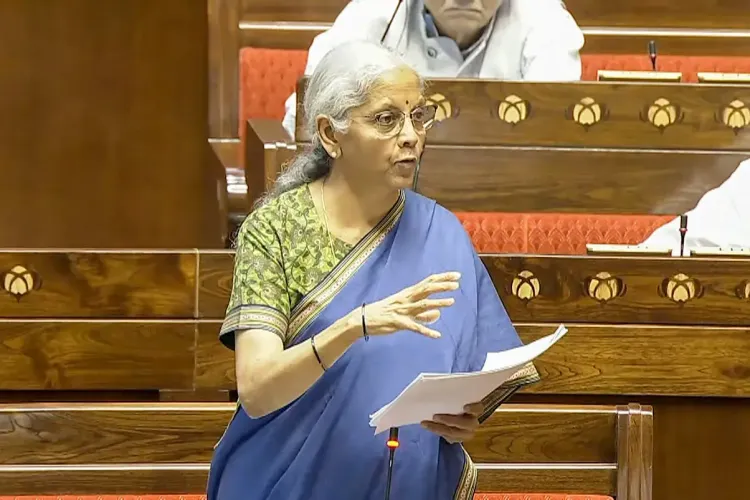
The Lok Sabha approved the bill on March 25, which included 32 amendments. The Rajya Sabha returned the bill after a brief discussion, which followed Finance Minister Nirmala Sitharaman's responses to questions from Members of Parliament regarding her budget proposals.
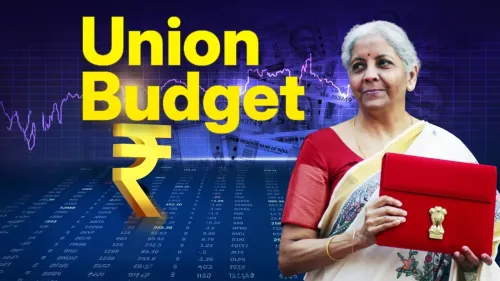
The Union Budget 2026-27 details a projected total expenditure of Rs 53.47 lakh crore, reflecting a 7.7% increase compared to the current financial year ending March 31.
Included in the budget is a capital expenditure allocation of Rs 12.2 lakh crore aimed at large infrastructure projects intended to stimulate growth and create jobs. This marks an increase of Rs 2.2 lakh crore from the previous fiscal year's figures.
The Finance Minister announced the establishment of an Infrastructure Risk Development Fund to expedite the execution of significant projects.
Moreover, she forecasted a reduction in the fiscal deficit to 4.3% of GDP for 2026-27, as the government pursues fiscal consolidation to promote stable economic growth.
Sitharaman indicated that this target strikes a balance between sustaining economic momentum and maintaining stable public finances. The fiscal deficit illustrates the disparity between the government’s total spending and its overall revenue.
She also announced plans for net borrowing of Rs 11.7 lakh crore in FY27 through dated securities to finance the fiscal deficit, with gross market borrowing estimated at Rs 17.2 lakh crore.
The budget aims to deliver a strong impetus to infrastructure, including investments in highways, ports, railways, and energy projects, while also enhancing manufacturing across seven strategic sectors and nurturing champion MSMEs.
Additionally, the Finance Minister emphasized that the government has upheld fiscal prudence and monetary stability while vigorously supporting public investments.
She noted that India’s debt-to-GDP ratio has decreased to 56.1% for 2025-26 and is projected to decline further to 55.6% in the upcoming budget.
This reduction in the debt-to-GDP ratio is expected to lessen the government's interest payment obligations, thereby helping to maintain a lower fiscal deficit and freeing up resources for developmental purposes, as stated by Sitharaman.
Point of View
Reflecting a commitment to economic growth and stability. With a focus on infrastructure and fiscal discipline, the government aims to navigate the challenges of the upcoming financial year while ensuring sustainable development.
NationPress
19 Sept 2026
Frequently Asked Questions
What is the Finance Bill 2026?
The Finance Bill 2026 is a legislative proposal to provide legal backing for the Union Budget 2026-27, facilitating its implementation starting April 1.
What are the key features of the Union Budget 2026-27?
The Union Budget 2026-27 outlines a total expenditure of Rs 53.47 lakh crore and aims to enhance infrastructure spending by Rs 12.2 lakh crore.
How does the budget plan to reduce the fiscal deficit?
The Finance Minister has projected a fiscal deficit reduction to 4.3% of GDP, focusing on fiscal consolidation and strategic borrowing.
What is the significance of the Infrastructure Risk Development Fund?
The Infrastructure Risk Development Fund will accelerate the development of major infrastructure projects, boosting economic growth.
How does the budget impact India's debt-to-GDP ratio?
The budget anticipates a decline in the debt-to-GDP ratio from 56.1% to 55.6%, which will reduce interest payments and free up resources for development.