How Did PM Modi Commend FM Sitharaman's Union Budget Roadmap for Economic Transformation?
Synopsis
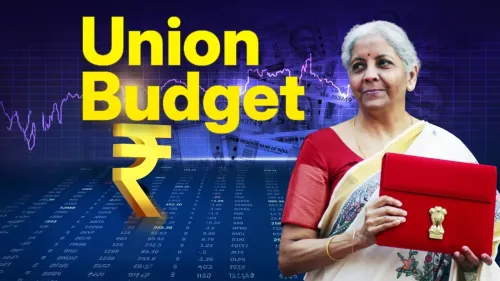
In a recent address, PM Modi lauded FM Nirmala Sitharaman for presenting a transformative Union Budget aimed at revitalizing India's economy. Key highlights include increased funding for states, support for MSMEs, and a focus on healthcare and education.
Key Takeaways
Comprehensive Budget Roadmap for economic transformation.
Increased support for MSMEs and infrastructure.
Focus on healthcare and educational advancements.
Capital investment projected at Rs 17.15 lakh crore.
41% of net tax proceeds allocated to states.
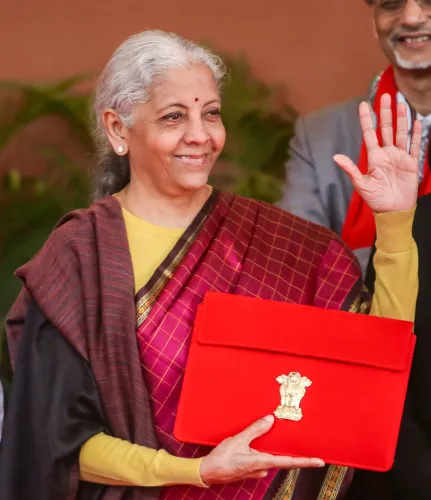
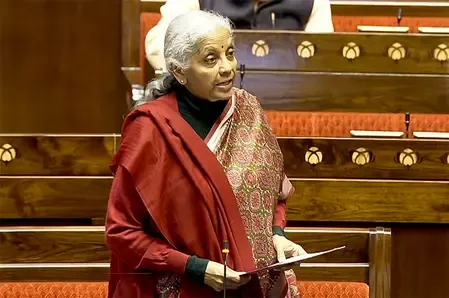
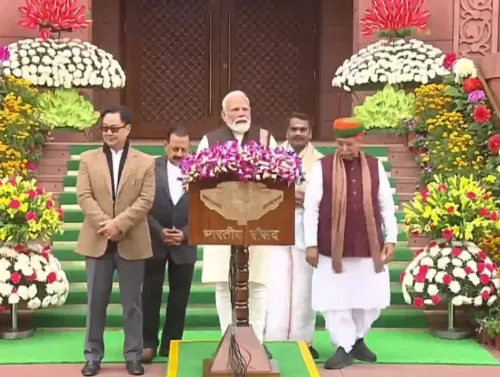
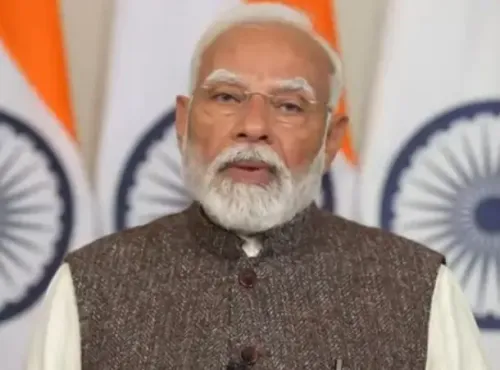
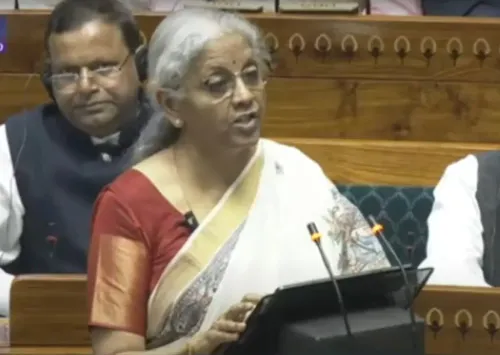
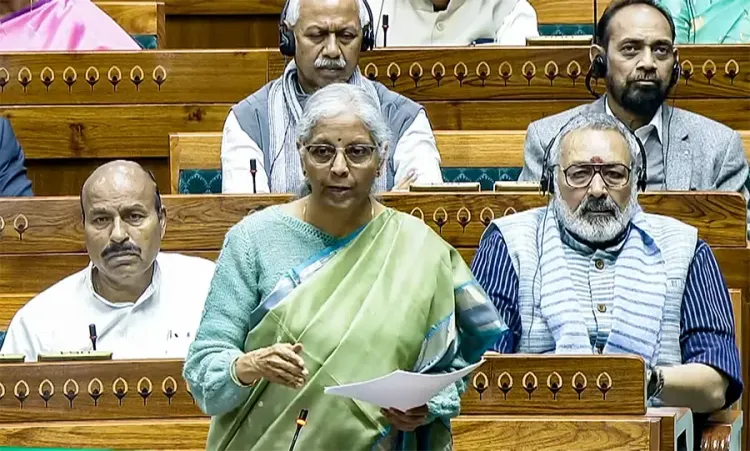
New Delhi, Feb 12 (NationPress) Prime Minister Narendra Modi commended Finance Minister Nirmala Sitharaman on Thursday, stating that her address in the Lok Sabha provided an extensive overview of how this year’s Union Budget will facilitate India’s economic transformation.
On the social media platform X, PM Modi shared the speech and noted, “In her Lok Sabha address, Finance Minister Smt. Nirmala Sitharaman Ji presented an in-depth analysis of how this year’s Budget will aid in our nation’s economic transformation. She focused on the Reform Express, support for MSMEs, enhancing skilling, advancing next-generation infrastructure, and boosting healthcare and education among other areas.”
Additionally, Finance Minister Nirmala Sitharaman stated on Wednesday that the total resources allocated to states, including tax devolution and centrally sponsored scheme releases in the Budget for 2026-27, are projected to reach Rs 25.44 lakh crore, reflecting a rise of Rs 2.7 lakh crore from 2025-26.
In her Lok Sabha address, she countered the opposition’s claim that the Centre has diminished resource transfers to the states, highlighting that the allocation to states has indeed increased. She asserted that all dues owed to the states have been transferred, leaving no room for doubt.
The Finance Minister noted that the Centre is transferring 41 percent of net tax proceeds to states as per constitutional guidelines, a figure audited by the CAG.
She elaborated on the cess amount, which is not included in net taxes but still benefits states. For example, cesses collected for various sectors, including health and education, are ultimately disbursed to the states.
The Budget for 2026-27 allocates a total capital investment of Rs 17.15 lakh crore, which is expected to have a 4X multiplier effect on economic growth towards a Viksit Bharat.
She indicated that the Centre's capital expenditure stands at Rs 12.22 lakh crore, representing 3.1 percent of GDP, an increase of 11.5 percent compared to 2025-26.
When including transfers to states through various centrally sponsored schemes, the capital expenditure of Rs 17.15 lakh crore equates to 4.4 percent of GDP.
The Finance Minister refuted the opposition's assertions that the fiscal deficit was constrained to 4.3 percent in the Budget by diminishing developmental allocations.
She further emphasized that the Centre is opening its schemes to all states and is committed to supporting them in establishing mega food parks, IT parks, smart cities, and waterways.
“Any state can aspire — by navigating through the PM Gati Shakti filters — if they present a feasible proposal. States can also seek to establish Allied and Health Services hubs where we plan to set up medical centres. This initiative will consolidate all aspects of medical education and patient care in one location,” she stated.
This is a significant, forward-thinking initiative, especially given India’s potential in medical tourism. It aims to position India as a hub for multi-purpose, multi-specialty Allied Health Services, thereby promoting medical tourism, she added.
Furthermore, all states can engage in the initiative to create mega centres for combining educational and skilling opportunities for the youth.
“These mega centres will empower students to become entrepreneurs, and they can be strategically located next to any industrial cluster within the state,” she noted.
“These entrepreneurship development centres as educational hubs can be established in any state. We are prepared to collaborate with states to develop this extensive higher education framework,” Sitharaman added.
The Finance Minister highlighted that the budget prioritizes labour-intensive sectors to ensure they receive adequate resources for improvement, while also addressing legacy industries in need of rejuvenation and funding.
She mentioned that the budget also emphasizes high-value agriculture and horticulture, such as promoting coconut cultivation, which will benefit one crore farmers.
Moreover, the agricultural sector is being prioritized with digital enhancements through the Agri stack, which will provide comprehensive soil and fertilizer information to boost productivity and increase farmers' earnings. This stack will include insights into scientific farming practices like quality seed usage and timely irrigation.
Point of View
The budget presented by FM Sitharaman reflects a comprehensive approach towards economic revitalization. As the nation navigates through challenging times, the government's focus on infrastructure, healthcare, and education illustrates a commitment to fostering growth and development across all states.
NationPress
30 Sept 2026
Frequently Asked Questions
What is the total budget allocation for states in 2026-27?
The total budget allocation for states in 2026-27 is estimated to be Rs 25.44 lakh crore.
How much capital investment is projected in the 2026-27 Budget?
The Budget for 2026-27 provides for a total capital investment of Rs 17.15 lakh crore.
What percentage of net tax proceeds is transferred to states?
The Centre is transferring 41 percent of net tax proceeds to the states.
What sectors does the budget prioritize?
The budget emphasizes labour-intensive sectors, high-value agriculture, and rejuvenation of legacy industries.
How will the Agri stack benefit farmers?
The Agri stack will provide vital information on soil and fertilizers, enhancing productivity and increasing farmer earnings.