Government Aims to Strengthen Health Workforce and Globalize Ayush

Synopsis
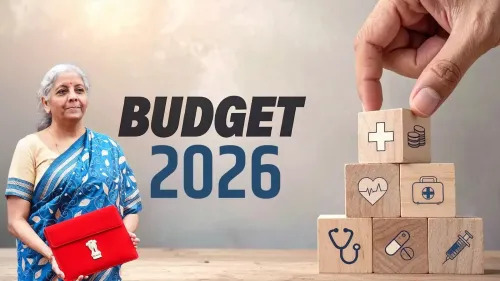
The Union Budget unveils a comprehensive strategy to enhance the allied health workforce, improve infrastructure, and elevate Ayush on a global scale, signaling a significant investment in India's healthcare future.
Key Takeaways
10% increase in funding for health ministry.
194% rise in allocations over 12 years.
Training for 1 lakh health professionals planned.
Establishment of new AYUSH institutes .
Focus on non-communicable diseases management.
New Delhi, March 30 (NationPress) The Union Budget has set the groundwork for enhancing the allied health workforce, boosting infrastructure, and promoting Ayush on an international platform, as stated by the government on Monday.
The latest budget has increased funding for the Ministry of Health and Family Welfare by 10 percent for the fiscal year 2025-26, totaling over Rs. 1,06,530 crore. This initiative includes global integration of AYUSH, the establishment of NIMHANS-2 in Northern India, and more, according to an official announcement.
This funding marks a remarkable 194 percent increase over the last 12 years, with the Department of Health Research receiving Rs 4,821.21 crore. Such rising government investment signifies a strong dedication to universal healthcare and innovation in medical research, the statement emphasized.
Among the noteworthy allocations is a 100 percent customs duty exemption on 17 newly introduced cancer medications. The budget also aims to train 1 lakh allied health professionals and 1.5 lakh caregivers within the upcoming five years.
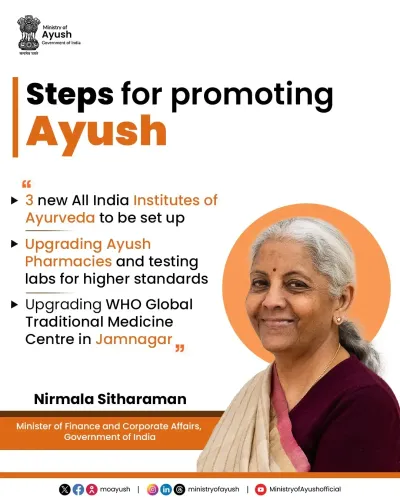
Additionally, the proposal includes the establishment of three new All India Institutes of Ayurveda to meet the increasing global demand and enhance the WHO Global Traditional Medicine Centre in Jamnagar.
The initiatives within the AYUSH sector are designed to fortify education, clinical training, and research capabilities, both for domestic healthcare and global partnerships, while improving regulatory standards and certification systems to position Indian AYUSH products in international markets requiring scientifically validated solutions.
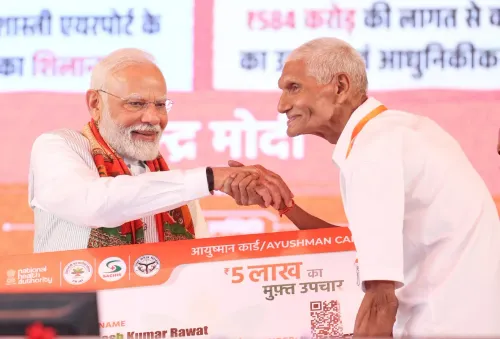
Funding for the Ayushman Bharat Pradhan Mantri‑Jan Arogya Yojana has seen a steady increase, with the scheme offering coverage of up to Rs. 5 lakh annually to each eligible household, benefiting over 12 crore vulnerable families.
"Despite significant advancements in addressing maternal and child health and raising life expectancy from 49.7 years in 1973 to 70.3 years in 2023, the nation now confronts an escalating health crisis: non-communicable diseases (NCDs) such as cardiovascular issues, diabetes, obesity, and cancers," the statement highlighted.
In 2021-23, NCDs accounted for 57 percent of fatalities in the country. To address this issue, the government has implemented the National Programme for Prevention and Control of Non-Communicable Diseases to systematically identify high-risk individuals and connect them with suitable care and treatment.
aar/pk
Point of View
This budget signifies a crucial investment in the future of India's healthcare system. The government's commitment to enhancing the allied health workforce and elevating AYUSH globally reflects a robust strategy aimed at addressing pressing health challenges, particularly non-communicable diseases. It highlights a proactive approach to universal healthcare that deserves close attention.
NationPress
21 Sept 2026
Frequently Asked Questions
What is the main focus of the Union Budget regarding healthcare?
The Union Budget primarily aims to expand the allied health workforce, strengthen infrastructure, and promote AYUSH on a global scale.
How much has the funding for the Ministry of Health increased?
The funding for the Ministry of Health and Family Welfare has increased by 10 percent, totaling over Rs. 1,06,530 crore.
What initiatives are included for the AYUSH sector?
The initiatives include establishing new All India Institutes of Ayurveda and enhancing the WHO Global Traditional Medicine Centre.
What is the significance of the Ayushman Bharat scheme?
The Ayushman Bharat scheme provides up to Rs. 5 lakh annually for eligible households, covering over 12 crore vulnerable families.
What is being done about non-communicable diseases in India?
The government runs the National Programme for Prevention and Control of Non-Communicable Diseases to identify high-risk individuals and provide them appropriate care.