IIT Gandhinagar Unveils Hydrogel Technology Revolutionizing Colon Tumor Surgery
Synopsis
A groundbreaking hydrogel technology developed at IIT Gandhinagar promises to transform colon tumor surgery, enhancing precision and efficacy while minimizing risks. This innovative approach could redefine treatment protocols for colorectal issues.
Key Takeaways
Hydrogel technology enhances colon tumor surgery.
Utilizes biocompatible polymers for drug delivery.
Improves precision in surgical removal of tumors.
Successfully completed pre-clinical trials .
Aims for clinical trials to facilitate widespread use.
Gandhinagar, April 19 (NationPress) In a significant breakthrough, researchers at IIT Gandhinagar have introduced a novel hydrogel-based technology designed to enhance the surgical process for colon tumors.
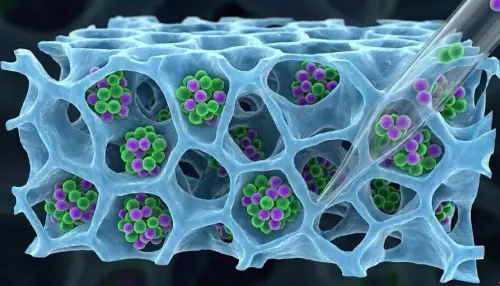
This innovative technology utilizes biocompatible polymers to enable local, controlled, and intelligent drug delivery, which not only increases treatment effectiveness but also reduces systemic toxicity.
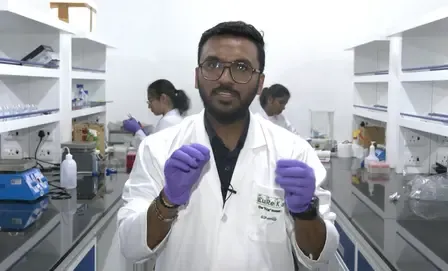
Harshil Dave, a talented scientist from Mehsana, has played a pivotal role in this advancement in medical science, explaining how this technology represents a substantial improvement in the management of colon tumors.
The hydrogel technology is particularly beneficial for the surgical excision of colorectal polyps, which are precursors to cancer.
According to Harshil, the hydrogel he developed exhibits a remarkable shear-thinning characteristic.
This property allows the substance to transition into a liquid state under pressure, and then revert to its solid form once the pressure is alleviated.
This unique feature enables physicians to inject the hydrogel through a long catheter or endoscope. Once injected, it forms a supportive cushion beneath the tumor, assisting surgeons in lifting and removing the tissue with enhanced accuracy.
Traditionally, saline or dextrose is injected under a colon tumor during endoscopic procedures to elevate it, but these fluids are often rapidly absorbed.
In contrast, the new hydrogel maintains the tumor's elevation and stability, significantly facilitating the surgical operation.
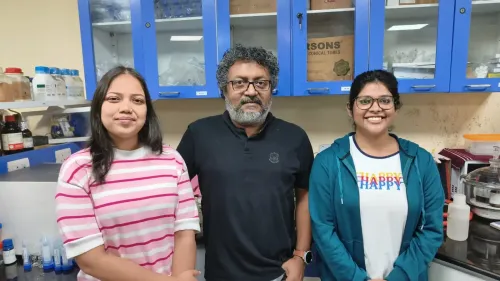
Mukesh Danka, an Assistant Professor in the Department of Biological Sciences and Engineering at IIT Gandhinagar, endorsed Harshil's findings, stating, "Harshil began his research three years ago. We sourced DGMS molecules from plants. Upon dissolving these in water, we discovered they formed a nanofibrous hydrogel. Harshil then proceeded to develop this material further."
He emphasized that small cancerous tumors frequently arise within our gastrointestinal tract.
Harshil Dave's groundbreaking research has been published in a prestigious international journal, and he has received the 'Vikram Sarabhai Young Scientist Award 2026' for his contributions.
Currently, this technology has successfully completed pre-clinical trials on large animals.
Plans are underway to advance it to clinical trials, aiming for widespread use in colon cancer treatment in the near future.
Point of View
I see this development at IIT Gandhinagar as a vital step forward in medical science. The innovative hydrogel technology has the potential to not only improve surgical procedures but also enhance patient outcomes in colon cancer treatment. This advancement reflects a commitment to healthcare innovation and patient safety.
NationPress
15 Sept 2026
Frequently Asked Questions
What is hydrogel-based technology?
Hydrogel-based technology involves biocompatible materials that can deliver drugs in a controlled manner and are used to enhance surgical procedures, particularly in treating tumors.
How does the hydrogel help in surgery?
The hydrogel forms a cushion under the tumor, making it easier for surgeons to lift and remove tissue with greater precision.
What are the benefits of using this technology?
The technology improves treatment efficacy while minimizing systemic toxicity, leading to better patient outcomes.
Who developed this hydrogel technology?
The hydrogel technology was developed by Harshil Dave and his team at IIT Gandhinagar.
What are the next steps for this technology?
The hydrogel has successfully completed pre-clinical trials, and preparations are underway to move to clinical trials for broader application.